Buying guides
Best Calming Products for Dogs: What Helps and What Doesn't
No calming product fixes the cause of a dog's anxiety, but the right type can support training and make stressful moments easier. The deciding factors are what triggers your dog, how severe the signs are, and whether the product can be introduced gradually. Browse our calming products for dogs once you know which situation you are solving.
By Matt GarnettUpdated November 14, 20264 min read3 sources
Start with the cause, not the product
VCA Animal Hospitals describes anxiety as fear that shows up even when the trigger is not yet present: panting, pacing, hiding, freezing, nighttime restlessness, excessive vocalizing or house soiling. Illness or pain can also cause new or heightened fear, especially in adult and senior dogs, so a physical exam is the right first step when the behavior is new or extreme.
That shapes how to shop. Products are best seen as support for behavior work, not a replacement for it. For mild fear, VCA suggests pairing the trigger with delicious treats. For moderate or high fear, it recommends gradual desensitization and counterconditioning, often with professional guidance. Pick a product that fits the plan, not the other way around.
Anxiety wraps and vests
Wraps apply gentle pressure across the back and sides of the chest, like a hug. VCA says the supporting data is limited and mostly anecdotal, although many owners see less anxiety, and wraps are generally considered harmless. Behaviorists caution that a dog can look calmer while still being anxious, simply because the wrap restricts movement.
If you try one, VCA advises getting your dog used to it by putting it on periodically during pleasant times, then putting it on before a stressful event and removing it afterward, since continuous wear may reduce its effect. Follow the maker's sizing guide, and do not mistake stillness for relaxation.
Calming beds, blankets and comfort items
A bed or blanket does not treat anxiety, but a soft, enclosed or bolstered place gives a worried dog somewhere predictable to retreat. Choose a size that lets your dog stretch out or curl up, a washable cover, and a spot away from the door or the loudest room. Browse calming dog beds if a safe retreat is the gap.
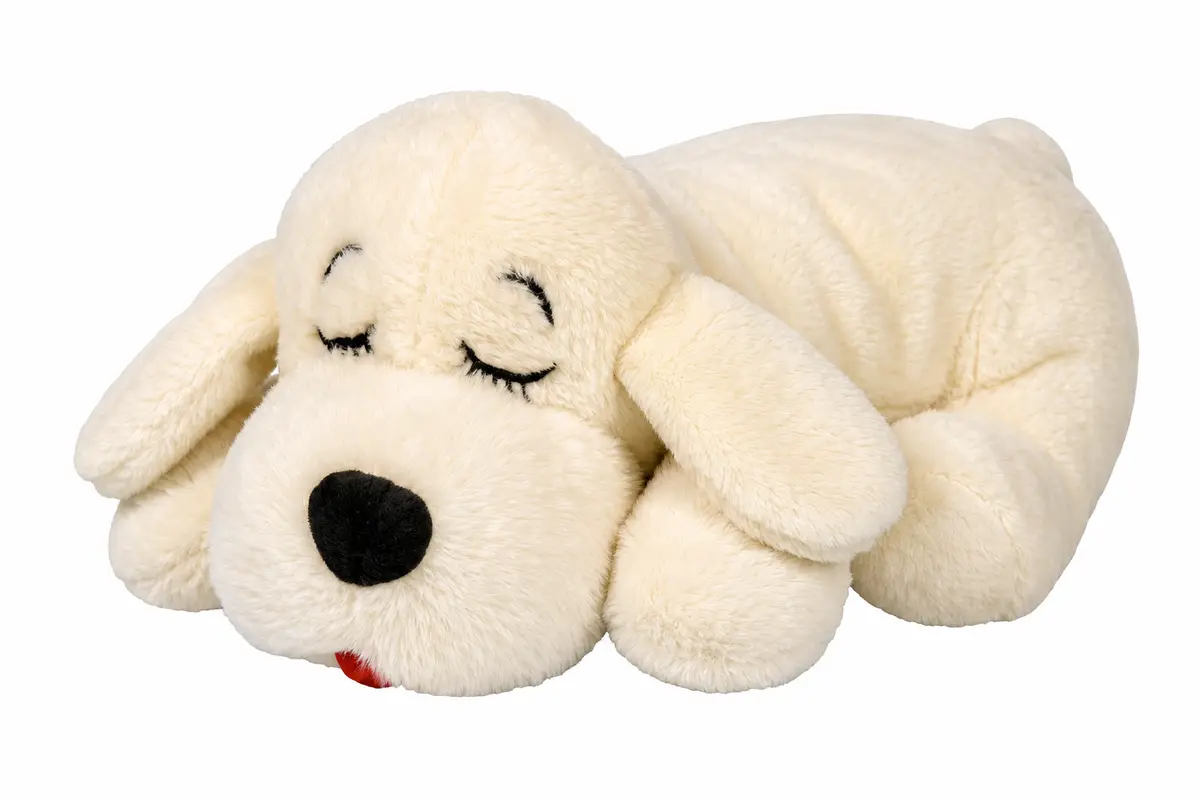
Heartbeat-style plush toys are popular for puppies and new arrivals. The AKC advises removing comfort toys with an artificial heartbeat or heated beads when your puppy falls asleep unsupervised, so they cannot chew them. A heartbeat puppy toy is a supervised comfort item, not a sleep aid to leave in the crate.
Pheromone items and noise reduction
Pheromone collars, sprays and diffusers are sold on the idea of mimicking a calming scent. The VCA pages we read do not give evidence for them, so keep expectations modest and treat them as an optional extra beside training, not a fix. A calming pheromone collar is one example of the category.
For noise-related fear, such as thunder or fireworks, physical noise reduction can lower how loud the trigger is. A noise-reducing calming snood covers the ears and muffles some sound. Introduce it with treats, and give your dog a quiet room as well. For true phobias, VCA says professional guidance is needed.
Which type suits which situation
For thunder and fireworks: a quiet room, a bed or den, a snood or wrap introduced early, and a plan from your vet if the fear is severe. For separation or crate stress: a settled routine, a comfort item used under supervision, and training. For travel or vet visits: a wrap or blanket that smells like home, introduced well ahead of time.
For a new puppy: a warm bed, a supervised comfort toy and gentle socialization, which VCA recommends for preventing later fear. Choose the least invasive option that fits and add one thing at a time, so you can see what helps and what does not.
When products are not enough
VCA advises consulting a veterinarian or animal behaviorist if anxiety is severe or persistent, and notes some dogs need medication such as fluoxetine or clomipramine alongside behavior modification. Seek help promptly if your dog tries to escape, injures itself by clawing at nails or paws, or shows other dangerous behavior.
Only your vet can decide whether medication is appropriate, and nothing on a shop shelf can substitute for that. Bring notes on when the behavior happens and for how long. This page is general information, not veterinary advice, and it cannot replace an examination by the vet who knows your pet. You can also browse our calming aids for dogs again once you have a plan.
Common questions
Do calming products for dogs actually work?
Evidence is mixed. VCA says data on anxiety wraps is limited and mostly anecdotal. Products may help some dogs as support for training, but they do not remove the cause of anxiety.
What is the best calming product for a dog with separation anxiety?
No single product fits. A settled routine, gradual training and a vet check come first. A bed or supervised comfort item can support that plan but should not replace it.
How do I introduce an anxiety wrap to my dog?
VCA advises putting it on periodically during pleasant times so your dog does not link it only with stress. Put it on before a stressful event and take it off afterward.
Are heartbeat toys safe to leave with a puppy overnight?
The AKC advises removing comfort toys with an artificial heartbeat or heated beads once your puppy falls asleep unsupervised, so the puppy cannot chew them. Use them while you are watching.
When should I see a vet about my dog's anxiety?
See your vet if the fear is extreme, started recently, or comes with escape attempts or self-injury. A physical exam can uncover medical causes, and your vet can refer you to a behaviorist.
Sources we checked
This guide is general information, not veterinary advice. If your pet is unwell or injured, contact your veterinarian.