






Breeds
Bernedoodle vs Goldendoodle
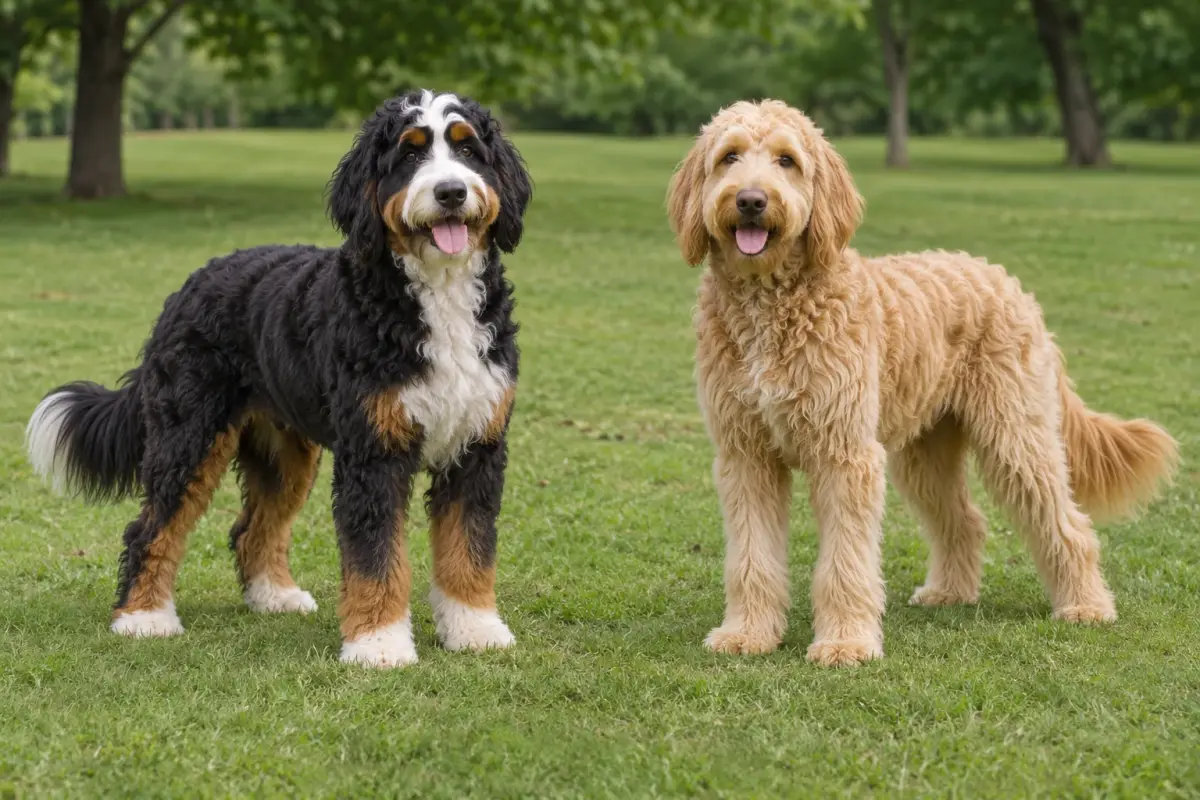
A Bernedoodle usually refers to a Bernese Mountain Dog–Poodle cross, while a Goldendoodle refers to a Golden Retriever–Poodle cross. Neither label guarantees one size, coat, temperament, or lifespan. Compare the actual parents, the dog’s observed needs, and your ability to provide training and grooming instead of expecting a predictable package from a crossbreed name.
By Matt GarnettUpdated November 14, 20263 min read4 sources
Compare parentage without inventing a standard
VCA explains that designer crosses combine established breeds but do not reliably inherit an equal or predictable set of traits. Poodles also come in different sizes. Ask which parents and generations are involved before treating either doodle label as useful information about adult size.
There is no single dependable comparison row for lifespan, energy, grooming, or trainability that applies to every Bernedoodle and Goldendoodle. Both may need substantial coat care and engagement. The best fit depends on the individual’s build, behavior, coat, and health. For a puppy, discuss development with your veterinarian; for an adult, use observed needs and records.
Treat the non-Poodle parent as background
AKC describes Bernese Mountain Dogs as powerful, affectionate working dogs. It describes Golden Retrievers as enthusiastic sporting dogs that enjoy work and activity with people. Those backgrounds suggest useful questions about a cross, but they do not establish that every Bernedoodle will be quieter or every Goldendoodle easier to train.
Ask how the individual plays, greets visitors, settles, and responds to routine handling. If you are considering a puppy, learn about the actual parents rather than relying on broad breed reputations. Meet adults when possible and consider what you observe in the context of the home and handling the dog has known.
Assess the coat and allergy question separately
A Poodle parent does not guarantee a particular coat or an allergy-free dog. AKC explains that no breed or mix is completely hypoallergenic. If a household member has dog allergies, discuss the situation with their medical clinician rather than choosing either cross on a promise that it cannot trigger symptoms.
Ask to see how the actual coat is combed and maintained. Which tools and appointments are part of its current routine? Consider time, handling, and professional grooming costs. A soft or curly appearance is not enough to tell you whether you can keep that individual coat comfortable and free of tangles.
Whichever cross you choose, a curly or wavy coat usually needs regular brushing with a slicker brush and the right dog brushes to stop mats forming.
Plan training and activity for the dog in front of you
Do not buy a fixed exercise or training promise attached to a doodle name. Ask about the individual’s activity, attention, existing skills, and reactions to everyday distractions. Think about the routine you can sustain and who will provide care when work or travel changes your schedule.
Choose humane, reward-based support and discuss suitable physical activity with your veterinarian. An adult’s documented routine may help you assess fit more clearly than a prediction about a puppy. Either cross can need patient teaching, opportunities for engagement, and help settling into a new household. Parentage offers context; it does not do that work for you.
Choose using records and realistic expectations
Ask for available medical information and the dog’s actual care and behavior history. Crossbreeding does not establish that an individual is free of inherited or other health concerns. Have your veterinarian review the records and discuss preventive care and questions relevant to the known ancestry.
Neither cross is universally the better family companion. Compare the particular animals and be honest about grooming, size, handling, and time. Seek veterinary advice about unexplained changes in appetite, movement, comfort, or behavior. Choose the dog whose needs you can support over the long term rather than the name that carries the most appealing promise.
This page is general information, not veterinary advice, and it cannot replace an examination by the vet who knows your pet.
Common questions
Is a Bernedoodle always bigger than a Goldendoodle?
No reliable rule covers every individual. Parent size, ancestry, and generation matter, and Poodles come in several sizes. Ask about the actual parents and discuss a puppy’s expected development with your veterinarian.
Are either of these crosses guaranteed hypoallergenic?
No. AKC explains that no breed or mix is completely hypoallergenic. A Poodle parent or low-shedding appearance cannot guarantee how an allergic person will respond to an individual dog.
Does crossbreeding guarantee better health or a longer life?
No label can guarantee an individual’s health or lifespan. Review available records and ancestry with your veterinarian, and plan appropriate preventive care rather than choosing on a broad health promise.
Sources we checked
This guide is general information, not veterinary advice. If your pet is unwell or injured, contact your veterinarian.