






Breeds
Anatolian Shepherd vs Great Pyrenees
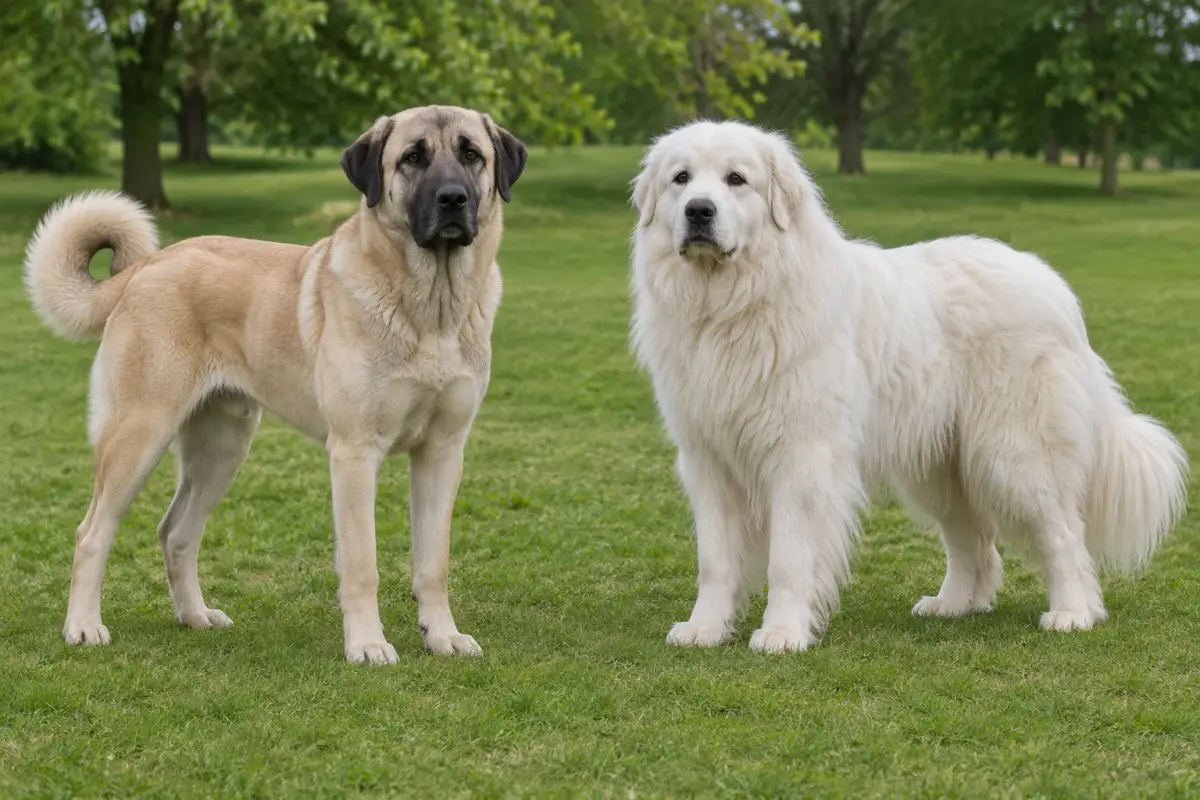
The Anatolian Shepherd and Great Pyrenees are both large livestock guardians, so the choice is between different forms of independent protection work, not a guardian and an easygoing obedience specialist. The Anatolian has a shorter coat; the Pyrenees has a heavier one. Decide first whether you can manage a powerful, watchful dog around visitors, boundaries, and everyday family life.
By Matt GarnettUpdated November 14, 20263 min read4 sources
Compare the practical differences side by side
Size: AKC lists Anatolians at 80–150 pounds across females and males, with Great Pyrenees females starting around 85 pounds and males around 100 pounds. Energy: both need daily activity despite a generally calm appearance. Coat care: the shorter Anatolian coat differs from the Pyrenees’ substantial coat and undercoat.
Lifespan: AKC gives about 11–13 years for the Anatolian and 10–12 for the Pyrenees. Training: both bring independent guardian instincts. Best fit: a household prepared for careful socialization, secure management, and a dog whose original work involved making decisions rather than waiting for repeated instructions.
Understand what guarding means in a family setting
The AKC describes the Anatolian as protective and territorial and the Pyrenees as a vigilant guardian. Those descriptions matter when someone unfamiliar approaches your home. A dog that is devoted to the family may still need thoughtful introductions to visitors rather than being expected to welcome everyone spontaneously.
VCA particularly cautions that an Anatolian may interpret rough play between children as a threat. Plan how guests enter, how children play, and where the dog rests during busy visits. Neither a breed label nor a history of calm behavior replaces supervision and an assessment of the individual dog.
Choose independent character with realistic expectations
VCA describes both breeds as capable of having their own ideas about a task. If your main goal is precise competitive obedience or immediate repetition of commands, ask whether a guardian’s working style is the match you actually want. Admiring the dog’s appearance is not enough to resolve that difference.
For either dog, discuss positive, consistent training and early socialization with a qualified professional. Meet adult dogs, not only puppies, and ask how they respond to ordinary handling and introductions. Look for a realistic account of behavior in the setting where the dog will live.
Budget space and grooming as everyday commitments
A large dog affects transport, handling, and the space needed to rest comfortably. Walk through the practical route from your home to the car and veterinary clinic before choosing either breed. A secure boundary and a plan for visitors are more useful than assuming a large yard will manage the dog for you.
VCA describes routine brushing for both, with attention to shedding and the Pyrenees’ undercoat. Check whether you can handle coat care on the full-grown animal. Ask to see the grooming tools and handling routine rather than estimating the workload from a freshly groomed photograph.
Both shed their undercoats seasonally, and an undercoat rake makes that period much easier to manage.
Make the decision around the individual dog
VCA identifies bone and joint concerns in these large breeds and advises checking parental screening information. Discuss available records with your veterinarian before committing to a puppy. For an adult, ask about current mobility, handling tolerance, and any medical history that changes daily care.
Choose the dog whose needs you can meet, including the less convenient parts of guarding behavior and coat maintenance. Contact a veterinarian for new limping, pain, or a marked behavior change rather than assuming it is simply part of the breed.
This page is general information, not veterinary advice, and it cannot replace an examination by the vet who knows your pet.
Common questions
Is an Anatolian Shepherd the same as a Great Pyrenees?
No. They are separate guardian breeds with different histories and coats. Both can be independent and protective, so compare the individual dog and your management arrangements rather than assuming the names are interchangeable.
Which breed needs more grooming?
The Pyrenees has a heavier coat and undercoat to manage, while the Anatolian has a shorter coat with seasonal shedding. Ask about the actual adult dog’s coat and handling routine before deciding.
Are either of these breeds an automatic choice for children?
No breed makes supervision unnecessary. Discuss the individual dog’s history, especially reactions to visitors and noisy play. A guardian may interpret events differently from the people involved, so plan safe separation and introductions.
Sources we checked
This guide is general information, not veterinary advice. If your pet is unwell or injured, contact your veterinarian.