Food safety
Can Dogs Eat Watermelon Rind? No — It Can Cause Blockages
No, dogs should not eat watermelon rind. It is not poisonous, but the tough green skin and pale inner rind are hard for dogs to digest, and a large piece can cause vomiting, diarrhea or an intestinal blockage. The red flesh, with the seeds removed, is the part to share. If your dog has chewed up a slice of rind, there is usually no need to panic, but watch closely over the next two days and call your vet if signs appear.
By Matt GarnettUpdated November 13, 20264 min read3 sources
Why the rind is the problem
Watermelon flesh is about nine-tenths water and is a well-liked summer treat. The rind is different: dense, fibrous and waxy on the outside. The AKC says it is not recommended because it is hard to digest, and that large pieces may cause stomach upset, vomiting, diarrhea or intestinal obstruction.
Dogs rarely chew rind thoroughly. They tend to bite off a chunk and swallow it, and that chunk can travel to the narrow small intestine and stall. Small dogs, puppies and dogs who gulp food are at the greatest risk, but a large dog who eats a whole half-melon shell can get into trouble too.
Pickled rind, seeds and other forms to avoid
Pickled watermelon rind, a Southern favorite, adds vinegar, sugar, salt and spices such as cloves and cinnamon to the same hard-to-digest rind, so it is a firmer no. Candied rind is mostly sugar. Watermelon rind that has sat in the sun at a picnic can also spoil and grow mold.
The AKC also notes seeds can be a choking hazard, especially for small dogs, and that many seeds can cause a blockage. Pick out the black seeds before sharing flesh, and skip watermelon candy, gum or flavored drinks, some of which are sweetened with xylitol, which is poisonous to dogs.
What to do if your dog ate watermelon rind
If your dog chewed and swallowed a small bit of rind, keep water available, feed the normal diet and watch for the next 48 hours. Many dogs pass small pieces without any trouble. Do not try to make your dog vomit at home, since a firm piece can lodge in the throat on the way back up.
Call your vet the same day if your dog swallowed a large chunk, a whole wedge, or a lot of rind compared with their size, especially a dog under 20 lb. Your vet may advise watching at home or want to examine your dog and take X-rays.
Signs of a blockage, and when to see a vet
Watch for repeated vomiting, especially vomiting after drinking water, loss of appetite, lethargy, a tender or bloated belly, straining with no stool or very little stool, and drooling. These can appear anywhere from a few hours to two or three days after eating the rind.
Any of those signs means a vet visit that day. A dog that is vomiting repeatedly, cannot keep water down or seems in pain needs an emergency clinic. Mild diarrhea or a single vomit that settles within a day is more likely a simple upset.
How to serve watermelon safely
Cut the red flesh away from the rind on a cutting board out of your dog's reach, then remove the seeds. Dice it into cubes sized for your dog: blueberry-sized for a 10 lb dog, grape-sized for a 40 lb dog. Throw the rind straight into a lidded trash or compost bin your dog cannot open.
Tufts University's Petfoodology team lists a third of a cup of diced watermelon as about 15 calories. For healthy adult dogs: under 20 lb, two to four small cubes; 20–50 lb, a third to half a cup; over 50 lb, up to a cup, all kept within about 10% of daily calories.
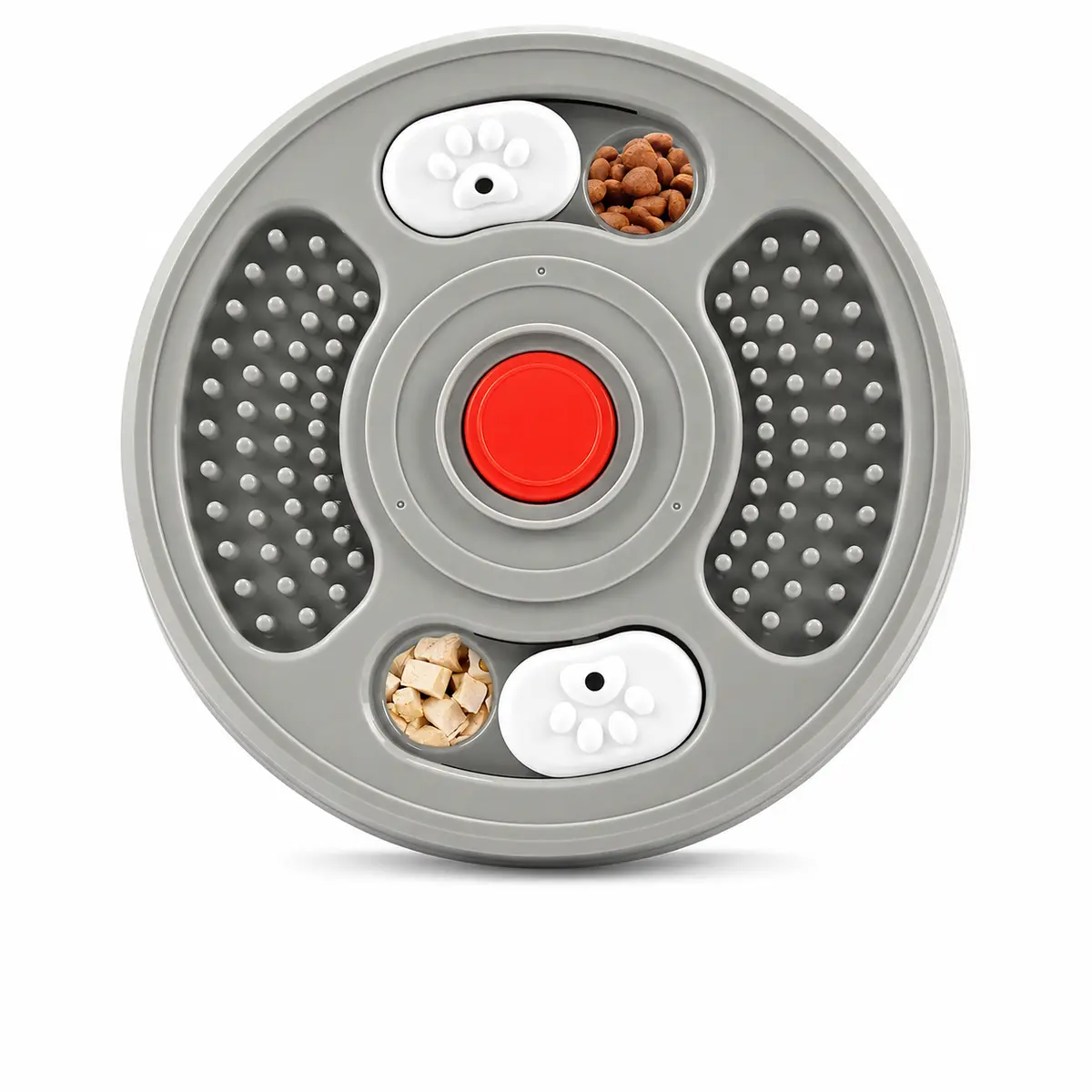
For dogs that gulp anything new, a slow feeder bowl or a lick mat keeps portions small and eating slow.
Puppies and watermelon
Puppies can have a few small cubes of seedless red flesh once they are on solid food, but never rind. Puppies chew everything and are the most likely to swallow a piece of rind whole, so keep melon shells off the floor and out of the yard at summer cookouts.
Start with one or two tiny cubes, since the high water content can loosen a puppy's stool. Frozen watermelon cubes can soothe a teething puppy, provided every bit of rind and seed has been removed first.
Safer crunchy alternatives
If your dog loves to crunch on something cold in summer, try frozen cucumber slices, carrot sticks or a frozen rubber toy filled with a little mashed watermelon flesh. Honeydew and cantaloupe flesh follow the same rule as watermelon: share the flesh, not the rind or seeds. Introduce one new food at a time so any upset is easy to trace.
This page is general information, not veterinary advice, and it cannot replace an examination by the vet who knows your pet.
Common questions
Is watermelon rind toxic to dogs?
No, the rind is not toxic. The risk is physical: it is tough and hard to digest, so larger pieces can cause vomiting, diarrhea or a blockage in the intestines, especially in small dogs.
Can dogs eat the white part of watermelon?
A thin sliver of the pale inner rind attached to the flesh is unlikely to harm a dog, but it is harder to digest than the red part. Trim it off when cutting cubes for your dog.
How long after eating watermelon rind would a dog show signs of a blockage?
Signs can appear within a few hours or take two to three days. Watch for repeated vomiting, loss of appetite, lethargy, belly pain or straining, and call your vet if any appear.
Can dogs eat pickled watermelon rind?
No. Pickled rind adds sugar, salt, vinegar and spices to an already hard-to-digest food. If your dog ate some, watch for stomach upset and call your vet if it does not settle.
Can dogs eat watermelon seeds?
It is best to remove them. A few swallowed seeds are unlikely to harm a large dog, but many seeds can cause a blockage, and they are a choking hazard for small dogs.
Sources we checked
This guide is general information, not veterinary advice. If your pet is unwell or injured, contact your veterinarian.