Food safety
Can Dogs Eat Turmeric? A Pinch, Yes; Supplements, Ask
Yes, dogs can eat a small amount of plain turmeric, such as a pinch cooked into dog-safe food. The spice is not toxic to dogs. Turmeric supplements are a separate question: the Merck Veterinary Manual notes that high amounts can cause diarrhea, gas and bloating, may raise bleeding risk alongside some pain medicines, and that some ground turmeric has been found contaminated with lead. Talk to your vet before giving any turmeric product.
By Matt GarnettUpdated November 13, 20264 min read3 sources
What turmeric is, and why it gets attention
Turmeric is a bright yellow spice ground from the root of the Curcuma longa plant, the same spice that colors curry and yellow mustard. Its best-studied compound is curcumin. The Merck Veterinary Manual notes that curcumin has been researched for anti-inflammatory and other effects in animals, which is why it shows up in pet supplements.
Research is not the same as proof, and the Merck manual is clear that evidence for herbal products is often limited, with many studies small or short. A pinch of turmeric in food is a flavoring, not a treatment, and no spice should be used in place of care your vet recommends.
The warning: supplements, medicines and quality
The Merck Veterinary Manual lists diarrhea, flatulence and bloating as effects of high amounts of turmeric, and warns that it may increase bleeding risk when combined with NSAIDs, the pain and anti-inflammatory medicines many older dogs take. VCA advises caution with combined products containing curcumin in pets on blood thinners or diabetes medication.
Quality is the other concern. The Merck manual notes rising reports of fraudulent and lead-contaminated ground turmeric. Supplements are not tested the way medicines are, so the amount and purity can vary from bottle to bottle. Always tell your vet about every supplement your dog gets, including spices added for health reasons.
How much turmeric by dog weight
As a food flavoring, think in pinches, not spoonfuls. For a dog under 20 lb, a tiny pinch in a meal now and then is the most to use. For a dog of 20 to 50 lb, a small pinch, and over 50 lb, a slightly larger pinch, still only occasionally.
Anything beyond a culinary pinch, including capsules, powders, pastes and chews marketed for joints, is a supplement decision for your vet. They can weigh your dog's health, medicines and weight and tell you whether a product is worth trying and how to give it. This page does not give supplement amounts.
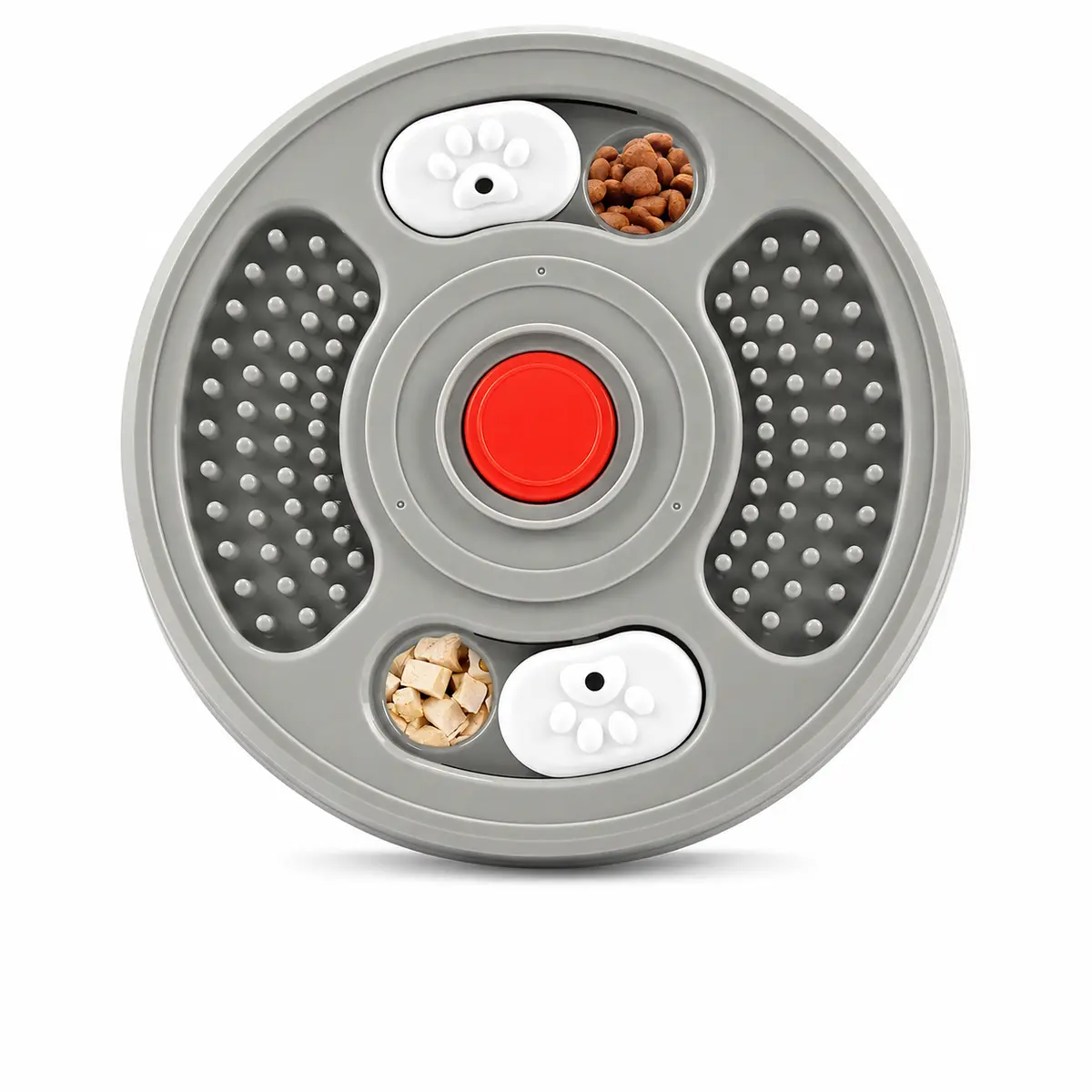
For dogs that gulp anything new, a slow feeder bowl or a lick mat keeps portions small and eating slow.
Puppies and dogs that should skip turmeric
Puppies do not need turmeric, and their stomachs upset easily, so it is best left out of their food. A complete puppy food provides everything a growing dog needs. Pregnant or nursing dogs should also not be given turmeric products without their vet's agreement.
Dogs taking NSAIDs, blood thinners or diabetes medicine, dogs scheduled for surgery, and dogs with gallbladder, liver or kidney disease or bleeding disorders should not get turmeric supplements unless their vet approves. VCA notes effects of curcumin-containing products can last longer in pets with liver or kidney disease.
Signs it disagreed with them, and when to call a vet
The most common problems are loose stool, gas, bloating or vomiting, usually within a day of starting a product or eating a large amount. Turmeric can also stain fur around the mouth yellow, which is harmless. Stop the turmeric and call your vet if stomach upset lasts more than a day.
Call your vet the same day for unusual bruising, bleeding gums, blood in the stool or black, tarry stool, especially in a dog on pain medicine. If your dog ate a curry or a spice blend with onion or garlic, call your vet or a poison control line for advice.
This page is general information, not veterinary advice, and it cannot replace an examination by the vet who knows your pet.
Common questions
Is turmeric toxic to dogs?
No. Plain turmeric spice is not toxic to dogs in small amounts. High amounts can cause stomach upset, and supplements can interact with some medicines, so ask your vet before giving any turmeric product regularly.
Can I give my dog turmeric for joint pain?
Talk to your vet first. Research on curcumin in dogs is limited, products vary widely in quality, and turmeric can interact with common pain medicines. Your vet can suggest options with better evidence for your dog.
Can dogs eat curry?
No. Curry dishes usually contain onion and garlic, which damage a dog's red blood cells, plus chili, salt, fat and sometimes dairy. The turmeric in curry is not the problem; the other ingredients are.
Can dogs have golden paste?
Golden paste is a homemade turmeric mixture usually made with oil and black pepper. It is a supplement, not a food, and the oil adds fat. Ask your vet before giving it, especially if your dog takes medication.
Does turmeric stain a dog's mouth?
Yes, turmeric can tint the fur around the mouth and the food bowl yellow. The staining is harmless and fades with time, but it is a sign of how concentrated the pigment is.
Sources we checked
This guide is general information, not veterinary advice. If your pet is unwell or injured, contact your veterinarian.