Food safety
Can Dogs Eat Turkey? Yes, Plain, Skinless and Boneless
Yes, dogs can eat turkey if it is plain, cooked, skinless and boneless. Lean white or dark meat is a good protein treat, and it is an easy way to include your dog at Thanksgiving. The risks are everything around the meat: cooked bones that splinter, fatty skin and drippings, and seasonings, stuffing and gravy that often contain onion or garlic, which can poison dogs. If your dog ate seasoned turkey, stuffing or bones in quantity, call your vet.
By Matt GarnettUpdated November 13, 20264 min read3 sources
Why plain turkey is safe for dogs
Turkey meat is not toxic to dogs, and plain cooked turkey breast is lean, high in protein and low in fat. It is a common ingredient in commercial dog foods for that reason. The AKC says plain cooked turkey is fine in small amounts, and the ASPCA lists lean, cooked turkey without bones or seasoning among foods you can safely share.
The safe version is the one you would never serve your guests: no skin, no butter, no salt, no herbs, no gravy. A small piece of that is a treat most dogs love, and it carries far less salt and fat than ham.
Warning: bones, skin, seasoning and stuffing
Never give cooked turkey bones. They are brittle and can splinter, causing mouth injuries, choking, or a blockage or tear in the gut. Turkey skin and drippings are fatty, and the AKC warns that fat from the skin and from roasting butter or oil can lead to inflammation of the pancreas.
Seasoning is the poisoning risk. Onion and garlic, in stuffing, gravy, rubs and many spice blends, can damage a dog's red blood cells. If your dog ate a large amount of stuffing, gravy or seasoned turkey, call your vet, ASPCA Animal Poison Control at (888) 426-4435 or Pet Poison Helpline at (855) 764-7661; a fee may apply.
How to prepare turkey for your dog
The easiest way is to set your dog's portion aside before anything is added. Take a piece of breast meat, remove the skin, check carefully for bones, and cut it into pieces sized for your dog: blueberry-sized dice for a 10 lb dog, and thumb-sized pieces for a large dog.
If you are cooking turkey just for your dog, boil or bake plain breast or ground turkey until it is cooked through with no pink, drain any fat, and let it cool. Skip processed turkey such as deli slices, turkey bacon and turkey hot dogs, which are salty and often seasoned.
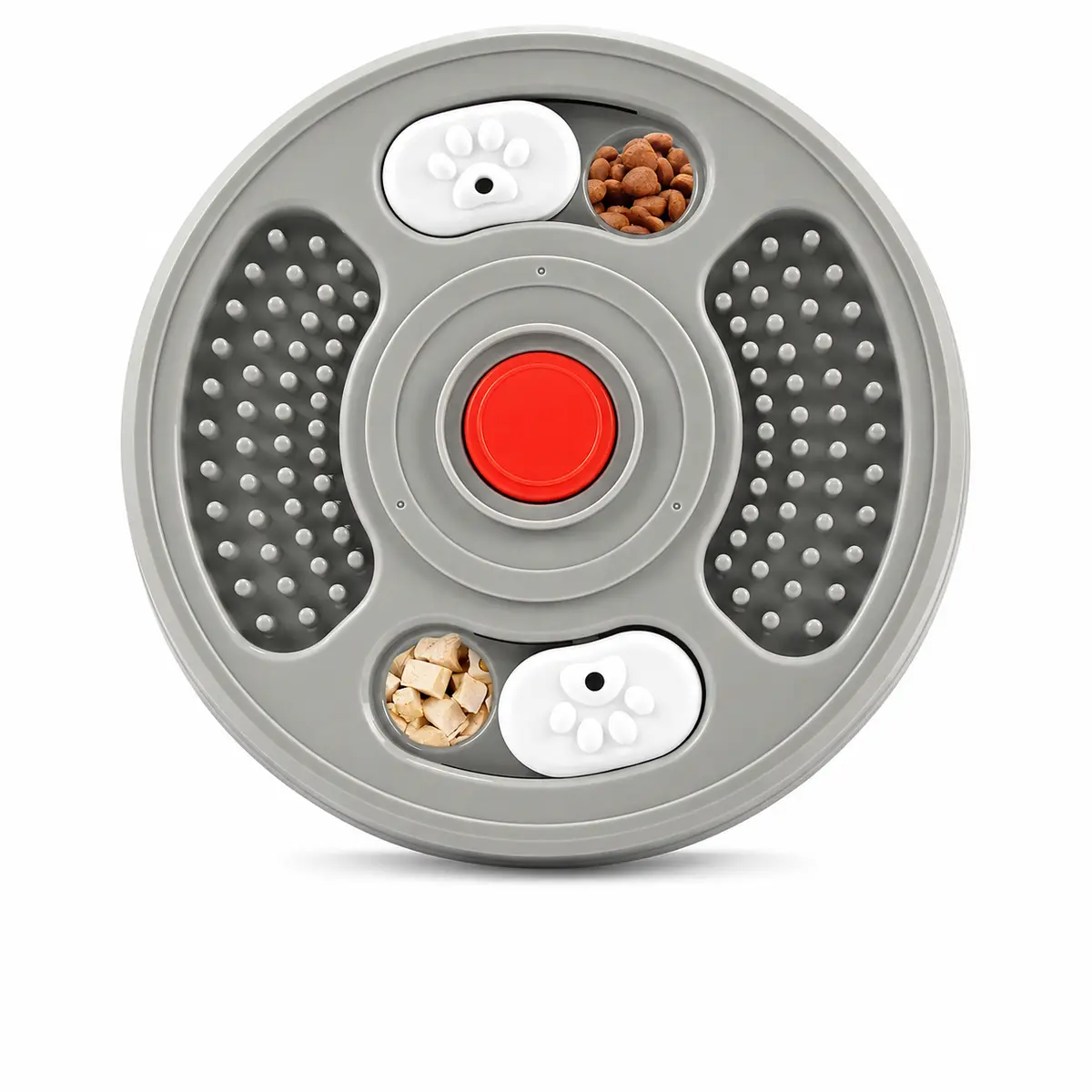
For dogs that gulp anything new, a slow feeder bowl or a lick mat keeps portions small and eating slow.
How much turkey a dog can have
Keep treats under about 10% of daily calories. As a guide: one or two small bites for dogs under 20 lb, a tablespoon or two of chopped meat for dogs of 20 to 50 lb, and up to a small handful for dogs over 50 lb. Give it as a treat alongside their regular food, not instead of it.
Regular table scraps add up, and the AKC notes they can lead to weight gain. If your dog has a sensitive stomach, a history of pancreatitis or a prescription diet, check with your vet before sharing.
Can puppies eat turkey?
Yes, a weaned puppy can have a small amount of plain cooked turkey breast with no skin, bones or seasoning. Chop it finely and offer a couple of pieces, then watch for loose stools over the next day.
Puppies are especially good at stealing bones from plates and trash, and their small size makes a splinter or blockage more serious. Keep the carcass well out of reach, and make sure the bulk of a puppy's diet stays a complete puppy food.
Signs turkey disagreed with your dog, and when to call the vet
After a rich holiday meal, mild upset usually shows within a few hours to a day as vomiting, diarrhea or gas. More serious signs can appear over one to four days: repeated vomiting, a painful hunched back, a tender belly, weakness or refusing food. After onion or garlic, signs such as pale gums, weakness and dark urine can take two to five days to appear.
Call your vet the same day for repeated vomiting, pain, or any of those later signs. If your dog swallowed a bone and is retching, straining, drooling or not eating, or if they ate a large amount of stuffing, call immediately.
Thanksgiving with a dog in the house
Tell guests before dinner that the dog does not get scraps, and keep plates, the roasting pan and the carcass away from counter edges. Bag the carcass and string from a stuffed bird and take them straight outside to a lidded can, because a dog will dig them out of an open kitchen bin.
To include your dog, set aside a few pieces of plain breast meat and a little plain cooked green bean or pumpkin before seasoning. A food puzzle or long-lasting chew during the meal keeps them busy and out from under the table.
Common questions
Can dogs eat turkey bones?
No. Cooked turkey bones splinter easily and can injure the mouth, cause choking, or block or tear the gut. If your dog swallowed one, call your vet for advice, even if they seem fine for now.
Can dogs eat turkey skin?
No. The skin holds most of the fat and the seasoning, and fatty food is a common trigger for vomiting, diarrhea and inflammation of the pancreas. Remove the skin before sharing any meat.
Can dogs eat deli turkey?
It is best avoided. Deli turkey is usually high in sodium and may contain seasonings. The ASPCA advises against processed turkey such as lunch meat; plain turkey you cook yourself is safer.
Can dogs eat turkey gravy?
No. Gravy is fatty and salty and is often made with onion or garlic, which can damage a dog's red blood cells. Keep gravy boats and drippings out of reach.
Sources we checked
This guide is general information, not veterinary advice. If your pet is unwell or injured, contact your veterinarian.