Food safety
Can Dogs Eat Tomatoes? Ripe Ones, Yes; Green Parts, No
Yes, dogs can eat ripe red tomatoes in small amounts, but the stems, leaves, vines and unripe green fruit contain solanine and tomatine, which can poison a dog. The ripe flesh is low in calories and carries a little fiber and vitamin C. The real risks are the green parts of the plant, a garden that a curious dog can raid, and tomato sauces and ketchup, which often hide onion, garlic and a lot of salt.
By Matt GarnettUpdated November 13, 20264 min read3 sources
Why ripe tomatoes are fine and green parts are not
Tomatoes belong to the nightshade family, and the plant protects itself with glycoalkaloids called solanine and tomatine. Those compounds sit mostly in the leaves, stems, vines and green, unripe fruit. As a tomato ripens to full red, the levels fall to the point where the ASPCA describes the ripe fruit as non-toxic for dogs.
So a wedge of a ripe slicing tomato or a halved cherry tomato is not a poisoning risk for most dogs. A dog chewing through a tomato vine in July, or eating a handful of hard green fruit that fell early, is a different situation, and that is the version of this question that needs a vet.
The warning: tomato plants and green tomatoes
The ASPCA lists the tomato plant as toxic to dogs and cats. Signs after eating leaves, stems or green fruit can include drooling, vomiting or diarrhea, loss of appetite, weakness, wobbliness, dilated pupils and a slow heart rate. Serious poisoning is uncommon, but small dogs and puppies are at higher risk because the dose is bigger for their size.
If your dog ate plant material or a lot of green tomatoes, call your vet, ASPCA Animal Poison Control at (888) 426-4435 or Pet Poison Helpline at (855) 764-7661 for advice. Both lines are open around the clock, and a fee may apply. Fence off vegetable beds and pick up dropped fruit.
How to serve a tomato to your dog
Pick a fully red, ripe tomato and wash it. Pull off the green calyx and any stem, then cut the flesh into pieces sized for your dog: dice to blueberry size for a dog around 10 lb, and quarter a cherry tomato for anything under 20 lb so it cannot be swallowed whole.
Serve it raw or plain-cooked with nothing added. Skip pasta sauce, pizza, salsa, ketchup, canned tomato soup and sun-dried tomatoes in oil. Those usually carry onion, garlic, salt, sugar or spices, and onion and garlic damage a dog's red blood cells even in cooked, powdered form.
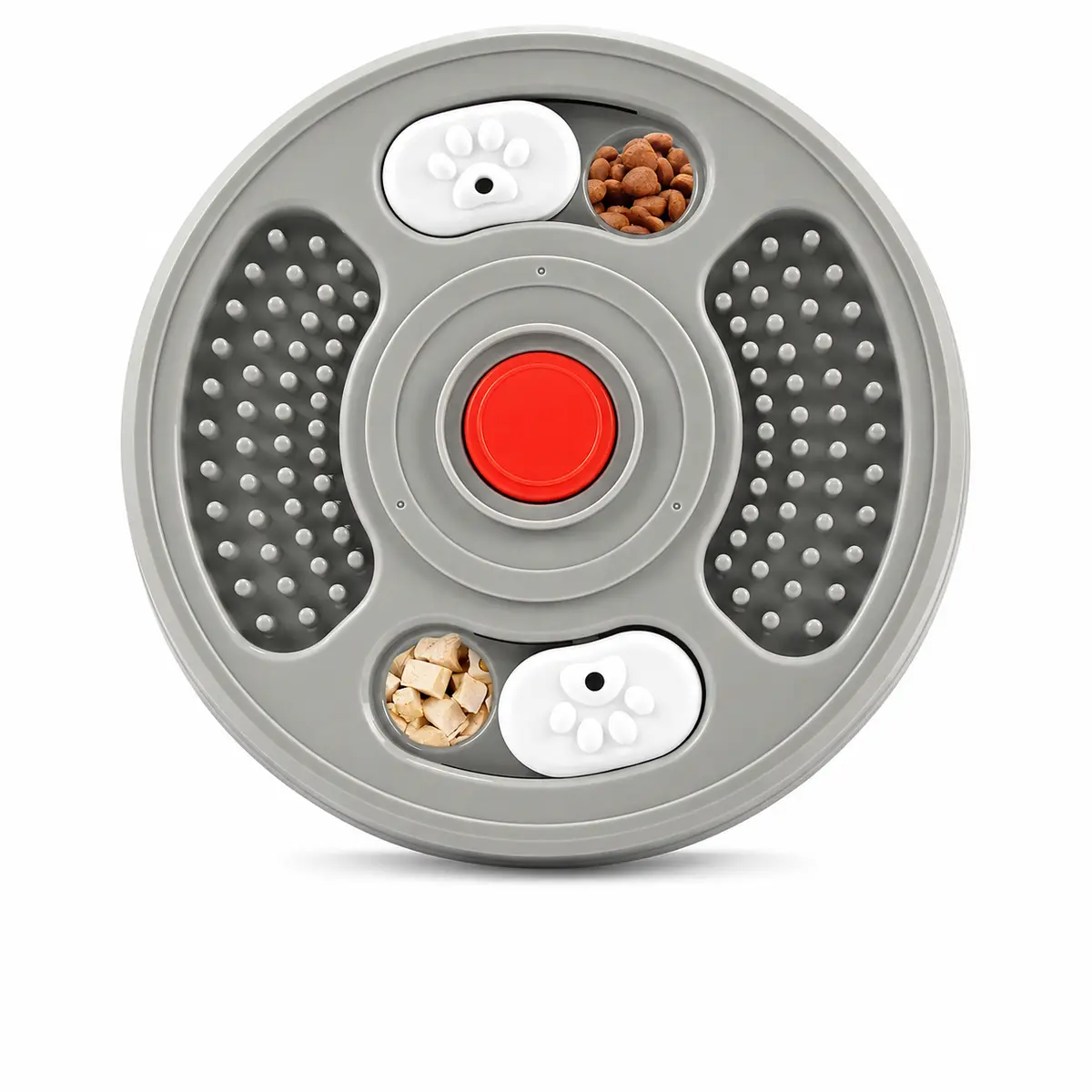
For dogs that gulp anything new, a slow feeder bowl or a lick mat keeps portions small and eating slow.
How much tomato by dog weight
Treats of every kind should stay under about 10 percent of what your dog eats in a day, and tomato is acidic, so a little goes a long way. For a dog under 20 lb, one or two cherry-tomato quarters is plenty. For a dog of 20 to 50 lb, a couple of bite-size chunks works.
For a dog over 50 lb, a few chunks or half a small ripe tomato is a sensible top end. Offer it now and then rather than every day, and start with a single piece the first time so you can see how your dog's stomach handles the acidity.
Puppies, sensitive stomachs and dogs to skip
Puppies can try a tiny piece of ripe tomato once they are eating solid food well, but there is no need to rush it. Their small body size makes any exposure to the green parts more serious, so keep puppies well away from tomato plants in the yard and in patio pots.
Skip tomato for dogs with a history of acid reflux, a sensitive stomach or a vet-prescribed diet. Some dogs simply do not tolerate the acidity and get loose stools. A rare dog may show an allergic reaction such as hives, itching, coughing or trouble breathing, which needs a vet the same day.
Signs it disagreed with them, and what to give instead
Mild stomach upset from too much ripe tomato usually shows as vomiting or loose stool within a few hours and settles within a day. Call your vet the same day if you see repeated vomiting, drooling, tremors, weakness, stumbling, a very slow heartbeat or a dog that seems flat after getting into the tomato plants.
If you want a low-calorie crunchy treat with less acid, plain cucumber slices, green beans or carrot coins do the same job. Ripe tomato is an occasional extra, never a regular part of the bowl.
This page is general information, not veterinary advice, and it cannot replace an examination by the vet who knows your pet.
Common questions
Can dogs eat cherry tomatoes?
Yes, if they are ripe and red. Quarter them for small dogs because a whole cherry tomato is the right size to slip down the throat, and remove the green stem first. Keep the plant itself out of reach.
Can dogs eat tomato sauce or ketchup?
It is best to avoid both. Pasta sauce, pizza sauce and ketchup usually contain onion or garlic, plus salt and sugar. Onion and garlic can damage a dog's red blood cells, so plain ripe tomato is the only form worth sharing.
Are green tomatoes poisonous to dogs?
Unripe green tomatoes carry more solanine and tomatine than ripe ones, so they can cause drooling, vomiting, weakness and other signs. If your dog ate several, or chewed the plant, call your vet or a poison control line for advice.
Can dogs eat tomatoes every day?
It is better not to. Tomato is acidic and adds nothing a complete dog food lacks, so a daily habit raises the chance of an upset stomach. A few pieces now and then is the sensible way to share it.
What if my dog ate a tomato plant?
Note how much was eaten and when, then call your vet, ASPCA Animal Poison Control at (888) 426-4435 or Pet Poison Helpline at (855) 764-7661. A fee may apply. Watch for drooling, vomiting, weakness or a slow heartbeat.
Sources we checked
This guide is general information, not veterinary advice. If your pet is unwell or injured, contact your veterinarian.