Food safety
Can Dogs Eat Steak Bones? No — Cooked Bones Can Splinter
No, dogs should not eat steak bones. A cooked T-bone, ribeye or porterhouse bone can splinter into sharp pieces, break teeth, wedge in the mouth, lodge in the throat or block the intestine, and the American Kennel Club's chief veterinarian advises never giving dogs cooked bones of any kind. The fat and seasoning left on a steak bone add the risk of vomiting or pancreatitis. If your dog just grabbed one, here is what to do and which signs need a vet.
By Matt GarnettUpdated November 13, 20264 min read3 sources
Why steak bones are dangerous
Grilling, broiling and pan-searing dry out bone and make it brittle. The AKC explains that cooked bones splinter into shards that can cause choking and damage the mouth, throat or intestines. The thin, flat T-shaped bone in a T-bone or porterhouse is especially prone to cracking into sharp edges.
VCA Animal Hospitals lists the injuries bones can cause: broken teeth, fragments wedged across the roof of the mouth or around the lower jaw, pieces stuck in the esophagus or windpipe, punctures of the stomach or intestine that can lead to peritonitis, blockages, and painful constipation from fragments packed in the colon.
Fat, seasoning and steak sauce
Steak bones usually carry a fringe of fat and seasoning. Rubs and marinades often include garlic and onion, which the ASPCA lists as damaging to red blood cells, plus a lot of salt. Butter basting and steak sauce add more fat and sugar.
The AKC warns that fatty food can lead to pancreatitis, a painful inflammation that can become serious. A dog that chews the fat off a ribeye bone may get pancreatitis even if the bone itself passes safely.
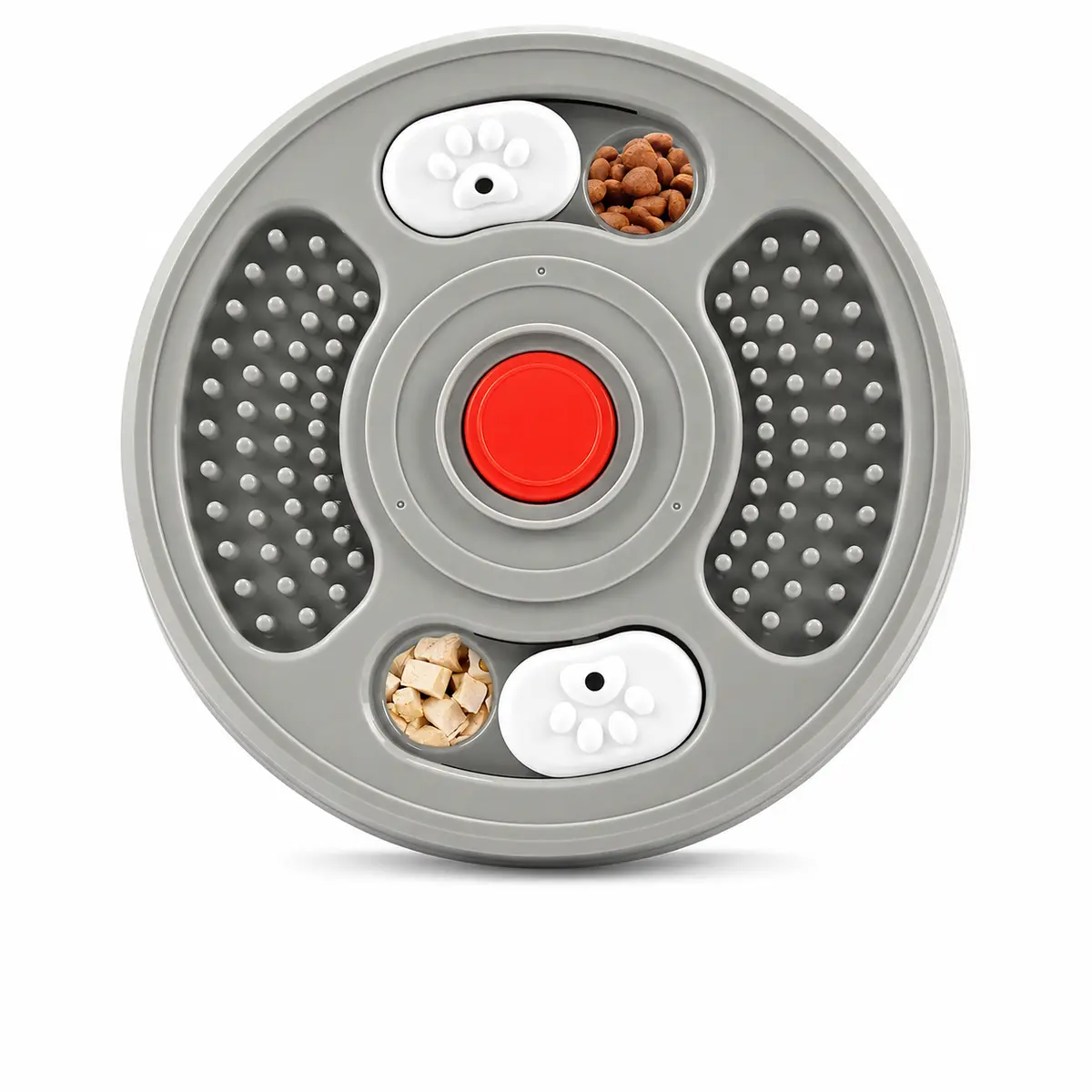
For dogs that gulp anything new, a slow feeder bowl or a lick mat keeps portions small and eating slow.
My dog ate a steak bone: what to do
Take away any remaining bone and gently check your dog's mouth for pieces stuck between the teeth or across the roof of the mouth. Do not try to make your dog vomit, as sharp fragments can do more damage on the way back up.
Call your vet, describe the bone and how much is missing, and give your dog's weight. Your vet may want to see your dog and take X-rays, or ask you to watch at home. If watching, feed normal meals, keep water available and check that stool passes normally over the next three days.
Signs that need a vet
Go to a vet or emergency clinic immediately for choking, gagging, heavy drooling, pawing at the mouth, trouble breathing, or retching without bringing anything up. VCA notes that choking is an emergency that needs immediate veterinary attention.
Call your vet the same day for vomiting, refusing food, a tense or painful belly, lethargy, straining to pass stool, or black, tarry or bloody stool. These can appear hours or a couple of days after the bone was eaten, so keep watching even if your dog seems fine at first.
Small dogs, large dogs and steak bones
Dogs under 20 lb can be hurt by fragments that a bigger dog might pass, and their narrow intestines block more easily. Dogs of 20 to 50 lb crack bones into many pieces. Dogs over 50 lb have jaws strong enough to break teeth on a dense steak bone and often swallow large chunks.
No size of dog and no size of bone makes a cooked steak bone safe. The safest amount is none, so the bone should go into a lidded trash can as soon as the plate is cleared.
Puppies and steak bones
Teething puppies want to chew everything, and a meaty bone smells irresistible. But puppy teeth break easily, their throats are narrow, and their intestines are small, so a cooked bone is even more dangerous for them than for an adult dog.
Give a teething puppy chew toys made for its age and size, and keep cookout plates out of reach. If a puppy swallows any part of a cooked bone, call your vet for advice the same day.
Cookout safety and safer chews
Steak bones are a common Fourth of July and summer barbecue hazard. Collect bones as plates are cleared, bag them tightly, and put them in a lidded bin or take them outside. Ask guests not to toss bones to the dog.
If you want to share, cut a thumbnail-size piece of plain, lean steak with no seasoning, fat or sauce. For chewing, VCA suggests chews with the Veterinary Oral Health Council seal, sized so they cannot be swallowed whole.
This page is general information, not veterinary advice, and it cannot replace an examination by the vet who knows your pet.
Common questions
Can dogs eat T-bone steak bones?
No. A cooked T-bone is thin and brittle and can splinter into sharp pieces that injure the mouth, throat or gut. Remove the bone and offer a small piece of plain lean steak instead.
Can dogs eat raw steak bones?
Raw bones splinter less than cooked ones, but VCA notes that they can still break teeth, cause blockages and carry bacteria such as Salmonella and Listeria. Ask your vet before giving any raw bone.
What if my dog ate a steak bone and seems fine?
Many dogs pass small fragments, but problems can appear up to two or three days later. Call your vet for advice, then watch for vomiting, belly pain, straining or bloody stool and call if any appear.
Can dogs eat steak fat?
It is best not to. Steak fat trimmings are very rich and can cause vomiting, diarrhea and pancreatitis, especially in small dogs or dogs with a history of pancreatitis.
Can dogs eat steak?
Yes, a small amount of plain cooked steak with fat trimmed and no seasoning, garlic, onion or sauce is a safe occasional treat. Cut it into bite-size pieces to reduce the choking risk.
Sources we checked
This guide is general information, not veterinary advice. If your pet is unwell or injured, contact your veterinarian.