Food safety
Can Dogs Eat Squash? Yes, Cooked, Plain and Seedless
Yes, dogs can eat squash. Butternut, acorn, zucchini, yellow squash and plain pumpkin are all safe when cooked, plain and served without the skin, seeds or rind. Squash is low in fat, carries fiber and beta-carotene, and most dogs like the sweet flavor. The cautions are preparation and recipes: the AKC advises removing seeds, skin and rinds, and squash casseroles and pumpkin pie filling carry butter, sugar, spices or even xylitol.
By Matt GarnettUpdated November 13, 20264 min read3 sources
Why squash is safe for dogs
Squash has no compound that is toxic to dogs. The ASPCA lists zucchini squash as non-toxic to dogs and cats, and the AKC calls squash safe in moderation as long as the seeds, skin and rinds are removed. It is low in fat and cholesterol and offers fiber, potassium and vitamin A precursors.
Winter squashes like butternut and acorn are denser and sweeter, while summer squashes like zucchini and yellow squash are watery and mild. The AKC notes zucchini is the easiest for dogs to digest. All of them work as a light vegetable extra rather than a main part of the diet.
The warning: rinds, seeds and holiday squash dishes
Hard winter squash rind is tough and fibrous, and a chunk of it can be hard to chew and slow to digest, which raises the risk of choking or a blockage. Large raw seeds are also slippery and fibrous. Scoop the seeds and peel the skin before cooking, and compost or bin the scraps where your dog cannot reach them.
Many squash recipes are not dog-safe. Butternut soup is often made with onion and garlic, squash casseroles with butter, cheese and brown sugar, and pumpkin pie filling with sugar and spices; the AKC warns that some filling contains xylitol, which is toxic to dogs. Share only plain squash.
How to prepare squash for your dog
Wash the squash, cut it open, scoop out the seeds and stringy pulp, and peel off the skin. Steam, boil or roast it plain, with no oil, butter, salt or seasoning, until soft enough to mash with a fork. The AKC notes steamed or roasted squash is easiest for dogs to digest.
Let it cool, then mash it or cut it into cubes: pea-sized for a dog around 10 lb, thumbnail-sized for larger dogs. Plain canned pumpkin, not pie filling, works too. Mashed squash can be stirred into kibble, spread in a lick mat or frozen in small portions.
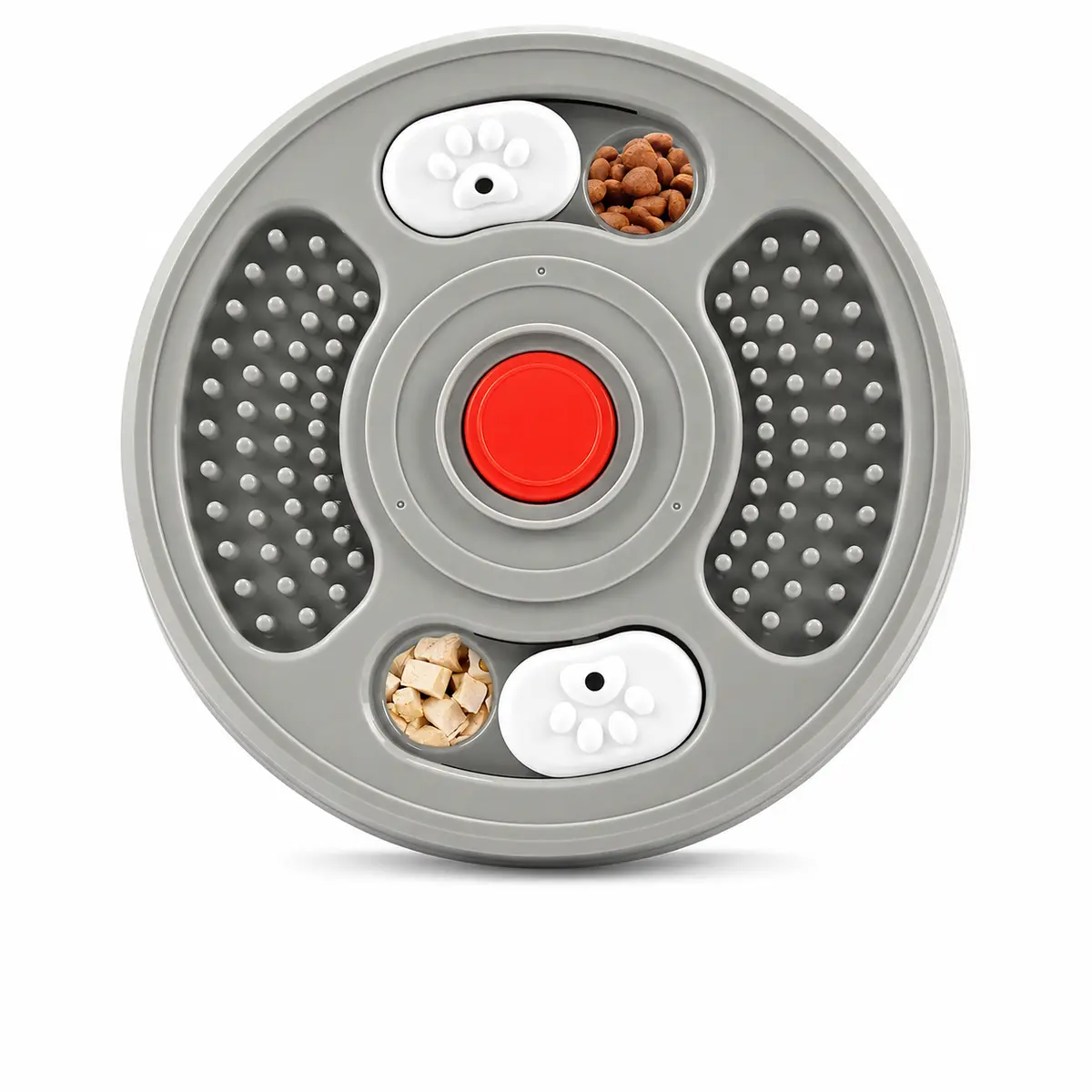
For dogs that gulp anything new, a slow feeder bowl or a lick mat keeps portions small and eating slow.
How much squash by dog weight
Keep squash and other treats under about 10 percent of your dog's daily calories. For a dog under 20 lb, a teaspoon or two of mashed squash is plenty. For a dog of 20 to 50 lb, one to two tablespoons works well as an occasional extra.
For a dog over 50 lb, up to about a quarter cup is a sensible top end. Because squash is fibrous, start with half these amounts the first time and build up slowly. Too much at once can cause loose stools or gas, so a few times a week is a good rhythm.
Puppies and dogs that need extra care
Puppies can try a little soft, cooked, mashed squash once they are on solid food. It is easy to chew and gentle, but keep the amount small, since a sudden fiber load can loosen their stools. A complete puppy food should still make up nearly all of what they eat.
Dogs with diabetes should check with their vet first, since winter squash is starchier and sweeter than summer squash. Dogs with kidney disease may need to watch potassium, and dogs on prescription diets should get their vet's approval before adding any extras.
Signs it disagreed with them, and what to give instead
Too much squash usually shows as loose stool, gas or a single vomit within a day, and settles on its own. Call your vet the same day for repeated vomiting, a painful belly, straining or not eating, or if your dog swallowed a large piece of rind or a pile of seeds.
If you want other plain vegetables, green beans, carrots and cucumber are easy to prepare and low in calories. Sweet potato, cooked and plain, is another soft, sweet option many dogs enjoy in small amounts.
This page is general information, not veterinary advice, and it cannot replace an examination by the vet who knows your pet.
Common questions
Can dogs eat butternut squash?
Yes. Plain cooked butternut squash, peeled and seeded, is a safe and popular choice. Mash it or cut it into small cubes and keep the portion small. Avoid butternut soup, which usually contains onion and garlic.
Can dogs eat squash skin?
It is best to remove it. Winter squash skin is tough and fibrous and can be hard to chew and digest. The thin skin on zucchini and yellow squash is softer and fine in small amounts if washed.
Can dogs eat raw squash?
Raw zucchini and yellow squash are fine in small, chopped pieces. Raw winter squash such as butternut or acorn is very hard and difficult to digest, so cook it until soft before sharing.
Can dogs eat squash seeds?
It is better not to. Raw seeds are slippery and fibrous, and a lot of them can upset the stomach. Scoop seeds out before cooking and keep them away from your dog.
Can dogs eat spaghetti squash?
Yes, plain cooked spaghetti squash is fine in small amounts. Serve the strands without butter, cheese, garlic or sauce, and remove the skin and seeds first.
Sources we checked
This guide is general information, not veterinary advice. If your pet is unwell or injured, contact your veterinarian.