Food safety
Can Dogs Eat Salt? Too Much Can Poison Them — What to Know
No, you should not give dogs salt or salty food, because too much salt can poison them. Dogs need a little sodium, but a complete dog food already contains it. The American Kennel Club warns that too much salt can lead to sodium ion poisoning, which can be fatal, and the ASPCA lists vomiting, diarrhea, tremors and seizures among the signs. If your dog ate a lot of salt or homemade play dough, call your vet or ASPCA Animal Poison Control at (888) 426-4435 now; a fee may apply.
By Matt GarnettUpdated November 13, 20264 min read2 sources
Why too much salt is dangerous for dogs
Sodium is an essential mineral, and the amount a dog needs is built into complete commercial dog food. When a dog takes in much more than that, the balance of sodium and water in its body is thrown off. The ASPCA explains that large amounts of salt can cause excessive thirst and urination and abnormal blood electrolytes.
At higher levels, the ASPCA lists vomiting, diarrhea, tremors, seizures and death as signs of salt toxicity, and the AKC calls this sodium ion poisoning. It can develop quickly, and small dogs are at greater risk because it takes less salt to tip their balance.
Common sources of too much salt
Most salt incidents do not come from a salt shaker. Homemade play dough and salt dough ornaments are very high in salt and taste appealing to dogs. Rock salt and ice melt on winter sidewalks, seawater, and bath salts are other sources, along with a dropped canister of table salt.
Salty human foods add up too. The AKC's cookout guidance flags chips, pretzels and popcorn, and notes that even half a hot dog can put a dog well over its daily sodium limit. Ham, bacon, jerky, deli meats, soy sauce, pickles and cured fish are all heavily salted.
What to do if your dog ate a lot of salt
Move your dog away from the source, note what was eaten and roughly how much, and keep the packaging. Offer fresh water, but do not force your dog to drink. Do not try to make your dog vomit, and never use salt water to induce vomiting, which can itself cause salt poisoning.
Call your vet, ASPCA Animal Poison Control at (888) 426-4435 or Pet Poison Helpline at (855) 764-7661 straight away for play dough, salt dough, rock salt, seawater, a large spill of table salt, or a whole bag of salty snacks, especially in a small dog. A fee may apply. Treatment works best when started early.
Signs of salt poisoning and when to call a vet
Early signs include intense thirst, frequent urination, vomiting and diarrhea, often within a few hours. As it progresses, dogs may become lethargic, unsteady or confused, with muscle tremors, a swollen belly from fluid, a fast heart rate or seizures.
Go to an emergency vet immediately for tremors, wobbling, collapse, confusion or seizures. Call your vet the same day for repeated vomiting or diarrhea after salty food, or if a small dog ate a large amount of salty snacks.
How much salt is too much by weight
There is no amount of added salt your dog needs, so do not season their food or share salty snacks. The risk rises steeply with the amount eaten relative to body size: a few salted chips are unlikely to harm a dog over 50 lb, but the same handful matters more for a dog under 20 lb.
Dogs of 20 to 50 lb fall in between. Dogs with heart disease, kidney disease or high blood pressure are on carefully controlled diets, and even moderate amounts of salty food can work against their treatment. Ask your vet which treats fit.
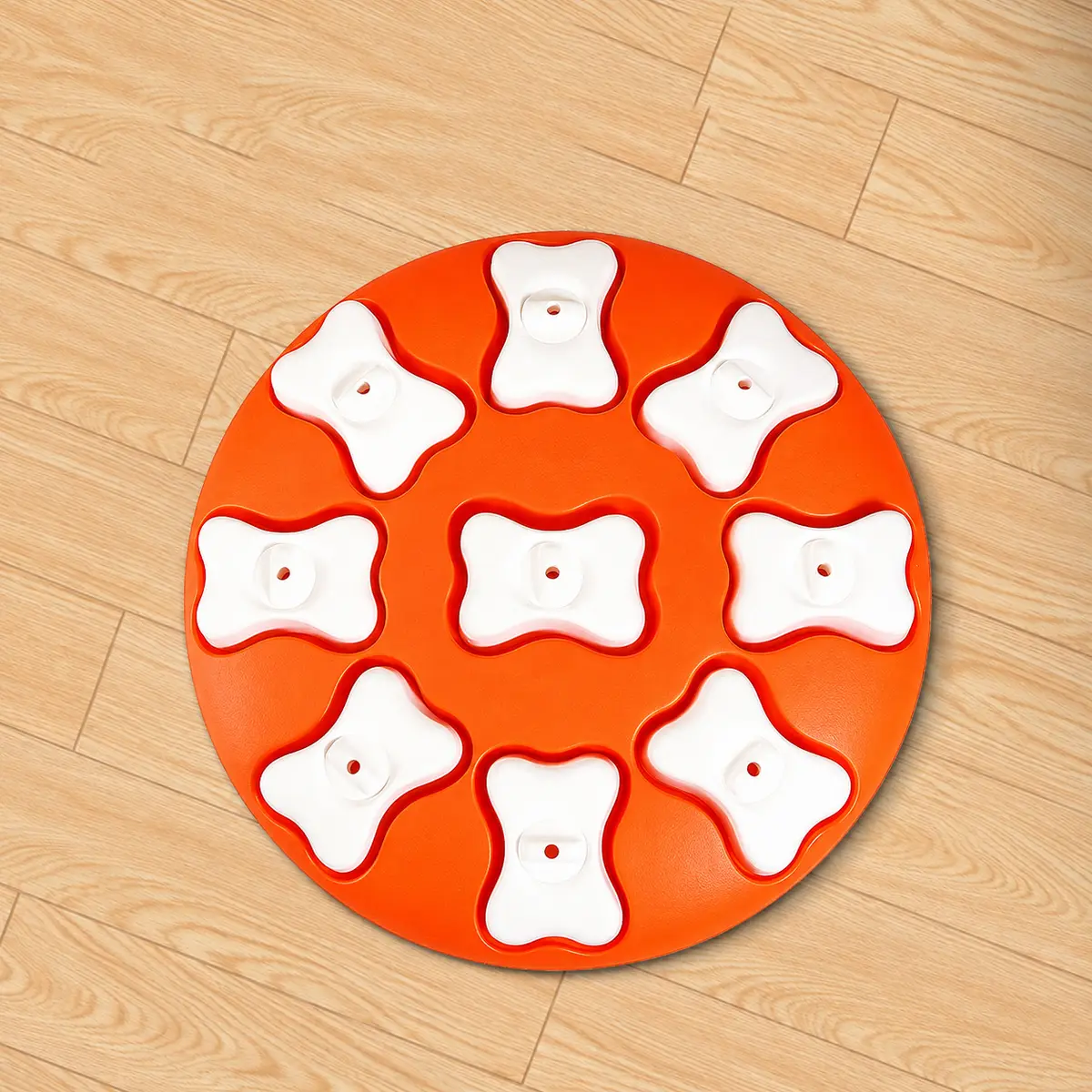
Spreading a few safe pieces across a snuffle mat or packing them into a puzzle toy turns a small treat into a few minutes of sniffing work.
Puppies and salt
Puppies are small and curious, and they are drawn to play dough, salt dough crafts and snack bags. Their small bodies mean a given amount of salt causes more harm, so homemade dough should be kept well out of reach and craft time supervised.
If a puppy ate play dough, salt dough or a lot of salty food, call your vet or poison control straight away, even if it seems fine. Keep fresh water available at all times.
Low-salt treats and winter safety
Choose treats made for dogs, or plain foods such as cooked chicken breast, carrot sticks, green beans or air-popped, unsalted popcorn. When you cook for your dog, set its portion aside before adding salt or seasoning.
In winter, wipe your dog's paws after walks on salted sidewalks so it does not lick off ice melt, and use pet-safe ice melt at home. At the beach, bring fresh water so your dog is not tempted to drink seawater.
This page is general information, not veterinary advice, and it cannot replace an examination by the vet who knows your pet.
Common questions
Do dogs need salt in their diet?
Dogs need some sodium, but complete commercial dog food already supplies it. There is no need to add salt to their food or give salty treats, and too much can be harmful.
Can dogs eat salted chips or pretzels?
A few are unlikely to harm a large healthy dog, but salty snacks are not a good treat. A whole bag, especially for a small dog, can cause salt poisoning. Call your vet if your dog ate a lot.
Is play dough poisonous to dogs?
Homemade play dough and salt dough ornaments are very high in salt and can cause salt poisoning. Call your vet or ASPCA Animal Poison Control at (888) 426-4435 straight away if your dog ate some. A fee may apply.
Is ice melt dangerous for dogs?
Rock salt and many ice melts can irritate paws and cause vomiting or salt poisoning if eaten or licked in quantity. Wipe your dog's paws after winter walks and call your vet if it ate some.
Can dogs drink salt water?
Dogs should not drink seawater. A few mouthfuls may cause vomiting or diarrhea, and larger amounts can cause salt poisoning. Bring fresh water to the beach and call your vet if your dog drank a lot.
Sources we checked
This guide is general information, not veterinary advice. If your pet is unwell or injured, contact your veterinarian.