Food safety
Can Dogs Eat Salmon? Yes, Cooked — Never Raw
Yes, dogs can eat salmon, as long as it is plain, fully cooked and boneless. Cooked salmon is a good source of protein and omega-3 fats, and most dogs find it irresistible. Raw or undercooked salmon is a different story: in the Pacific Northwest it can carry a parasite that causes salmon poisoning disease, which is often fatal without treatment. Smoked salmon and lox are too salty. Here is how to serve it safely.
By Matt GarnettUpdated November 13, 20264 min read3 sources
Why cooked salmon is fine for dogs
Plain cooked salmon is a nutritious food for dogs. The AKC says dogs can eat cooked salmon in moderation as part of a complete and balanced diet, and notes that salmon is a shorter-lived fish, so it carries less of the mercury that builds up in tuna and swordfish.
Cooking matters because it kills the parasites and bacteria raw fish can carry. Keep it plain: baked, poached, steamed or grilled with no butter, oil, salt, garlic, onion, lemon pepper or marinade. Fish cooked in a lot of oil can upset a dog's stomach.
The danger of raw salmon: salmon poisoning disease
Raw or undercooked salmon, trout and steelhead from the Pacific Northwest can carry a fluke infected with the bacterium Neorickettsia helminthoeca. VCA Animal Hospitals explains that this causes salmon poisoning disease in dogs, seen mostly in Washington, Oregon and northern California, and that most untreated dogs die within two weeks. Cats do not appear to be affected.
Signs usually appear within a week of eating raw fish and include loss of appetite, vomiting, diarrhea that may be bloody, fever, weakness and swollen lymph nodes. If your dog ate raw salmon or fish scraps, call your vet right away, even if your dog seems fine. The disease responds well to treatment when it is caught early.
Bones, skin, smoked salmon and canned salmon
Salmon bones are small, sharp and brittle. They can catch in the throat or, rarely, puncture the gut, so use boneless fillets and run your fingers over the flesh to find pin bones before serving. Plain cooked skin is fine in small pieces, but it is fatty, so keep it occasional.
Smoked salmon and lox are cured with a lot of salt and are not cooked, so skip them. Canned salmon is cooked and can be shared if it is packed in water with no added salt; the soft canned bones are generally edible, but mash them in well.
How much salmon by dog weight
Treat salmon as an occasional topper rather than a daily meal; the AKC suggests no more than about once a week. A dog under 20 lb can have a tablespoon or two of flaked cooked salmon, a dog of 20 to 50 lb two to three tablespoons, and a dog over 50 lb up to a quarter cup.
Reduce your dog's usual food slightly on salmon days to keep total calories steady. If you are thinking of making salmon a regular part of your dog's diet, or your dog is pregnant, nursing or has a health condition, ask your vet about the right amount.
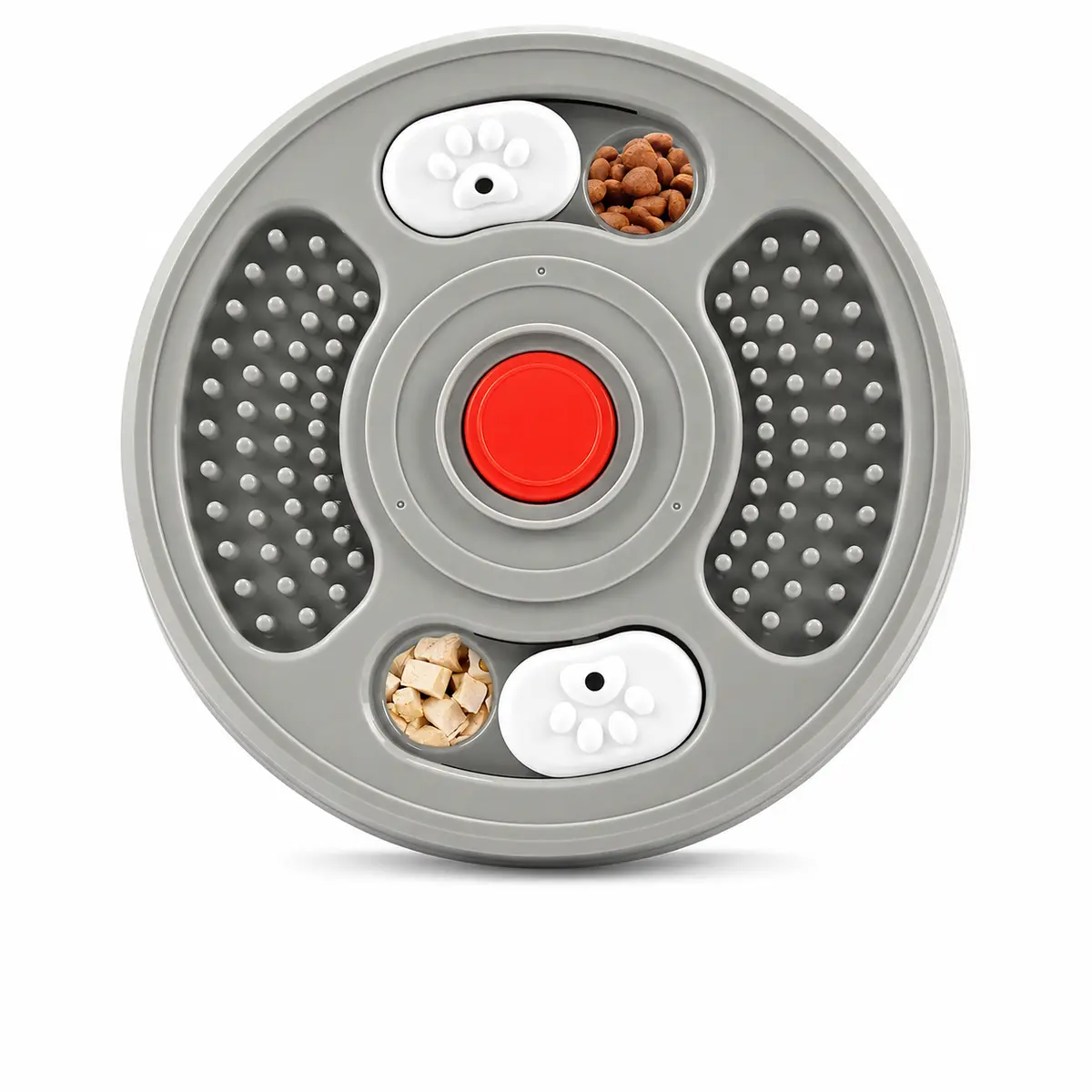
For dogs that gulp anything new, a slow feeder bowl or a lick mat keeps portions small and eating slow.
Puppies and salmon
Puppies can have a small amount of plain cooked, boneless salmon once they are eating solid food. Start with a teaspoon of flakes mixed into their meal and check that the stool stays normal the next day.
Be extra careful with bones, since puppies gulp food. Keep fishing gear, bait buckets and fish scraps out of reach on camping and fishing trips, and do not let puppies or dogs eat dead fish on riverbanks in salmon country.
Signs salmon disagreed with your dog
A dog not used to fish, or one that ate a rich, oily portion, may have vomiting or loose stool within a few hours, which usually settles within a day. Itchy skin or ear trouble after repeated fish meals can occasionally point to a food sensitivity worth raising with your vet.
Call your vet the same day for repeated vomiting, bloody diarrhea, fever, refusal to eat, or gagging and pawing at the mouth after eating fish with bones. Any of the signs of salmon poisoning disease within a week of eating raw fish means get seen today.
This page is general information, not veterinary advice, and it cannot replace an examination by the vet who knows your pet.
Common questions
Can dogs eat raw salmon?
No. Raw salmon can carry a parasite that causes salmon poisoning disease, which is often fatal without treatment, and it can also carry bacteria. Always cook salmon thoroughly, and call your vet if your dog ate raw salmon or fish scraps.
Can dogs eat salmon skin?
Plain, fully cooked salmon skin is safe in small pieces, and many dogs love it. It is high in fat, so keep it occasional, and avoid skin that was seasoned, oiled heavily or comes from smoked salmon.
Can dogs eat smoked salmon?
It is best not to. Smoked salmon and lox are high in salt and are not cooked to a temperature that reliably kills parasites. Plain baked or poached salmon is the safer way to share it.
Can dogs eat canned salmon?
Yes, if it is packed in water with no added salt. Canned salmon is already cooked, and the soft canned bones are generally safe when mashed in. Avoid canned salmon in oil, brine or sauce.
Is salmon good for dogs every day?
Daily salmon is not necessary and can unbalance a dog's diet unless your vet has planned it. Once a week as a topper is a sensible pattern, alongside a complete dog food.
Sources we checked
This guide is general information, not veterinary advice. If your pet is unwell or injured, contact your veterinarian.