Food safety
Can Dogs Eat Rib Bones? No — Cooked Ribs Can Splinter
No, dogs should not eat rib bones, whether pork ribs or beef short ribs. Cooked rib bones splinter into sharp shards that can choke a dog, cut the mouth or throat, or tear and block the intestines, and the American Kennel Club advises never giving a dog cooked bones of any kind. Barbecue sauce and the fat on ribs bring their own risks, including pancreatitis. If your dog just grabbed a rib from the plate or the grill, here is what to do and which signs need a vet.
By Matt GarnettUpdated November 13, 20264 min read3 sources
Why rib bones are dangerous for dogs
Rib bones are thin and curved, and slow cooking, smoking and grilling make them brittle. The AKC explains that cooked bones splinter into shards that can damage a dog's mouth, throat or intestines, and that rib fragments can lodge in the lower colon near the rectum, causing painful straining that looks like constipation.
VCA Animal Hospitals adds a longer list: broken teeth, bones wedged across the roof of the mouth or around the lower jaw, fragments stuck in the esophagus, punctures of the stomach or intestine that can lead to peritonitis, and complete blockages that need surgery.
Fat, sauce and rub
The AKC singles out pork rib bones as high in fat, which can cause pancreatitis, a painful inflammation that can be severe. Leftover ribs usually carry rendered fat, charred bits and barbecue sauce, which is often sweet and salty and may contain onion and garlic powder.
Dry rubs commonly include garlic, onion, salt and chili, and some sugar-free sauces are sweetened with xylitol, which the ASPCA warns can cause a dangerous drop in blood sugar. If your dog ate ribs with a sauce or rub that lists xylitol, garlic or onion, call your vet or ASPCA Animal Poison Control at (888) 426-4435; a fee may apply.
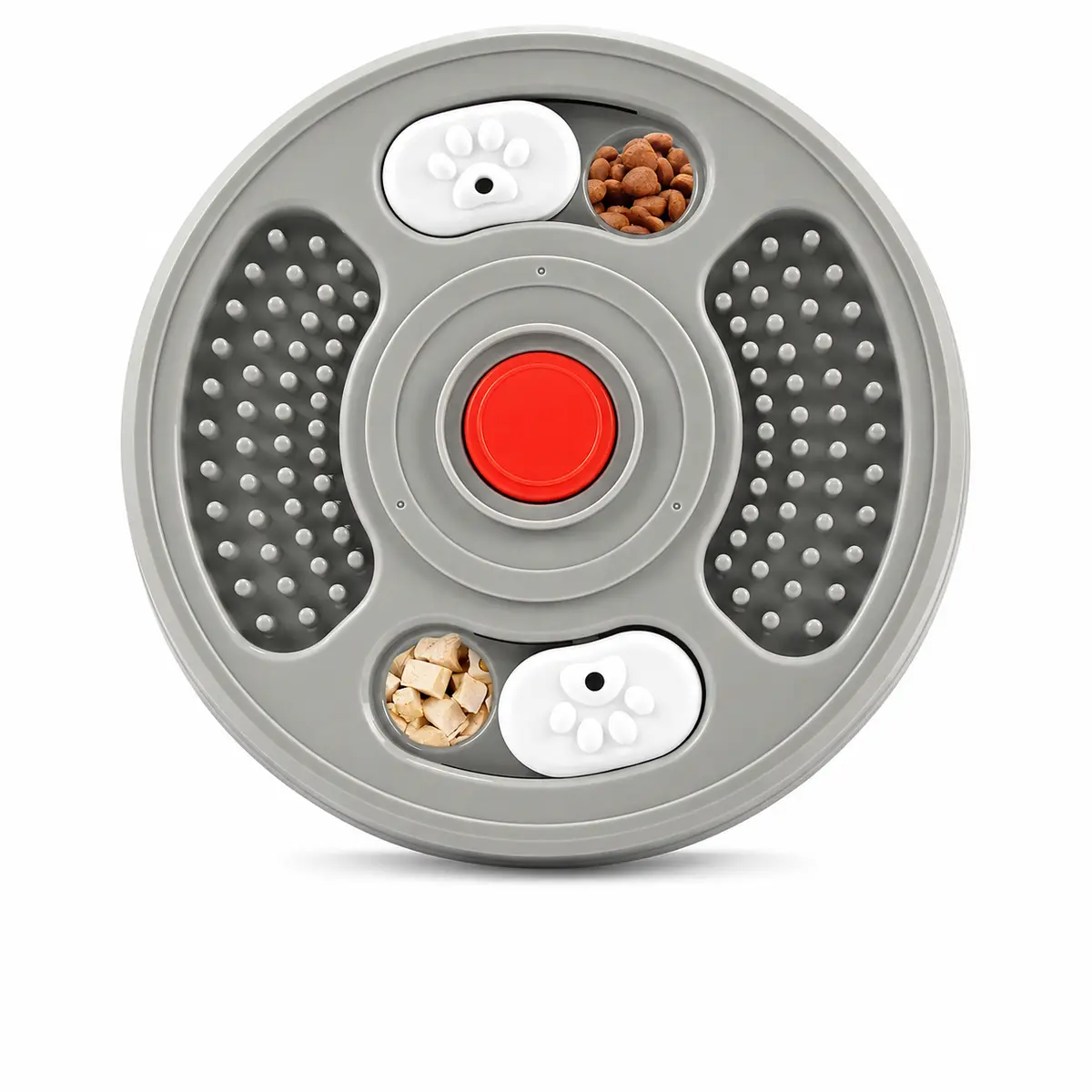
For dogs that gulp anything new, a slow feeder bowl or a lick mat keeps portions small and eating slow.
My dog ate a rib bone: what to do
Take away anything left and check your dog's mouth for wedged pieces, especially across the roof of the mouth. Do not induce vomiting at home. Call your vet, tell them how many bones and roughly how big, and your dog's weight, then follow their advice.
Your vet may ask you to watch at home, or want to examine your dog and take X-rays. If you are watching at home, feed normal meals, keep fresh water out, and check stool over the next three days for normal passage, blood or bone fragments.
Signs that mean a vet visit
Seek help immediately for choking, gagging, pawing at the face, heavy drooling, difficulty breathing, or retching without bringing anything up. These can mean a bone is stuck in the mouth, throat or esophagus.
Call your vet the same day for vomiting, refusal to eat, a hunched posture or painful belly, lethargy, straining to pass stool, or black, tarry or bloody stool. The AKC lists vomiting, diarrhea, lethargy and loss of appetite as signs of pancreatitis, which can appear a day or two after a fatty meal.
Small dogs, big dogs and rib bones
Dogs under 20 lb are at particular risk from small rib fragments, and a single bone can block their narrower intestine. Dogs of 20 to 50 lb can crack ribs into many shards with a few bites.
Dogs over 50 lb often swallow rib sections nearly whole, which is how bones end up lodged in the esophagus or stomach. There is no weight at which a cooked rib bone becomes safe, so the only safe amount is none.
Puppies and rib bones
A puppy's small throat and intestines and soft baby teeth make cooked rib bones even riskier than for adults. Puppies also have no sense of how big a piece they can swallow, and teething makes them want to chew anything they find.
Keep plates, grills and trash out of reach at cookouts, and give a teething puppy a chew toy sized for its age. If a puppy eats any rib bone, call your vet the same day for advice.
Cookout safety and better treats
Ribs are a Fourth of July and summer barbecue staple, and most rib incidents happen when bones are left on plates or tossed in an open trash bag. Collect bones as you go, bag them tightly, and put them in a lidded bin your dog cannot reach. Ask guests not to share.
For a safe treat, cut a little plain cooked chicken breast or lean beef into thumbnail-size pieces, with no sauce, rub or skin. For chewing, choose a dog chew sized so it cannot be swallowed whole.
This page is general information, not veterinary advice, and it cannot replace an examination by the vet who knows your pet.
Common questions
Can dogs eat pork ribs?
No. Cooked pork rib bones splinter, and the AKC notes that pork ribs are high in fat, which can cause pancreatitis. A small piece of plain, lean, boneless cooked pork is a safer occasional treat.
Can dogs eat beef rib bones?
Cooked beef rib bones carry the same splintering, choking and blockage risks as any cooked bone. The AKC advises against cooked bones of any kind, so keep beef ribs away from your dog.
Can dogs eat raw rib bones?
Raw bones splinter less than cooked ones, but VCA notes they can still break teeth, cause blockages and carry bacteria such as Salmonella and E. coli. Talk to your vet before giving any raw bone.
My dog ate a rib bone and seems fine. Should I worry?
Many dogs pass small fragments, but problems can appear up to two or three days later. Call your vet for advice, then watch for vomiting, belly pain, lethargy or straining, and check stool for blood.
Can dogs eat rib meat?
A small amount of plain rib meat with the bone, fat, sauce and rub removed is not dangerous, but most rib meat is fatty and seasoned. Plain lean chicken or beef is a better choice.
Sources we checked
This guide is general information, not veterinary advice. If your pet is unwell or injured, contact your veterinarian.