Food safety
Can Dogs Eat Raw Turkey? No, Cook It Thoroughly
No, do not offer dogs raw turkey because raw poultry can carry harmful bacteria affecting pets and people. The ASPCA specifically warns that raw or undercooked turkey may contain Salmonella. A dog’s willingness to eat it does not establish safety, and raw meat is different from a small plain, fully cooked portion. If your dog has eaten raw turkey, keep the product details and ask your veterinarian about the exposure and any symptoms.
By Matt GarnettUpdated November 13, 20264 min read3 sources
Raw poultry creates an avoidable bacterial exposure
The ASPCA warns about raw meat and eggs because of harmful bacteria, and its Thanksgiving guidance specifically identifies raw or undercooked turkey as a Salmonella concern. This is a food-safety issue, rather than a claim that turkey meat itself is inherently toxic. Preparation changes the question.
Do not offer uncooked offcuts while preparing dinner or let the dog lick a tray that held raw poultry. A bird intended for human cooking is not a ready-to-eat dog treat. Keep it away from the dog until you have prepared an appropriate plain portion, if the veterinarian agrees that an extra suits the diet.
Cooked, plain meat is a separate option
The AKC describes plain cooked turkey as an option for some dogs and emphasizes removing skin, bones, and added ingredients. If you choose to share, set aside the suitable meat separately instead of handing over part of a whole prepared bird. Follow proper cooking practice rather than assuming the outside appearance establishes that the inside is cooked.
A safe preparation does not mean every dog needs turkey added to its regular food. Ask the veterinarian about existing dietary restrictions and keep the dog’s complete diet as the foundation. A puppy’s growth nutrition also needs its own consideration; raw turkey is not a shortcut to providing an appropriate developmental diet.
Bones are not made harmless by being raw
The AKC notes that raw meaty turkey bones still carry bacterial exposure concerns and advises discussing such choices with the veterinarian. It also warns that cooked poultry bones are brittle and can cause choking or injury. This does not make either form an appropriate object to hand over casually while carving or cleaning up.
Remove bones before considering a cooked meat portion and keep the discarded parts inaccessible. If a bone was swallowed, contact your veterinarian and describe whether it was raw or cooked, when it happened, and how much may be missing. Breathing difficulty or severe distress requires immediate emergency care.
Keep raw preparation separate from bowls and counters
The ASPCA notes that bacterial exposure from raw food matters to people as well as pets. Handle the raw turkey and its utensils separately from cooked food, clean the preparation area, and wash your hands before handling the dog’s prepared portion or other ready-to-eat food.
Do not let the dog become part of kitchen cleanup by licking raw juices from a pan or counter edge. Put packaging and scraps into inaccessible trash promptly. If several people are cooking, agree on where the raw food and discarded materials go so nobody unknowingly leaves them where the dog can investigate.
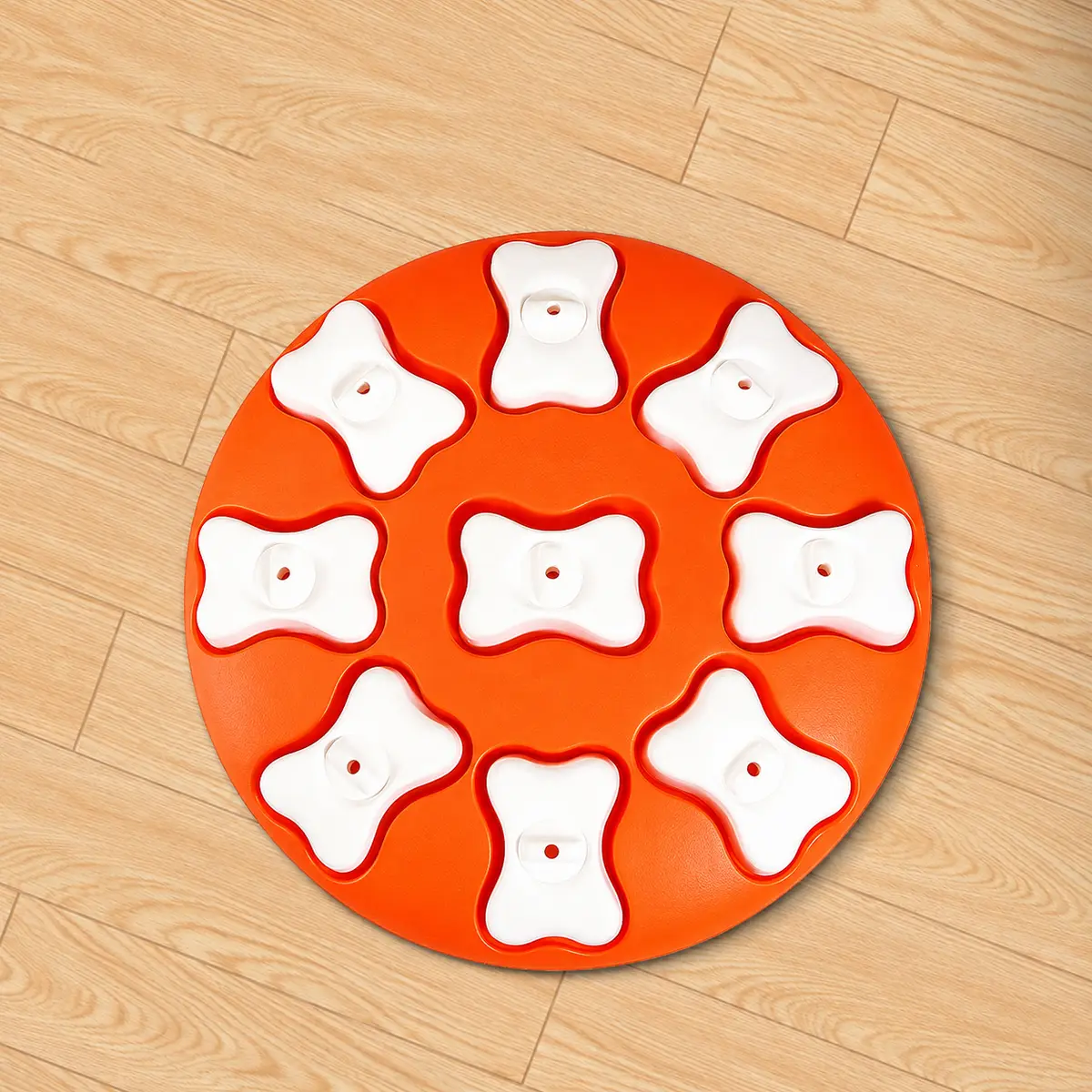
Spreading a few safe pieces across a snuffle mat or packing them into a puzzle toy turns a small treat into a few minutes of sniffing work.
Give the clinic a clear exposure history
If the dog has already eaten raw turkey, remove access and save the package or preparation details. Tell the veterinarian when it happened, the estimated amount, whether bones or packaging were involved, and any current symptoms. Explain whether the meat was plain, mixed with another food, or part of an unfinished recipe.
Contact the clinic about vomiting, diarrhea, reduced appetite, abdominal pain, or unusual tiredness. Persistent illness, inability to keep water down, marked weakness, collapse, or severe distress needs prompt assessment. Do not diagnose an infection from the history alone or give medication or a home remedy without veterinary direction.
Plan Thanksgiving cleanup as carefully as serving
During Thanksgiving, keep the dog away from raw poultry preparation and secure the trash before guests or cooks become distracted. Ask everyone not to offer scraps from the raw tray. If the dog may have a separate approved cooked treat, identify that portion clearly so it is not confused with uncooked ingredients or discarded bones.
This page is general information, not veterinary advice, and it cannot replace an examination by the vet who knows your pet.
Common questions
Is raw turkey inherently poisonous to dogs?
Turkey itself is not inherently toxic, but raw poultry can carry harmful bacteria. The ASPCA specifically warns about raw or undercooked turkey, so do not offer it as a dog treat.
Can I give my dog raw turkey bones while cooking?
Do not hand them over casually. The AKC notes bacterial risks from raw meaty bones and recommends veterinary discussion. Keep bones inaccessible and call the clinic if one has been swallowed.
Is plain cooked turkey different from raw turkey?
Yes. The AKC describes plain cooked meat as an option for some dogs when skin, bones, and additions are removed. Ask your veterinarian whether any extra fits the dog’s existing diet.
What if my dog has diarrhea after raw turkey?
Call your veterinarian and describe the product, timing, amount, and any bone or packaging exposure. Symptoms do not establish a diagnosis, and persistent illness or severe weakness requires prompt assessment.
Sources we checked
This guide is general information, not veterinary advice. If your pet is unwell or injured, contact your veterinarian.