Food safety
Can Dogs Eat Raw Potatoes? No — Cook Them First
No, dogs should not eat raw potatoes. Raw potato, and especially green potato, peel, sprouts and the plant, contains solanine, a natural toxin that can poison dogs, and hard raw chunks are a choking and blockage risk. If your dog ate raw or green potato and seems unwell, call your vet, the ASPCA Animal Poison Control Center at (888) 426-4435 or Pet Poison Helpline at (855) 764-7661; a fee may apply. Plain, fully cooked potato is a different food and is fine as a small treat.
By Matt GarnettUpdated November 13, 20265 min read3 sources
Why raw potatoes are unsafe for dogs
Potatoes belong to the nightshade family, the same group as tomatoes and eggplant. The AKC describes raw or green potatoes as unsafe and potentially toxic, and explains that green patches signal more solanine, a compound the plant makes to protect itself. Pet Poison Helpline likewise advises against feeding green potatoes or the potato plant.
Raw potato is also starchy in a form dogs digest poorly, so even a pale, healthy-looking piece can cause stomach upset. Cooking breaks that starch down and makes the potato soft, which is why plain boiled or baked potato is an acceptable treat while the same potato raw is not.
The riskiest parts: green skin, sprouts and the plant
Solanine is concentrated in the skin, in any green areas, and in the eyes and sprouts of potatoes that have been stored in the light. Vines, leaves and green garden potatoes are the worst of all, so a dog digging in a vegetable patch is more at risk than one that grabs a dropped slice of peeled potato.
Potato peelings in the trash are a common route, because dogs eat them in large quantities and the peel is where the toxin sits. Use a lidded trash can or compost bin, and keep a dog out of the garden when potatoes are being harvested or the plants are being pulled.
My dog ate a raw potato: what to do
First, work out what was eaten: how much, whether it was green or sprouting, and whether it was peel, a chunk or plant material. A bite of peeled white potato usually causes nothing more than a mild upset. Do not try to make your dog vomit unless a vet or poison line tells you to.
Call your vet or a poison line if your dog ate a lot of potato, any green potato, peelings or leaves, or if your dog is small. Severe poisoning is uncommon, but how serious it becomes depends on the dog's size and the amount and part eaten. A large whole chunk also deserves a call, because it may not pass.
How to serve potato safely, and how much
Peel the potato, cut away any green or sprouting spots, and boil or bake it until it is soft enough to mash, with no butter, milk, salt, garlic or onion. The AKC stresses that potato should be cooked soft so a dog does not choke on a half-cooked piece.
Treat it as a small extra. As a rough guide, for an occasional treat: under 20 lb, a tablespoon of mashed plain potato; 20 to 50 lb, two tablespoons; over 50 lb, about a quarter cup.
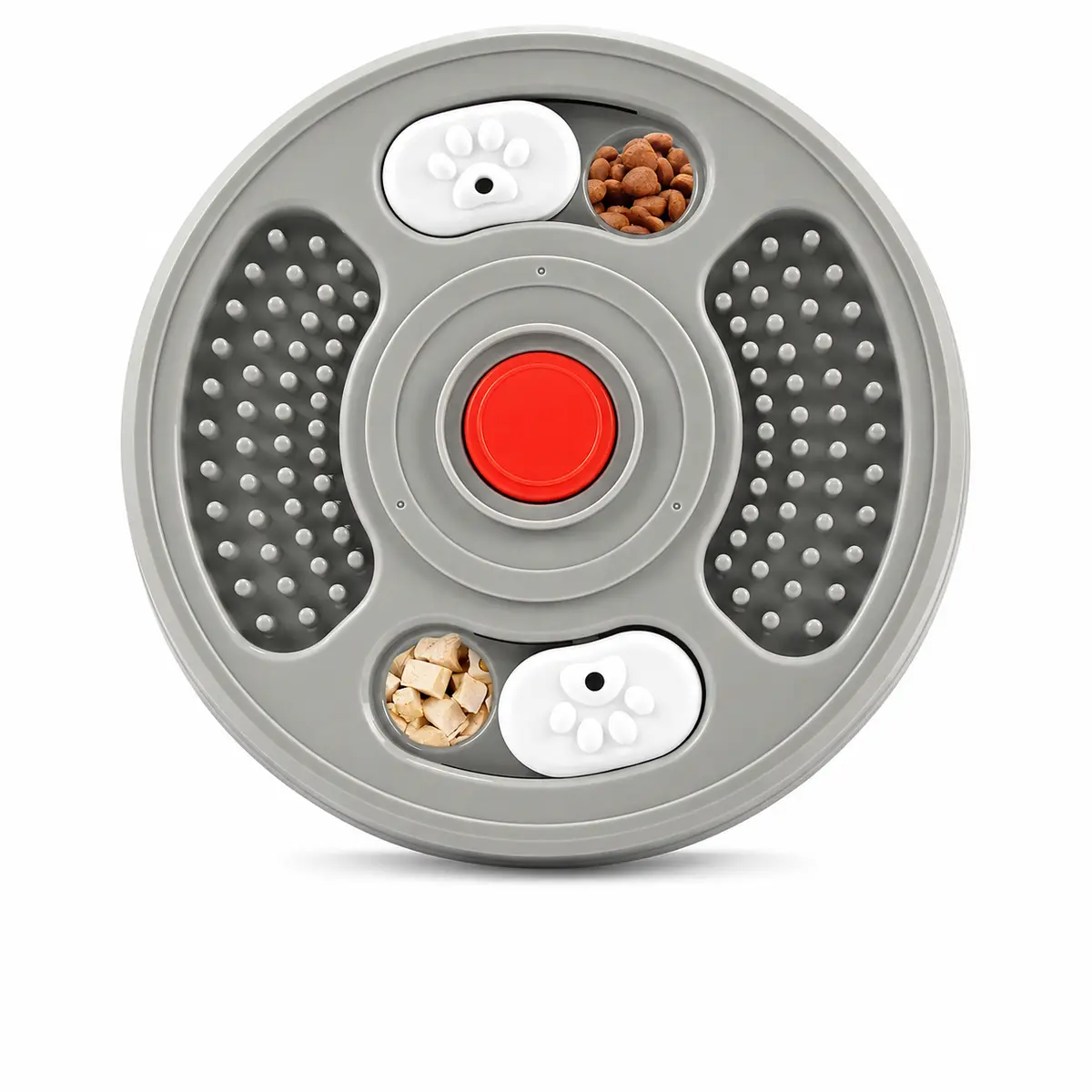
For dogs that gulp anything new, a slow feeder bowl or a lick mat keeps portions small and eating slow.
Puppies and raw potato
Puppies chew everything, and a cube of raw potato is just the right size to lodge in a small throat or gut. Their smaller bodies also mean the same amount of solanine has a bigger effect, so a puppy that eats peelings or a green potato should be discussed with a vet sooner than an adult dog would be.
There is no reason to give a puppy potato at all while it is growing on a complete puppy food. If you want to offer a taste later, use a teaspoon of plain, cooked, mashed potato and watch the stool the next day.
Signs of potato poisoning and when to call a vet
Signs usually start within a few hours. Pet Poison Helpline lists vomiting, diarrhea, drooling and loss of appetite as the milder signs, and muscle weakness, tremors, loss of coordination and changes in heart rate in more serious cases.
Get your dog seen today if vomiting is repeated, if your dog is weak, wobbly, trembling or unusually sleepy, or if it ate a large amount or plant material. Go at once for collapse or trouble breathing. Gagging, retching without producing anything or a swollen belly after a big chunk can mean a blockage and also need a vet promptly.
Better alternatives to raw potato
If your dog likes crunchy vegetables, raw carrot sticks, green beans and cucumber slices are safe to give raw, cut to a size your dog cannot swallow whole. The ASPCA lists carrots and green beans among the snacks you can share, with the reminder to cut them small.
For a softer, starchy treat, plain cooked sweet potato or pumpkin works well, or a little cooked white potato as described above. Keep treats to a small part of the day's food, and ask your vet before adding new foods if your dog has a medical condition.
This page is general information, not veterinary advice, and it cannot replace an examination by the vet who knows your pet.
Common questions
Can dogs eat raw potato peels?
No. The peel holds much of a potato's solanine, especially if it is green or the potato has sprouted. Keep peelings in a closed trash can and call your vet if your dog ate a large amount or seems unwell.
How much raw potato is toxic to a dog?
There is no safe amount to aim for, and no reliable figure for a home calculation. Size, the amount and the part eaten all matter, so if your dog ate more than a bite, call your vet or a poison line for advice.
Can dogs eat cooked potatoes?
Yes, plain cooked potato is fine as an occasional treat. Peel it, remove green spots, and boil or bake it soft without butter, salt, cheese, garlic or onion. Fries and chips are too salty and fatty to share.
Can dogs eat raw sweet potatoes?
Raw sweet potato is hard to digest and can choke or block the gut, so cook it first. Sweet potatoes are not nightshades, but they still need to be soft, plain and cut into small pieces before serving.
What if my dog ate a green potato?
Call your vet or an animal poison control line, especially if your dog is small or ate a lot. Green areas contain more solanine, and signs such as vomiting, drooling or weakness can start within a few hours.
Sources we checked
This guide is general information, not veterinary advice. If your pet is unwell or injured, contact your veterinarian.