Food safety
Can Dogs Eat Raw Meat? Not Recommended — Here's Why
Dogs can physically eat raw meat, but feeding it is not recommended. Raw meat commonly carries bacteria such as Salmonella, Listeria and E. coli, which can make dogs sick and can spread to the people they live with, even when the dog looks perfectly healthy. The FDA, the ASPCA and VCA Animal Hospitals all advise against raw diets. Here is why, what to do if your dog grabbed raw meat, and safer ways to share meat.
By Matt GarnettUpdated November 13, 20264 min read3 sources
Why raw meat is risky for dogs
The main concern is bacteria. In FDA testing of more than 1,000 pet food samples, raw pet foods were more likely than other types to be contaminated with disease-causing bacteria, with Salmonella and Listeria monocytogenes found in raw dog and cat foods and Listeria in no other food type tested. The ASPCA warns that raw meat and raw eggs can carry Salmonella and E. coli.
VCA Animal Hospitals concludes that the risks of feeding raw food outweigh the potential benefits. Freezing does not reliably kill these bacteria, and dogs can shed them in their saliva and stool without showing any sign of illness, which is how infections reach children, older adults and anyone with a weakened immune system in the home.
Nutritional balance and bones
A raw diet is not automatically a complete one. VCA notes that raw diets usually supply plenty of protein but can fall short on vitamins and minerals, many commercial raw foods carry no statement that they are complete and balanced, and homemade raw recipes are unlikely to be balanced unless a veterinary nutritionist formulated them.
Raw bones bring their own problems. They can break teeth and cause choking or intestinal blockages that may need surgery, and the ASPCA lists raw bones among the hazards of raw feeding. Puppies, whose growth depends on precise calcium and phosphorus levels, are especially vulnerable to an unbalanced raw diet.
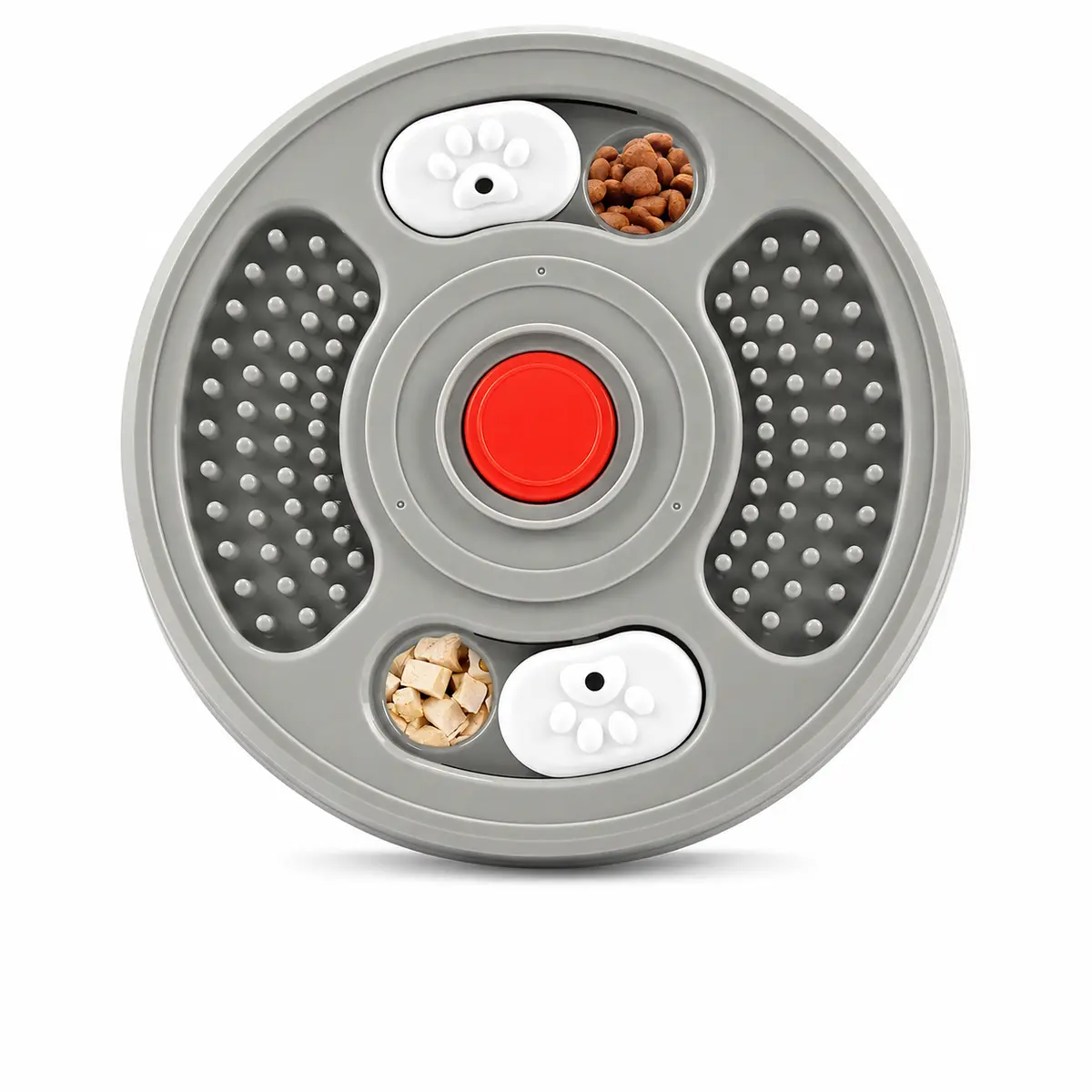
For dogs that gulp anything new, a slow feeder bowl or a lick mat keeps portions small and eating slow.
If your dog ate raw meat
A healthy adult dog that snatched a piece of raw steak or ground beef from the counter will often have no problems, or a mild upset stomach within a day. Offer water, keep meals plain, and wash your hands and any surfaces the meat touched. Keep the dog away from young children's faces until it has had a day or two to clear its system.
Call your vet the same day if your dog has repeated vomiting, diarrhea with blood, fever, lethargy or stops eating. Raw salmon, trout or steelhead from the Pacific Northwest can cause salmon poisoning disease, so tell your vet right away if raw fish was involved. Raw meat seasoned with onion or garlic, such as a marinated cut, is another reason to call.
If you choose to feed raw anyway
Tell your vet, so they can factor it into your dog's care and suggest safer options. VCA recommends choosing a commercial diet that is complete and balanced and tested for pathogens, and asking the maker whether it uses a kill step such as high-pressure processing.
Follow the FDA's handling advice: keep raw food frozen until use, thaw it in the refrigerator, wash hands for at least 20 seconds after handling it, clean and disinfect bowls and surfaces after every meal, refrigerate or discard leftovers promptly, and do not let your dog lick your face after eating.
Puppies and households at higher risk
Puppies have developing immune systems and exacting nutritional needs, so a raw diet carries more risk for them than for an adult dog. Ask your vet before feeding a puppy any raw food.
Homes with babies, young children, pregnant people, older adults or anyone with a weakened immune system face the greatest risk from bacteria a dog sheds. In those homes especially, cooked meat and a complete commercial dog food are the safer choice.
Common questions
Is raw meat good for dogs?
Raw meat is a source of protein, but the FDA, ASPCA and VCA all advise against raw diets because of bacteria such as Salmonella and Listeria and the risk of nutritional gaps. Cooked meat and complete dog foods are safer.
Can dogs eat raw ground beef?
Raw ground beef carries a higher risk of bacteria than a whole cut, because grinding spreads surface bacteria through the meat. If your dog ate some, watch for vomiting or diarrhea and call your vet if it is severe or bloody.
Can dogs eat raw chicken?
Raw chicken is commonly contaminated with Salmonella and Campylobacter, and raw chicken bones can still cause choking or blockages. It is not recommended. Plain, fully cooked, boneless chicken is a safer treat.
Can puppies eat raw meat?
It is not recommended. Puppies need precisely balanced nutrition for growth and are more vulnerable to infections. Ask your vet before feeding a puppy any raw food, and use a complete puppy diet.
Can dogs get sick from raw meat?
Yes. Dogs can develop vomiting, bloody diarrhea, fever and lethargy from bacteria in raw meat, and many carry and shed bacteria without signs. Call your vet if your dog becomes unwell after eating raw meat.
Sources we checked
This guide is general information, not veterinary advice. If your pet is unwell or injured, contact your veterinarian.