Food safety
Can Dogs Eat Raw Eggs? Cooked Is Safer, Here's Why
No, raw eggs are not a good idea for dogs. Eggs themselves are not toxic, but raw ones can carry Salmonella, which can make dogs sick and spread to the people who handle them, and raw egg white contains avidin, which blocks the absorption of biotin. The AKC says most veterinarians recommend cooking eggs fully. A plain scrambled or hard-boiled egg gives your dog the same protein without those risks.
By Matt GarnettUpdated November 13, 20264 min read3 sources
Why raw eggs are a risk
The main concern is bacteria. Raw eggs can carry Salmonella, and the ASPCA lists raw eggs alongside raw meat as a source of Salmonella and E. coli. Some dogs carry and shed these bacteria with no signs at all, which means they can contaminate floors, bowls and hands in a household with children or older adults.
The second concern is avidin, a protein in raw egg white that binds biotin, a B vitamin that keeps skin and coat healthy. Cooking breaks avidin down. The AKC notes that biotin deficiency from eggs is rare, but it is one more reason the cooked egg is the better choice.
Raw feeding and egg handling
Some owners feed raw diets that include eggs. If you do, talk to your vet about the trade-offs and follow strict food hygiene. Wash hands for at least 20 seconds after handling raw eggs, clean bowls and counters with hot soapy water, and keep raw egg away from food prepared for people.
Never give a dog eggs that are cracked, smell off or have been left at room temperature. Pasteurized eggs reduce the bacteria risk but do not change the avidin issue, so cooking remains the simplest answer.
How to serve eggs safely
Cook eggs fully with nothing added: no butter, oil, salt, pepper, cheese, onion or chives. Scrambled in a nonstick pan with a splash of water, or hard-boiled and chopped, both work well. Let the egg cool, then cut it into pieces that suit your dog's size.
Skip deviled eggs, egg salad, omelets with fillings and breakfast sandwiches. These bring mayonnaise, mustard, onion, garlic, bacon and salt. Eggnog is a firm no, since it often contains alcohol, nutmeg and raw egg.
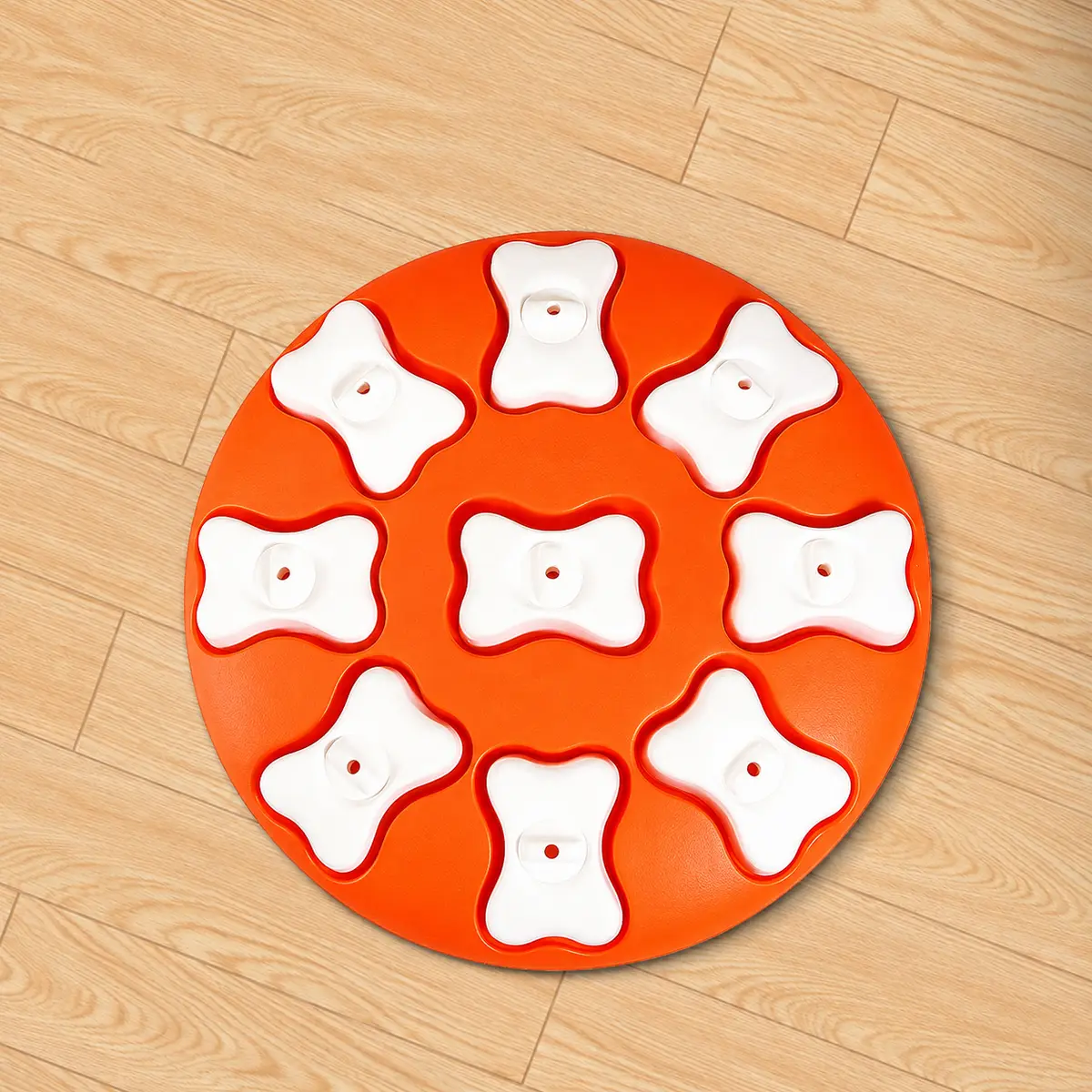
Spreading a few safe pieces across a snuffle mat or packing them into a puzzle toy turns a small treat into a few minutes of sniffing work.
How much egg by dog size
Under 20 lb: about a quarter of a cooked egg, a couple of times a week. Between 20 and 50 lb: up to half an egg. Over 50 lb: up to one whole egg. A large egg carries about 70 calories, so count it within the 10 percent of daily calories that treats should make up.
Dogs that are overweight, prone to pancreas trouble or on a prescription diet should only have eggs if their vet agrees. Eggs are a good occasional protein boost, not something to add to every meal.
Eggshells and puppies
Eggshells contain calcium, but sharp edges can scratch the mouth and throat, and too much calcium is harmful to growing puppies. The AKC advises using eggshells only with veterinary guidance. Do not grind them up as a supplement on your own.
Puppies can have small pieces of plain, fully cooked egg once they are eating solid food. Start with a teaspoon of scrambled egg and check the stool the next day. Never give puppies raw egg, because young dogs are more vulnerable to bacterial infections.
Signs of trouble and when to call the vet
Salmonella infection in dogs commonly shows up one to three days after exposure as vomiting, diarrhea that may contain blood, fever, loss of appetite and lethargy. Too much cooked egg tends to cause gas or loose stool within a day.
Call your vet the same day if your dog has bloody diarrhea, a fever, repeated vomiting, or is very quiet after eating raw egg, and mention the raw egg when you call. Puppies, seniors and dogs with weak immune systems should be seen sooner, because they dehydrate fast.
This page is general information, not veterinary advice, and it cannot replace an examination by the vet who knows your pet.
Common questions
Is a raw egg good for a dog's coat?
Raw egg is often suggested for a shiny coat, but raw egg white blocks biotin, which the coat needs, and raw eggs can carry Salmonella. Cooked egg gives the same nutrients more safely.
Can dogs eat scrambled eggs?
Yes. Plain scrambled eggs cooked without butter, oil, milk, salt or seasoning are a safe occasional treat. Cool them before serving and keep portions small for small dogs.
Can dogs eat hard-boiled eggs?
Yes. A plain hard-boiled egg, peeled and chopped, is a convenient treat. Remove the shell and offer a portion that fits your dog's size, since a whole egg is a lot for a small dog.
What if my dog ate a raw egg?
Most healthy dogs are fine after one raw egg. Watch for vomiting, diarrhea or fever over the next few days, wash any surfaces the egg touched, and call your vet if signs appear.
Can dogs eat eggs every day?
Daily eggs are not recommended for most dogs unless a vet suggests it. Eggs are calorie-dense, and adding one every day can push a dog over its calorie needs and lead to weight gain.
Sources we checked
This guide is general information, not veterinary advice. If your pet is unwell or injured, contact your veterinarian.