Food safety
Can Dogs Eat Rabbit? Plain Cooked Meat Precautions
Yes, plain, cooked rabbit meat can fit some dogs’ diets when your veterinarian agrees it is appropriate. A VCA dermatology handout includes cooked, unseasoned rabbit as a possible treat, with the veterinary team deciding suitability. This is not a recommendation to feed a whole rabbit or replace complete dog food with meat. Remove bones, avoid raw preparations, and follow existing dietary restrictions rather than adding a new protein on your own.
By Matt GarnettUpdated November 13, 20264 min read4 sources
What the veterinary example actually supports
VCA’s dermatology service lists pure rabbit meat cooked without oil or flavoring among possible treats for particular diet-trial patients. It says the veterinary team should decide which options are appropriate. That supports a carefully selected plain meat option, rather than a blanket recommendation for every dog or every rabbit product.
Keep that distinction when choosing a snack. A rabbit-based complete food, a seasoned dinner, a raw carcass, and a piece of cooked meat are different preparations. Ask about the actual item you want to offer and the reason you want to offer it, particularly if a skin or digestive problem prompted the change.
Cook the meat and handle it hygienically
The ASPCA warns that raw meat can carry harmful bacteria, including organisms that affect pets and people. Do not assume rabbit is exempt because it is a less familiar protein. Choose fully cooked meat rather than using raw offcuts as a reward while preparing a meal.
Keep raw meat and its utensils separate from the cooked portion and the dog’s bowl. Clean the preparation area and your hands before handling other food. These kitchen steps address exposure to raw ingredients; they do not establish that a meat-only diet supplies the nutrients the dog needs over time.
Separate the meat from bones before serving
The AKC warns that cooked bones can splinter, cause choking, or injure the digestive tract. Remove every bone before considering a plain meat treat. Do not give a cooked rabbit joint and expect the dog to leave the bone behind, even if the dog has eaten a bone without obvious trouble before.
Check the separated meat for fragments rather than relying only on the pieces you can see on the plate. If a bone was swallowed, call the veterinarian and describe whether it was cooked, how much may be missing, and when it happened. Breathing difficulty or severe distress requires immediate emergency attention.
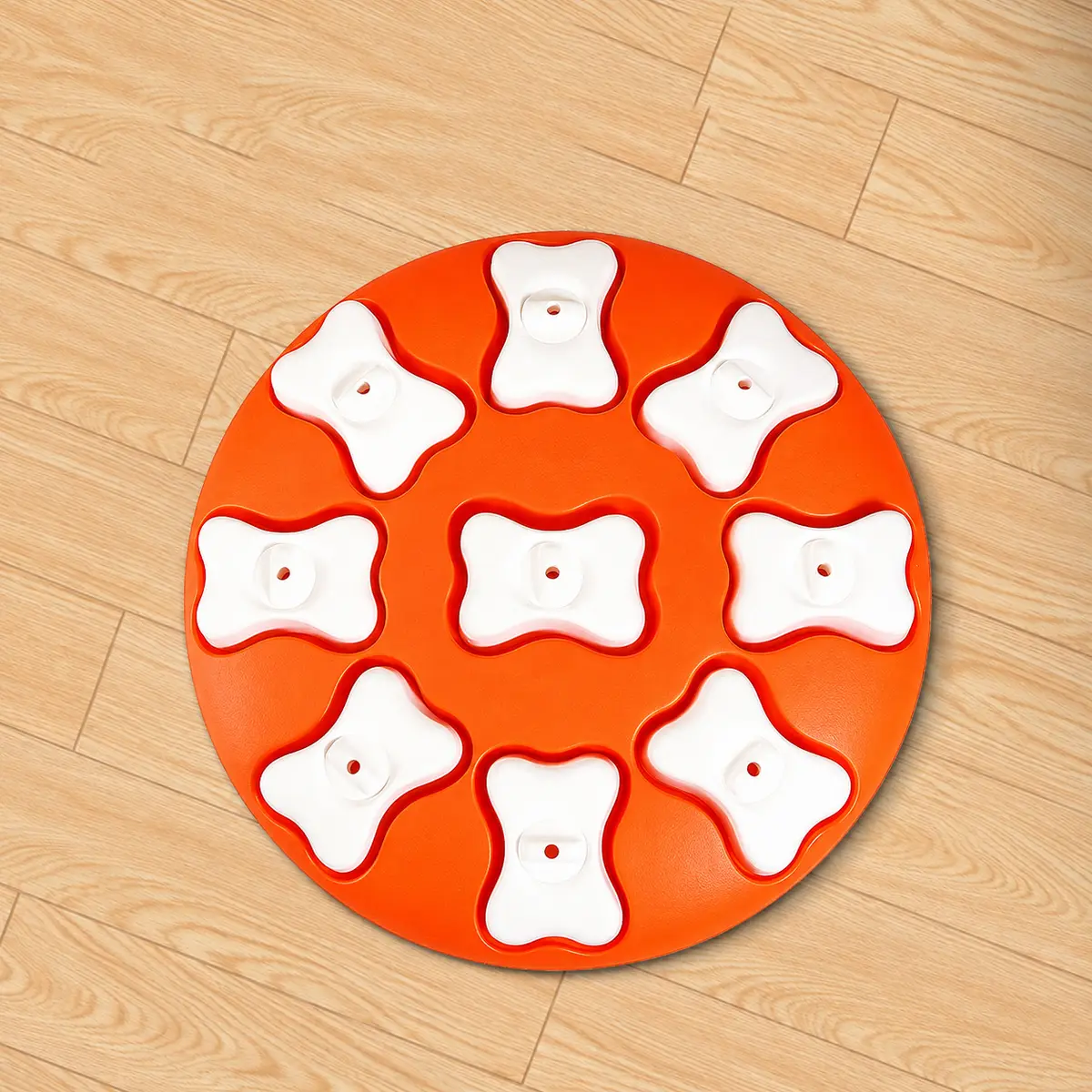
Spreading a few safe pieces across a snuffle mat or packing them into a puzzle toy turns a small treat into a few minutes of sniffing work.
A novel protein is not automatically an allergy solution
VCA explains that food allergy assessment requires a controlled approach and that a dog can react to foods it has eaten. A protein is not made suitable for a particular dog simply by being marketed as unusual. The dog’s own history matters when the veterinarian chooses an appropriate diet trial.
Do not add rabbit during an existing trial unless the veterinary team approves it. The VCA dermatology handout emphasizes avoiding other foods and checking treat ingredients. An unplanned extra can make the trial harder to interpret, even when that extra is acceptable for a different patient following a different plan.
Keep complete food at the center of the diet
Ask your veterinarian to assess the nutritional balance of the whole diet. Plain rabbit meat is not the same as a complete diet formulated for a dog’s life stage. Treat it as an optional extra that needs to fit the existing food routine, rather than replacing meals because meat sounds natural.
This distinction matters particularly for puppies, whose growth creates specific nutritional demands. Ask the veterinarian before adapting an adult dog’s treat to a growing puppy. Likewise, dogs with a prescribed diet or an established food sensitivity need individual advice before a new protein is introduced.
Act on symptoms instead of trying another protein
Stop offering rabbit and call your veterinarian if vomiting, diarrhea, itching, or another change develops after eating it. Provide the ingredients, preparation, timing, and other recent foods. Symptoms alone cannot establish an allergy or identify the food responsible, and repeated unsupervised at-home substitutions can make the history more confusing.
This page is general information, not veterinary advice, and it cannot replace an examination by the vet who knows your pet.
Common questions
Can dogs eat raw rabbit?
Do not assume raw rabbit is free from the bacterial concerns associated with raw meat. The ASPCA warns that raw meat can affect pets and people; use a cooked preparation if your veterinarian permits rabbit.
Can my dog chew a cooked rabbit bone?
No. The AKC warns that cooked bones can splinter and cause choking or digestive injury. Remove bones before offering meat, and call the veterinarian if a bone has already been swallowed.
Does rabbit automatically suit a dog with food allergies?
No. Suitability depends on the dog’s history and the veterinarian’s assessment. Do not add rabbit to a controlled diet trial without approval, because extra ingredients can interfere with interpreting the result.
Can rabbit meat replace complete dog food?
No. A piece of meat does not establish a complete balance of nutrients. Keep an appropriate complete diet as the foundation and ask your veterinarian how any optional extra fits your dog.
Sources we checked
This guide is general information, not veterinary advice. If your pet is unwell or injured, contact your veterinarian.