Food safety
Can Dogs Eat Potato Skins? Only Plain, Cooked Ones
Plain, cooked potato skin is fine for most dogs in small amounts, but raw or green skins and restaurant-style loaded skins can make a dog sick. Green patches and sprouts carry more solanine, a natural toxin in the nightshade family, and loaded skins are often topped with chives or green onions, which are toxic to dogs, plus bacon, cheese and butter. If you share, scrub the potato, cook it soft with nothing added, cut away anything green, and offer a strip or two.
By Matt GarnettUpdated November 13, 20265 min read2 sources
Why the skin needs more care than the potato
Potatoes belong to the nightshade family and produce solanine, which protects the plant. The American Kennel Club says green spots on a potato signal higher solanine, and lists green and raw potatoes as unsafe for dogs. The skin is where you see that greening, along with any sprouts or eyes, so it is the part to check most closely.
Cooked, the AKC's vet says, potato skins are okay too, but not if they are green. Raw skin is also tough and fibrous, which makes it hard for a dog to digest and easy to swallow in a strip that is too long. Cooking it until soft solves the second problem; only trimming solves the first.
Loaded potato skins are the real problem
The potato skins most dogs get offered are the appetizer kind: fried or baked shells filled with cheddar, bacon, sour cream and sliced chives or green onions. Chives and green onions belong to the onion family, which the ASPCA lists as dangerous to pets. If your dog ate skins topped with them, call your vet, the ASPCA Animal Poison Control Center at (888) 426-4435 or Pet Poison Helpline at (855) 764-7661. A fee may apply.
Even without the onion family, the toppings are a lot of fat and salt for a dog. The AKC notes that butter can trigger pancreatitis, and the ASPCA warns that too much salt causes thirst and, in larger amounts, vomiting and tremors. Fried skins left over from a game-day plate belong in the trash, not the dog bowl.
How to prepare potato skin for a dog
Scrub the potato and cut away any green areas, sprouts and eyes, taking a little of the flesh beneath them too. Bake or boil it plain, with no oil, butter, salt or seasoning, until the skin is soft enough to tear easily. The AKC says potato should be cooked enough to mash so a dog does not choke on a half-cooked piece.
Let it cool, then cut the skin into short strips or small squares. For a dog under 20 lb, pieces the size of a fingernail are right. Skin from a potato that was already green or bitter when you peeled it should not be served at all, cooked or not.
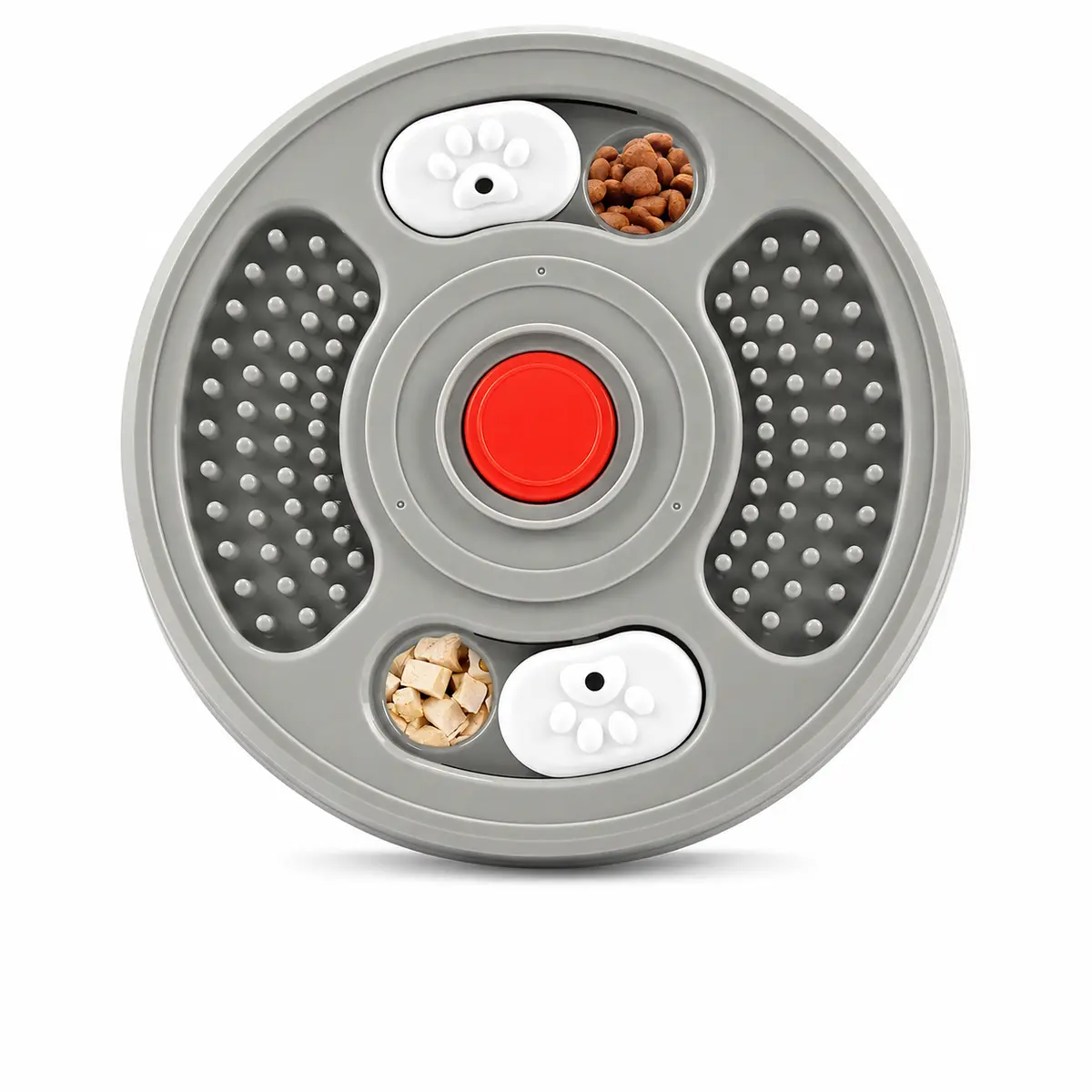
For dogs that gulp anything new, a slow feeder bowl or a lick mat keeps portions small and eating slow.
How much potato skin by dog size
Potato skin is a treat, and the AKC recommends potato only occasionally and as a small part of the diet. As a starting point for a healthy adult dog: under 20 lb, one or two small pieces; 20 to 50 lb, a few strips, roughly the skin from a quarter of a potato; over 50 lb, a small handful.
Do not make it a daily habit, and count it as part of the day's treats rather than an extra. Dogs with diabetes, weight problems or a history of pancreatitis need their vet's go-ahead before starchy extras, and should never get the buttered or fried kind.
Puppies and potato skins
Puppies are better off without potato skins. The skin is the chewiest, most fibrous part of the potato, and a puppy's narrow throat and still-developing stomach handle it poorly. If you want to share potato at all, a little plain, well-mashed cooked potato flesh is the gentler choice.
Keep any taste tiny, about the size of a pea for a small-breed puppy, and only once your puppy is fully weaned onto solid food. A growing puppy needs a complete puppy diet, and starchy extras add calories without anything the puppy food does not already provide.
Signs potato skin disagreed with your dog, and when to call a vet
A small piece of plain cooked skin usually causes nothing more than a softer stool. If your dog ate raw or green potato or sprouts, the AKC lists vomiting, diarrhea, lethargy and muscle weakness as signs to watch for, and says a dog showing them should see a vet right away.
After loaded skins, watch over the next few days, not just hours. Repeated vomiting, a painful belly or refusing food after a fatty meal needs a vet the same day. Weakness, pale gums or dark urine after the onion family also means call your vet promptly.
What to give instead
If you want a starchy treat, plain baked sweet potato without the skin is softer and easier to portion, and plain canned pumpkin works as a lick-mat topping. For something crunchy and low in calories, try green beans, cucumber or carrot coins.
Whatever you choose, keep it plain. The risk in most people food comes from what is added to it, not from the vegetable itself.
This page is general information, not veterinary advice, and it cannot replace an examination by the vet who knows your pet.
Common questions
Can dogs eat baked potato skins?
Plain baked skin with no oil, butter, salt or toppings is fine in small amounts, as long as none of it was green. Cut it into small pieces and let it cool before you offer it.
Can dogs eat raw potato skins?
No. The AKC lists raw potato as unsafe, and raw skin is tough to digest and may carry more solanine where it has turned green. Cook it soft first or skip it.
Can dogs eat potato skins with sour cream and chives?
No. Chives belong to the onion family, which is toxic to dogs, and the cheese, bacon and sour cream add a lot of fat. If your dog ate some, call your vet or a poison helpline.
Are potato peels bad for dogs?
Clean, cooked peels are not harmful in small amounts. Peels from green or sprouting potatoes, raw peels and peels fried in oil or butter are the ones to keep away from your dog.
What happens if my dog eats green potato skin?
Green skin carries more solanine. The AKC says vomiting, diarrhea, lethargy or muscle weakness after green potato means your dog should see a vet right away, so call even if the amount was small.
Sources we checked
This guide is general information, not veterinary advice. If your pet is unwell or injured, contact your veterinarian.