Food safety
Can Dogs Eat Pork Bones? No — They Splinter and Block
No. Pork bones are not safe for dogs, raw or cooked: the American Kennel Club says they are likely to crack and splinter when chewed, which can cause choking, a blocked intestine or tears in the throat and gut. Rib bones carry fat that can trigger pancreatitis, and ham bones add salt. If your dog has eaten one, take any pieces away, watch closely and call your vet.
By Matt GarnettUpdated November 13, 20265 min read3 sources
Why pork bones are dangerous for dogs
A dog chews a bone with its back teeth, and a pork bone breaks under that pressure into sharp, uneven pieces. The AKC says pork bones, raw or cooked, are likely to splinter and crack, and those splinters can lodge in the throat, scrape the esophagus or cut the stomach and intestines on the way through.
Size is the second problem. Pork chop, rib and knuckle bones are short, and the AKC notes that a large dog may swallow one whole. A bone that is too big to pass but small enough to swallow can stop in the stomach or intestine. The ASPCA also warns that bones can cause injury or obstruction anywhere in the digestive tract.
Rib bones and the fat problem
Barbecued ribs come with a second risk on top of splinters. The AKC warns that rib bones, especially pork ribs, are high in fat, and that fat can trigger pancreatitis, a painful inflammation of the pancreas that can be severe and, in bad cases, deadly.
A dog that finds a plate of rib bones after a cookout is therefore at risk twice: from the fragments, and from the fat soaked into them. Scrape plates straight into a lidded trash can.
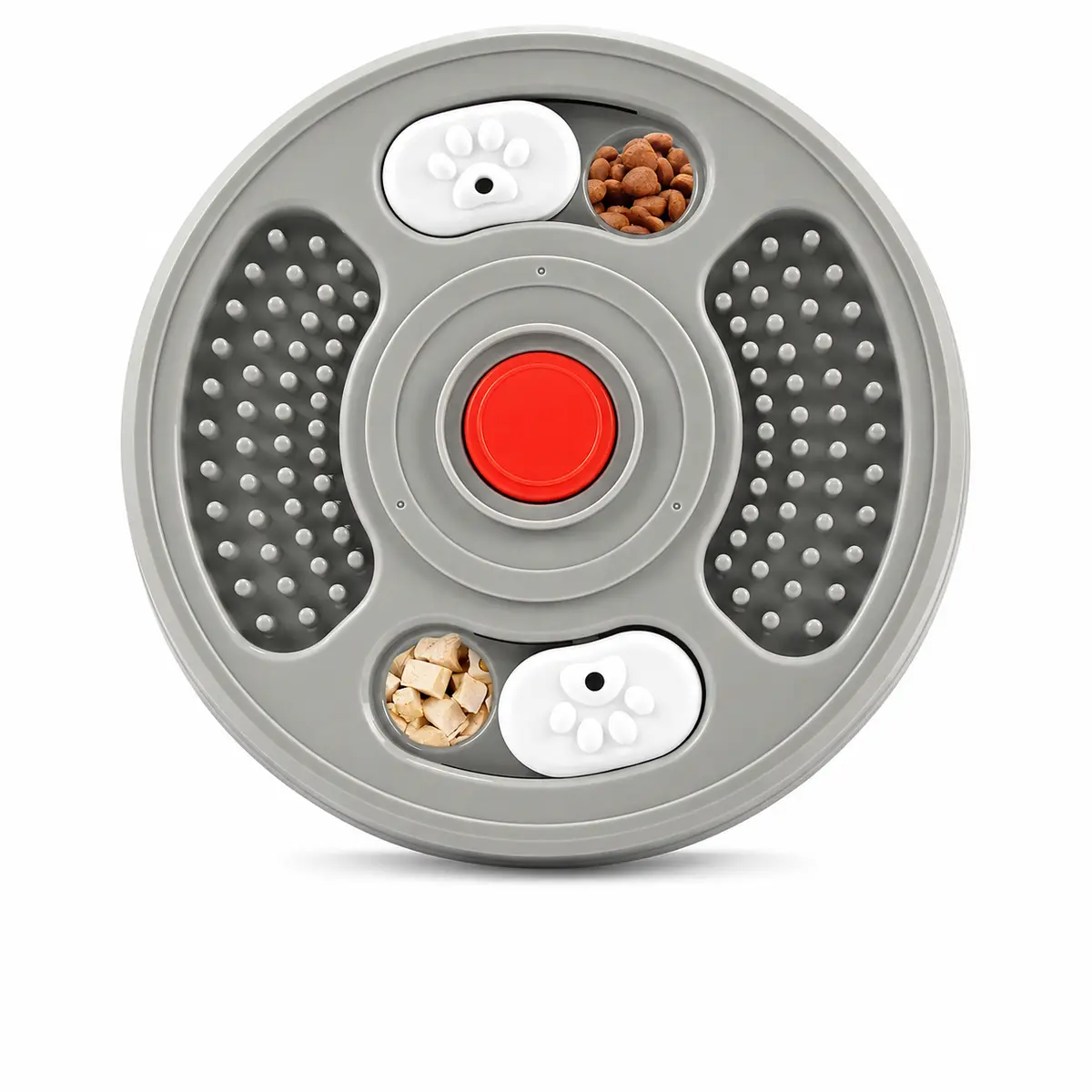
For dogs that gulp anything new, a slow feeder bowl or a lick mat keeps portions small and eating slow.
Ham bones at Christmas and Easter
A leftover ham bone is one of the most common holiday bones dogs are handed, often with good intentions. It is still a pork bone that splinters, and a cured or smoked ham bone is also heavily salted. The ASPCA warns that too much salt causes thirst and urination and, in larger amounts, vomiting, tremors and seizures.
Glazed hams add sugar, and the fat around the bone is rich enough to upset a dog's stomach. Wrap the bone in a bag, put it straight into an outdoor or lidded can, and remind guests not to slip the dog anything from the carving board. A plain slice of lean meat, trimmed of fat and glaze, is the safer share.
What to do if your dog ate a pork bone
Take away any bone or pieces your dog is still chewing, calmly, so they do not gulp the rest. Look in the mouth for splinters wedged between the teeth or across the roof of the mouth, but do not reach into the throat. Do not try to make your dog vomit: a splintered bone can cut on the way back up.
Call your vet and tell them what kind of bone it was, whether it was cooked, roughly how much your dog swallowed and when. The AKC says some dogs pass bone pieces without trouble but that serious complications can occur, so your vet will decide whether to watch and wait, use an endoscope or operate.
Signs of a blockage or injury, and when to call a vet
The AKC lists vomiting, excessive drooling, abnormal bowel movements and loss of appetite as signs of an intestinal blockage after a pork bone, and says to contact a vet right away if you see them. Also watch for straining to pass stool, blood in the stool, a tender or swollen belly, or lethargy over the next few days.
Get help immediately if your dog is choking, gagging repeatedly, pawing at the mouth, unable to keep water down, or seems to be in pain. After a fatty rib or ham bone, repeated vomiting and a hunched posture may point to pancreatitis and also need a vet the same day.
Puppies and small dogs
Puppies chew hard, especially while teething, and they swallow what they break off. A pork bone fragment that a big dog might pass can block a puppy's narrower intestine, and sharp edges can cut gums that are already sore. Keep all pork bones away from puppies, including the small ones in chops and spare ribs.
Small and toy breeds face the same problem at any age. Their mouths and digestive tracts are small, so even a short piece of bone is a large object for them. If a puppy or small dog swallowed any part of a pork bone, call your vet promptly rather than waiting for signs.
Safer things to chew
If your dog loves to chew, the AKC suggests a large raw beef or bison bone is a more acceptable choice: big enough that it cannot be swallowed, less likely to splinter than a pork bone, and always given under supervision. Ask your vet first, because raw bones carry their own risks.
Commercial chew toys and dental chews sized for your dog give the chewing without the splinters. If you want the flavor, the AKC says a little homemade pork bone broth can be mixed into food, made with no onion, garlic or salt and with the fat skimmed off.
This page is general information, not veterinary advice, and it cannot replace an examination by the vet who knows your pet.
Common questions
Can dogs eat cooked pork bones?
No. Cooking makes bones more brittle, so cooked pork bones break into sharp splinters that can cut the mouth, throat or intestines. Keep chops, ribs and ham bones out of reach.
Can dogs eat raw pork bones?
No. The AKC says pork bones are likely to splinter whether raw or cooked, and they are small enough to be swallowed whole. A large raw beef bone, with your vet's approval, is a safer choice.
My dog ate a pork rib bone. What should I do?
Take away any remaining pieces, do not make your dog vomit, and call your vet. Watch for vomiting, drooling, straining, loss of appetite or a sore belly over the next few days.
Can dogs have a ham bone for Christmas?
No. A ham bone splinters like any pork bone, and cured ham is very salty and fatty. Give a small piece of lean, plain meat with the glaze and fat trimmed off instead.
How long does it take a dog to pass a pork bone?
There is no reliable timeline, and some pieces never pass. Call your vet as soon as you know your dog swallowed one, and do not wait for signs before asking for advice.
Sources we checked
This guide is general information, not veterinary advice. If your pet is unwell or injured, contact your veterinarian.