Food safety
Can Dogs Eat Pork? Yes, Plain, Lean and Fully Cooked
Yes, dogs can eat pork, but only plain, lean pork that has been cooked all the way through. Raw or undercooked pork can carry the parasite that causes trichinosis, cooked pork bones splinter, and most pork that people eat is fatty, salty or seasoned with onion and garlic. A few small pieces of unseasoned roast pork loin are fine for most dogs. Bacon, ham, sausage and barbecue are not.
By Matt GarnettUpdated November 13, 20264 min read2 sources
Why plain cooked pork is safe
Pork is a good source of protein, and many commercial dog foods include it. The AKC says plain, cooked pork is safe for dogs in small amounts as long as it has no seasoning or sauce. Lean cuts such as tenderloin or loin with the fat trimmed off are the best choice.
Pork is also a less common protein for dogs, so a few dogs react to it the first time. Introduce it in a small amount and watch for itching or an upset stomach over the following day or two.
Raw pork, fat and bones: the warnings
Raw or undercooked pork can carry Trichinella larvae, which cause trichinosis. The AKC notes that dogs often show only mild signs such as vomiting, diarrhea, fever or lethargy, but dogs with weaker immune systems can be affected more severely. Cook pork to at least 145°F and let it rest.
Fat is the other danger. Pork fat, crackling and drippings are hard for dogs to digest, and VCA lists a fatty meal as one trigger for pancreatitis. Cooked pork bones dry out and splinter, and can injure the throat or gut or cause choking. Never give a pork chop bone or rib bone.
How to cook pork for your dog
Choose a lean cut, trim off visible fat, and roast, bake or boil it plain until the juices run clear and the center reaches 145°F. Let it cool and cut it into small pieces with no bone: pea-size for a 10 lb dog, dice-size for a large dog.
Leave out every seasoning. The AKC warns that onion powder, garlic powder and nutmeg are harmful to dogs, and barbecue sauce is often high in salt and sugar as well as onion and garlic. Pulled pork, carnitas and marinated chops are all off the list.
How much pork by dog weight
Keep pork within the 10 percent treat allowance. As a guide: under 20 lb, a few pea-size pieces; 20 to 50 lb, about a tablespoon of diced lean pork; over 50 lb, two tablespoons or so. Once or twice a week is plenty.
If you add pork to a meal, take a little of the regular food out so the calories stay the same. Dogs that have had pancreatitis before, or that have a sensitive stomach, should only have pork if their vet agrees.
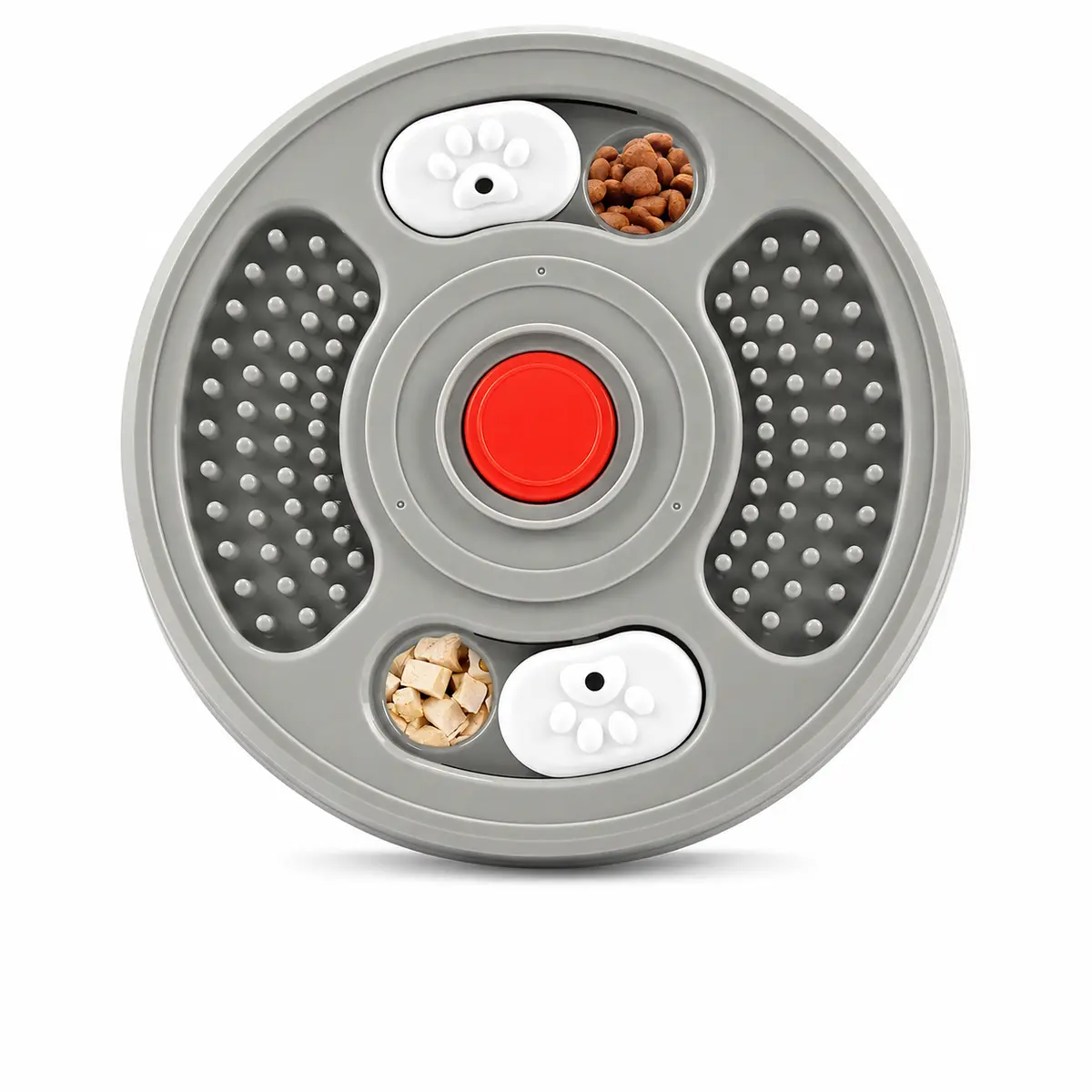
For dogs that gulp anything new, a slow feeder bowl or a lick mat keeps portions small and eating slow.
Bacon, ham and sausage
Bacon, ham, sausage, hot dogs and other processed pork are not good for dogs. The AKC points out that bacon is very fatty and salty, which can bring on pancreatitis, and that the salt in ham can cause heavy thirst. Many sausages are also seasoned with garlic, onion or spices.
A dog that steals a strip of bacon is unlikely to come to serious harm, but watch for vomiting, diarrhea or a sore belly over the next day. A dog that raided a platter of ham or a tray of sausages should be checked by your vet if it becomes unwell.
Pork for puppies
A weaned puppy can try a tiny piece of plain, lean, fully cooked pork. Puppies have sensitive stomachs and are more affected by fat, so keep the portion very small and offer it only once you know the puppy is otherwise well.
Puppy food is designed to support growth, and extras like meat can throw that balance off if they become a large part of the bowl. Keep pork bones, ribs and fatty trimmings well away from puppies, who chew hard and swallow fast.
Signs to watch for, and other proteins
Call your vet the same day if your dog vomits repeatedly, has diarrhea with blood, stands with its rear up and front down, seems painful in the belly or stops eating after eating pork, especially fatty pork. Those can be signs of pancreatitis, which needs prompt treatment. Retching, gagging or straining after a bone is also an emergency.
If you want to share meat, plain cooked chicken or turkey breast with no skin or bones is easier for most dogs to digest than pork, and lean cooked beef is another option.
This page is general information, not veterinary advice, and it cannot replace an examination by the vet who knows your pet.
Common questions
Can dogs eat pork bones?
No. Cooked pork bones become brittle and can splinter, injuring the throat, stomach or intestines or causing choking. Throw rib and chop bones away in a closed trash can your dog cannot open.
Can dogs eat raw pork?
No. Raw and undercooked pork can carry the parasite that causes trichinosis, along with other bacteria. Cook pork to at least 145°F before sharing any with your dog.
Can dogs eat pulled pork?
It is not a good choice. Pulled pork is usually cooked with fat and finished with barbecue sauce or rubs containing salt, sugar, garlic and onion. Share plain cooked pork loin instead.
Can dogs eat pork rinds?
No. Pork rinds are fried pork skin, very high in fat and salt and often flavored with onion or garlic powder. They can upset a dog's stomach and are a poor treat.
Can dogs eat pork chops?
A few small pieces of plain, fully cooked, lean pork chop with the bone and fat removed are fine. Never give the bone, and skip chops that were seasoned, breaded or cooked in butter.
Sources we checked
This guide is general information, not veterinary advice. If your pet is unwell or injured, contact your veterinarian.