Food safety
Can Dogs Eat Pizza? No — Garlic, Onion and Fat Are the Risk
No, dogs should not eat pizza. A slice combines several things that are bad for dogs: sauce and crust seasoned with garlic and onion, which can damage a dog's red blood cells; cheese, pepperoni and sausage that are high in fat and salt. Raw pizza dough is an emergency on its own. A small bite of plain crust is unlikely to cause harm, but a stolen slice deserves attention. Here is what to watch for and when to call a vet.
By Matt GarnettUpdated November 13, 20264 min read2 sources
Why pizza is a bad idea for dogs
Most pizza sauce, and many crusts, are seasoned with garlic and onion, fresh or as powder. The ASPCA explains that these allium plants can irritate the gut and damage red blood cells, leading to anemia, and the American Kennel Club notes garlic is several times more potent than onion. One slice is unlikely to cause anemia in a large dog, but repeated or large helpings can.
The rest of the slice adds fat and salt. Mozzarella, pepperoni, sausage, bacon and extra cheese can cause vomiting and diarrhea, and fatty meals can trigger pancreatitis in susceptible dogs. Many dogs also digest dairy poorly, as the ASPCA notes pets produce little lactase.
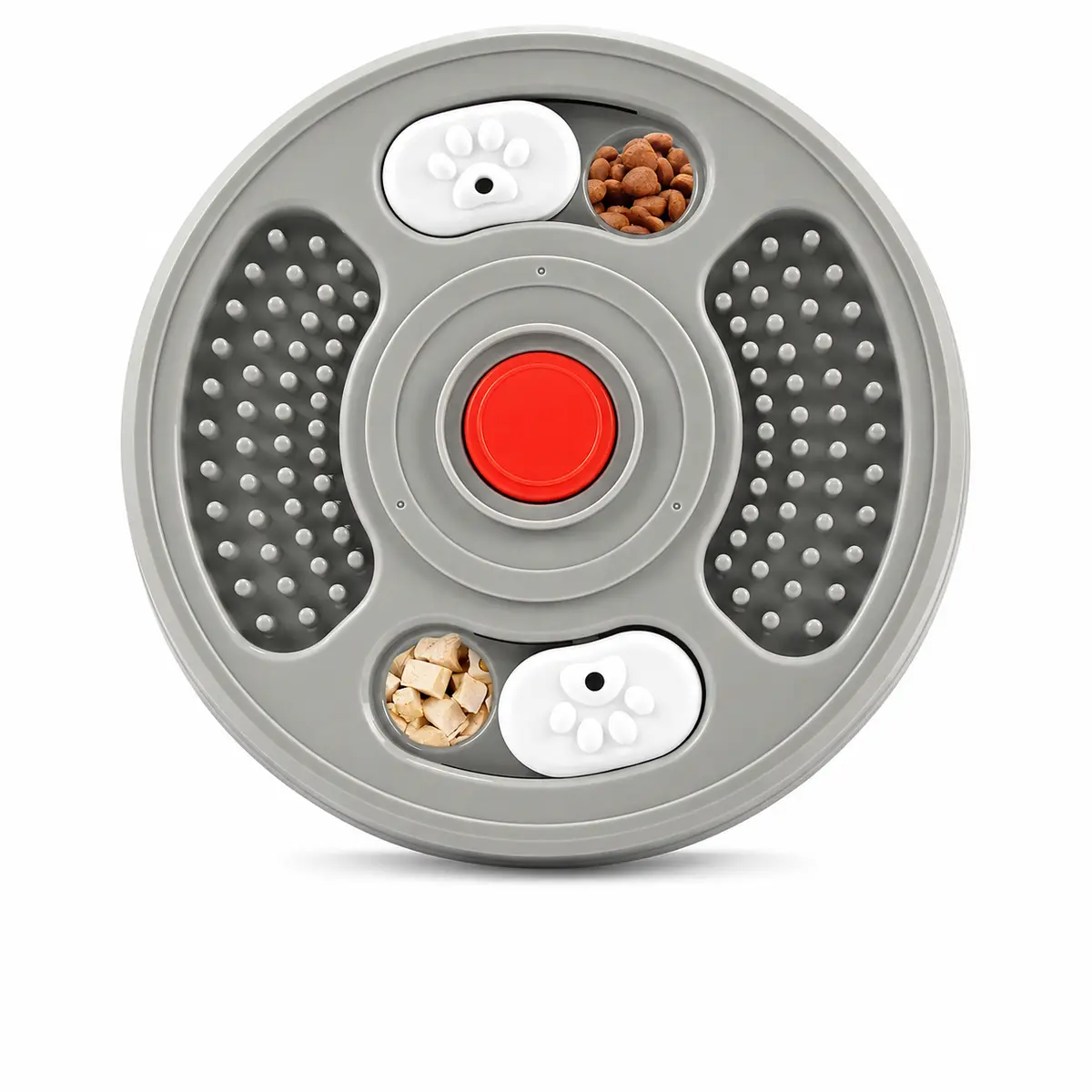
For dogs that gulp anything new, a slow feeder bowl or a lick mat keeps portions small and eating slow.
Raw pizza dough is an emergency
Unbaked pizza dough is far more dangerous than cooked pizza. The ASPCA explains that raw yeast dough can rise inside a dog's stomach, causing painful bloating that can twist into a life-threatening emergency, and that the fermenting yeast produces alcohol, which is absorbed quickly.
If your dog ate raw dough, call your vet, ASPCA Animal Poison Control at (888) 426-4435 or Pet Poison Helpline at (855) 764-7661 immediately, before signs appear. A fee may apply. Signs include a swollen belly, retching without vomiting, restlessness, wobbling and weakness.
Toppings that need a call
Some toppings raise the stakes. Large amounts of onion or garlic, whether rings, chopped or roasted, need a call to your vet. Pineapple, plain chicken and peppers are not toxic, but they arrive covered in cheese and sauce.
Dessert or specialty pizzas can contain chocolate, raisins or macadamia nuts, all toxic to dogs. Salty, heavily processed meats in quantity, or a whole pizza eaten by a small dog, can cause salt-related vomiting and thirst. Keep the box until you know what your dog ate.
Can dogs eat pizza crust?
The plain outer crust, the part with no sauce or cheese, is mostly baked bread. The AKC says small amounts of plain, fully baked bread are fine for dogs, so a small piece of crust from a plain pizza is unlikely to hurt a healthy dog.
Many crusts are brushed with garlic butter or sprinkled with garlic powder or parmesan, though, and stuffed crusts are full of cheese. If you want to share, only offer a thumbnail-size piece of crust you know is plain, and not as a habit.
Size, puppies and pizza
Size changes how worried to be. A slice is a big helping of fat and garlic for a dog under 20 lb, and more likely to cause vomiting or pancreatitis. Dogs of 20 to 50 lb usually show stomach upset. Dogs over 50 lb often tolerate one slice with nothing more than a soft stool, but can still react.
Puppies have small, sensitive stomachs and should not be given pizza at all. A puppy that ate a slice should be watched closely, and you should call your vet if it vomits, seems tired or will not eat.
If your dog ate pizza: signs and when to call a vet
Within a few hours, watch for vomiting, diarrhea, gas, a painful or bloated belly, heavy thirst or restlessness. Call your vet the same day for repeated vomiting, a hunched or painful belly, refusing food or lethargy, which can point to pancreatitis after a fatty meal.
Garlic and onion damage can take two to five days to show, as tiredness, weakness, pale or yellow gums, fast breathing or reddish urine. If your dog ate a lot of pizza with onion or garlic, or any raw dough, call your vet or ASPCA Animal Poison Control at (888) 426-4435 straight away.
Pizza night alternatives
If you want your dog to join in, set aside a little plain cooked chicken breast or lean beef before it goes on the pizza, with no seasoning. A few pieces of plain bell pepper or a commercial dog treat are other options.
Keep boxes off low tables and out of the trash, and ask guests not to share crusts. A food-stuffed chew toy is a good way to keep a dog busy while people eat.
This page is general information, not veterinary advice, and it cannot replace an examination by the vet who knows your pet.
Common questions
Can dogs eat cheese pizza?
Plain cheese pizza still has a sauce that usually contains garlic and onion, plus fatty, salty cheese. A small bite is unlikely to harm a large dog, but it is best not to share. Watch for vomiting or diarrhea afterward.
My dog ate a whole pizza. What should I do?
Call your vet, especially for a small dog or if there was onion, garlic, raw dough, chocolate or a sugar-free ingredient. Note the toppings, how much was eaten and when, and keep the box for reference.
Can dogs eat pepperoni pizza?
No. Pepperoni is very salty and fatty and often seasoned with garlic, and it sits on a garlic-rich sauce. A stolen slice may cause vomiting or diarrhea; call your vet if your dog seems unwell.
Can dogs eat pizza crust?
A small piece of plain, unseasoned crust is generally fine. Avoid garlic butter crusts, parmesan-dusted crusts and stuffed crusts, and never give raw pizza dough, which can expand in the stomach.
Can dogs eat pizza sauce?
It is best not to. Pizza sauce usually contains garlic, onion, salt and sometimes sugar. A lick is unlikely to cause harm, but a larger amount, especially for a small dog, is worth a call to your vet.
Sources we checked
This guide is general information, not veterinary advice. If your pet is unwell or injured, contact your veterinarian.