Food safety
Can Dogs Eat Pickles? Best Not — Too Much Salt
No, pickles are not a good snack for dogs. A plain dill spear is not poisonous, but pickles are soaked in salty brine, and some recipes, especially bread and butter pickles, contain onion or garlic, which can poison dogs by damaging their red blood cells. Spicy pickles add chili that upsets the stomach. If your dog ate a lot of pickles or brine, call your vet. Plain cucumber gives the same crunch with none of the risk.
By Matt GarnettUpdated November 13, 20264 min read3 sources
Why pickles are a poor choice for dogs
A pickle starts as a cucumber, which is a safe, low-calorie snack. The problem is the brine. Pickles are very high in sodium, and the AKC quotes a vet suggesting a medium-size dog needs only around 100 milligrams of sodium a day, a figure one pickle spear can easily pass.
Because there is no standard recipe, you rarely know what else is in the jar. Dill, vinegar and mustard seed are common; garlic, onion, chili flakes and sugar are too. The AKC's conclusion is that the downsides of pickles far outweigh any benefit for a dog.
Warning: onion, garlic and salt in the jar
Bread and butter pickles and many relishes are made with onion, and garlic dills are common. Onion and garlic contain compounds that damage red blood cells and can cause anemia, and the ASPCA lists them among foods pets should not eat. Concentrated forms such as garlic powder in the brine are the most potent.
Too much salt at once can also make a dog seriously ill, with vomiting, diarrhea, extreme thirst, wobbliness and, in severe cases, seizures. If your dog ate several pickles, drank brine, or ate pickles made with onion or garlic, call your vet, ASPCA Animal Poison Control at (888) 426-4435 or Pet Poison Helpline at (855) 764-7661; a fee may apply.
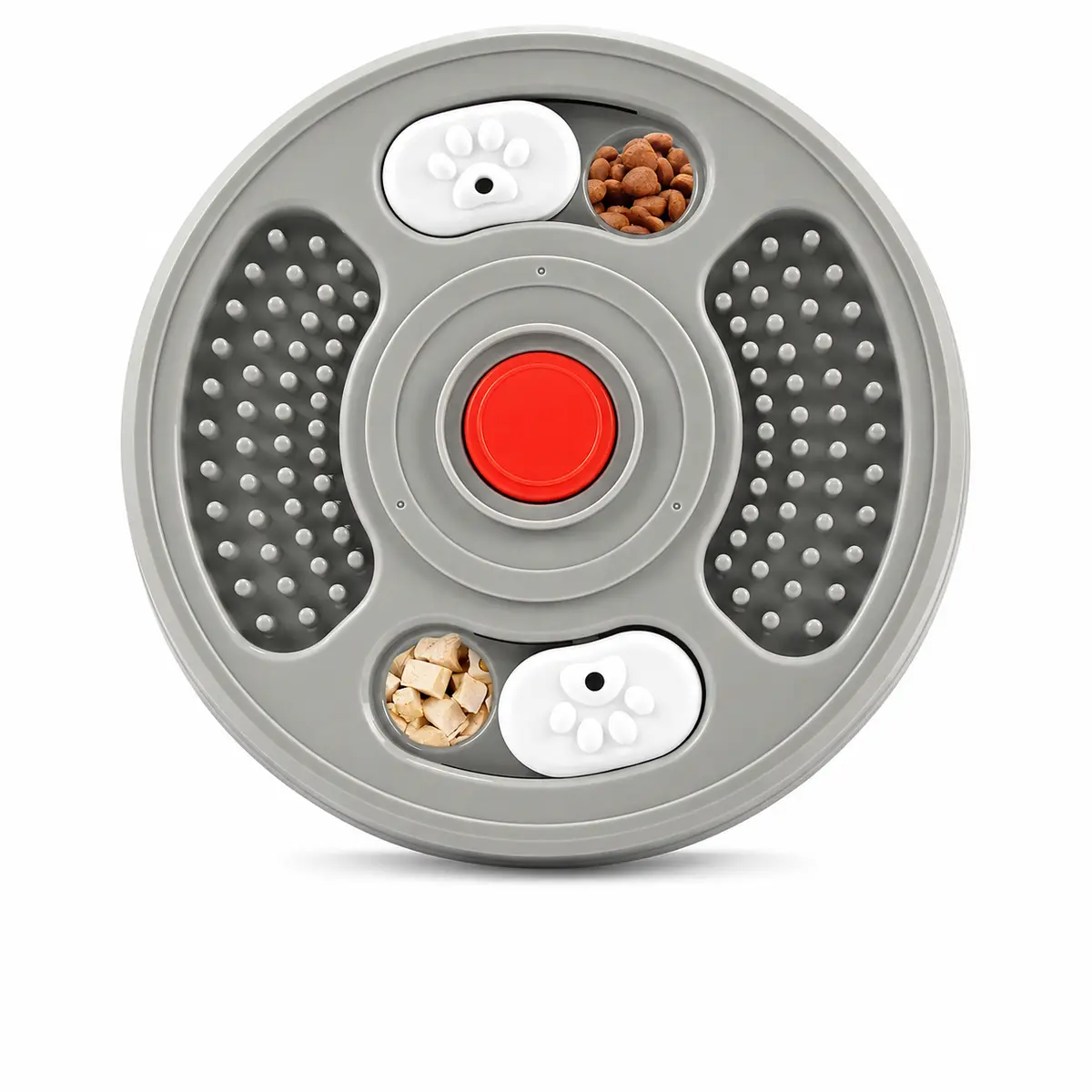
For dogs that gulp anything new, a slow feeder bowl or a lick mat keeps portions small and eating slow.
What to do if your dog ate a pickle
If your dog grabbed one plain dill slice, they will most likely be fine. Put down plenty of fresh water and watch for vomiting, diarrhea or unusual thirst over the next day. Do not make your dog vomit unless a vet or poison helpline advises it.
Check the label on the jar. If it lists onion, garlic, garlic powder or xylitol, or if your dog ate several spears or licked up spilled brine, call for advice now. Have your dog's weight and an estimate of the amount ready.
Is any amount of pickle okay?
There is no amount to recommend, because pickles add nothing a dog needs. A single thin slice of a plain dill pickle with no garlic or onion is unlikely to harm a healthy adult dog over 50 lb, but the same slice is a much bigger salt load for a dog under 20 lb.
Dogs with heart disease, kidney disease or high blood pressure, and dogs on a prescription or low-sodium diet, should not have pickles at all. If you are unsure, the simplest answer is to give a slice of plain cucumber instead.
Can puppies eat pickles?
No. Puppies are small, so the salt in a single pickle is a larger dose for their body weight, and their stomachs are easily upset by vinegar and spice. There is no benefit that makes the risk worthwhile.
If your puppy ate a pickle, offer water and watch them closely. Call your vet if they vomit more than once, have diarrhea, seem very thirsty or tired, or if the pickles contained onion or garlic. Puppies can become dehydrated quickly.
Signs pickles disagreed with your dog, and when to call the vet
Salty or spicy food usually causes signs within a few hours: drooling, vomiting, diarrhea, drinking and urinating more than usual, or restlessness. After onion or garlic, the stomach upset may come first, with pale gums, weakness, fast breathing and dark urine appearing two to five days later.
See your vet the same day for repeated vomiting, diarrhea that will not settle, or any of those later anemia signs. Wobbliness, tremors, confusion or seizures after eating something salty are an emergency and need to be seen immediately.
What to give instead of pickles
Plain, washed cucumber is the obvious swap: the AKC notes it offers similar vitamins and minerals without the sodium, onion, garlic or spices. Slice it thin for small dogs. Some dogs also enjoy a sprig of fresh dill, which the AKC mentions as a way to share the flavor without the pickle.
Other crunchy, low-sodium options include carrot coins, green beans and zucchini, all plain and cut to size. Introduce any new food in small amounts and ask your vet if your dog has a medical condition.
This page is general information, not veterinary advice, and it cannot replace an examination by the vet who knows your pet.
Common questions
Can dogs eat dill pickles?
A plain dill pickle is not toxic, but it is very salty and not a good snack. Garlic dills should be avoided completely. If you want to share the taste, a sprig of fresh dill or a slice of cucumber is a better option.
Can dogs eat bread and butter pickles?
No. Bread and butter pickles are sweetened and usually made with onion, which can damage a dog's red blood cells. Call your vet if your dog ate several of them.
Can dogs drink pickle juice?
No. Pickle juice is concentrated brine, so it delivers a lot of salt quickly, and it may contain garlic or onion. If your dog drank a significant amount, call your vet or a poison helpline.
Can dogs eat sweet pickles or relish?
It is best not to share them. Sweet pickles and relish are high in sugar and salt, and many recipes include onion. Check the label and keep jars and hot dog toppings out of reach.
Are pickles toxic to dogs?
Cucumber and dill are not toxic, but the salt in pickles can make a dog ill in larger amounts, and onion or garlic in the brine is toxic. That is why pickles are best left off your dog's menu.
Sources we checked
This guide is general information, not veterinary advice. If your pet is unwell or injured, contact your veterinarian.