Food safety
Can Dogs Eat Peas? Yes, Fresh or Frozen, Not Canned
Yes, dogs can eat peas. Green garden peas, snow peas and sugar snap peas are not toxic, and a spoonful makes a cheap, crunchy treat or a bowl topper. Fresh and frozen peas are the best forms, because canned peas usually come packed in salted water. The main things to watch are portion size, choking on whole pods in small dogs, and the extra gas that a big helping can bring.
By Matt GarnettUpdated November 13, 20264 min read2 sources
Why peas are safe for dogs
Peas are legumes with a decent amount of fiber, some plant protein and vitamins such as A, K and several B vitamins. The AKC is clear that peas are not toxic or poisonous to dogs, and many commercial dog foods already list them as an ingredient.
They work best as a small extra rather than a staple. A dog's complete food is built to supply the right balance of nutrients, and a big pile of peas on top changes that balance and adds fiber the gut has to deal with.
Canned peas and salt
Canned peas are the form to skip. They are usually packed in water with added salt, and the ASPCA warns that too much salt makes pets very thirsty and, in large amounts, can upset the balance of electrolytes in the blood. A few canned peas off your plate will not hurt, but a habit of them is not ideal.
The same goes for peas cooked the way people like them: tossed in butter, salted, mixed into a creamy sauce, or stirred through fried rice with onion and garlic. Onion and garlic can damage a dog's red blood cells, so share peas only when they are plain.
How to serve peas
Frozen peas straight from the bag are the simplest option, and many dogs love them as a crunchy snack on a warm day. You can also thaw them, steam them for two or three minutes, or mash cooked peas into a lick mat. Garden peas should always be shelled; the tough outer pod is not meant to be eaten.
Snow peas and sugar snap peas have edible pods, so dogs can eat those whole, but cut them into short lengths for small dogs. A whole pod can be a choking risk for a toy breed that gulps, and chopping it into half-inch pieces solves that.
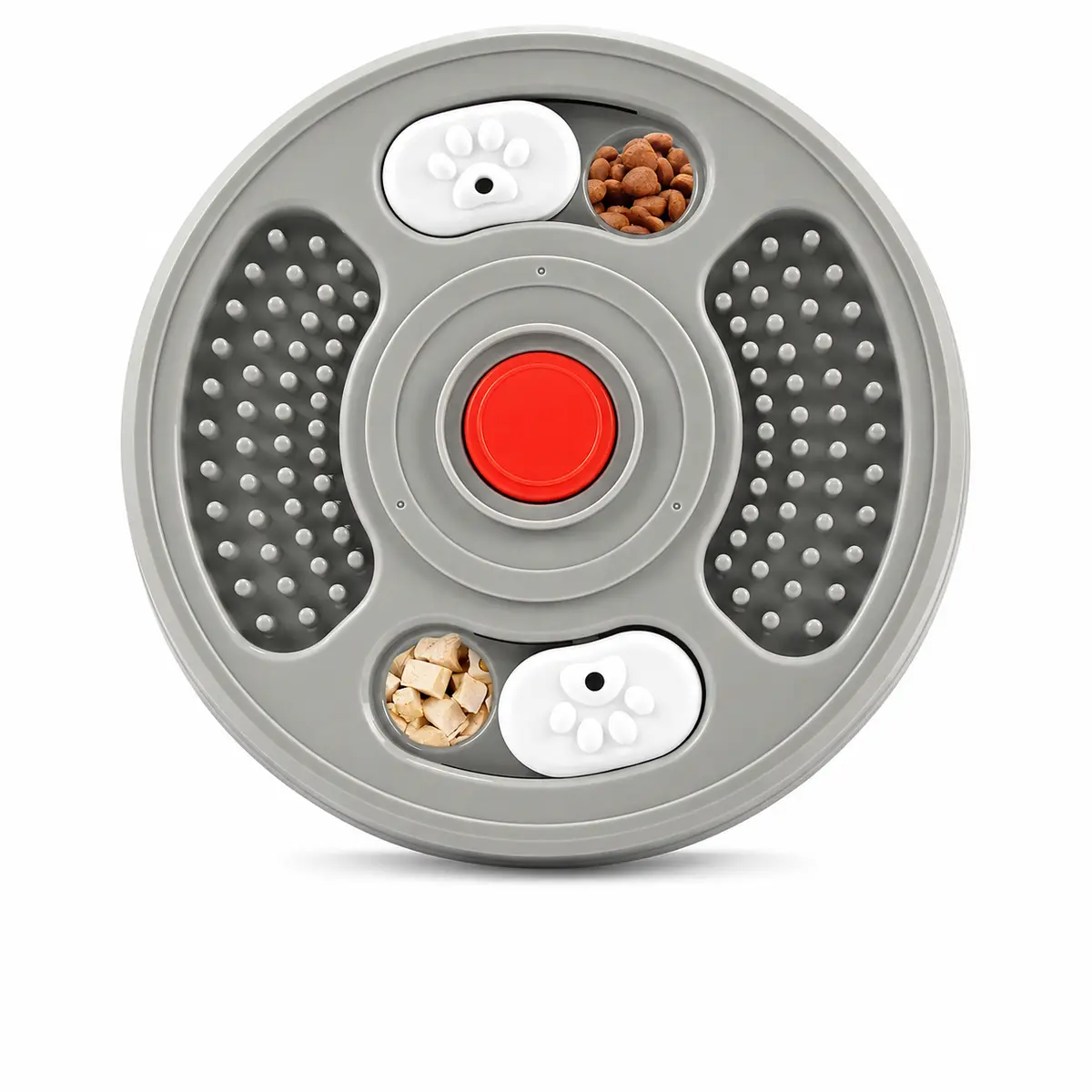
For dogs that gulp anything new, a slow feeder bowl or a lick mat keeps portions small and eating slow.
How many peas by dog weight
Keep peas, along with every other treat, to about 10 percent of your dog's daily calories. As a rough guide: under 20 lb, a teaspoon to a tablespoon of peas; 20 to 50 lb, one to two tablespoons; over 50 lb, up to a quarter cup.
Start at the low end the first time, because a sudden load of fiber can cause gas or soft stool. If your dog eats a food that already lists peas high in its ingredients, there is little reason to add more on top.
Peas for puppies
A weaned puppy can try a few soft, cooked peas. Thawed or lightly steamed peas are easier for small teeth than hard frozen ones, and mashing them reduces the chance of a pea going down the wrong way in a very young puppy.
Puppies need most of their calories from a complete puppy food for steady growth, so keep vegetables as an occasional reward. If a puppy gets loose stool after trying peas, leave them out for a while and try again later in a smaller amount.
Peas, heart health and when to ask a vet
You may have read about peas and dog heart disease. Researchers are looking at whether diets that rely heavily on peas and other legumes might be linked to a heart condition called dilated cardiomyopathy. The AKC notes that peas may not be the cause, but they remain one ingredient under study.
That research is about diets built on peas, not a few peas as a treat. If your dog eats a food with peas near the top of the ingredient list and you notice coughing, tiring easily on walks or trouble breathing, book a visit with your vet and bring the food bag with you.
Signs peas disagreed with your dog, and other veggies to try
Too many peas usually cause gas, a gurgling stomach or soft stool within a day. That passes on its own once the extra fiber is through. A dog that vomits repeatedly, stops eating or seems painful after eating a lot of pods should be seen by a vet that day.
If peas do not suit your dog, try green beans, carrot coins or plain cooked pumpkin. All three are easy to portion and are not toxic to dogs. As with peas, serve them plain with no butter, salt or seasoning.
This page is general information, not veterinary advice, and it cannot replace an examination by the vet who knows your pet.
Common questions
Can dogs eat frozen peas?
Yes. Frozen peas are one of the easiest ways to share them, and many dogs enjoy the cold crunch. For very small dogs or puppies, thaw them first so they are softer and easier to chew.
Can dogs eat pea pods?
Snow pea and sugar snap pea pods are edible, so dogs can have them in small, chopped pieces. Garden pea pods are tough and fibrous; shell those peas and throw the pods away.
Can dogs eat canned peas?
It is better not to make a habit of it. Canned peas usually carry added salt. A few will not harm a healthy dog, but fresh or frozen peas with nothing added are the better choice.
Can dogs eat chickpeas?
Plain cooked chickpeas are not toxic to dogs in small amounts. Avoid hummus, which usually contains garlic, lemon, salt and oil. Chickpeas cause gas easily, so offer only a few at first.
Can dogs eat peas and carrots?
Yes, plain cooked peas and carrots are a good pairing for dogs. Skip the frozen mixes that come with butter sauce or seasoning, and keep the portion within your dog's daily treat allowance.
Sources we checked
This guide is general information, not veterinary advice. If your pet is unwell or injured, contact your veterinarian.