Food safety
Can Dogs Eat Peaches? Yes, but Never the Pit
Yes, dogs can eat fresh peach flesh, but the pit, stem and leaves contain cyanide-releasing compounds that can poison a dog, and a swallowed pit can also block the intestines. Sliced, pitted peach is a sweet summer treat in small amounts. If your dog has swallowed a pit or chewed one up, call your vet, ASPCA Animal Poison Control at (888) 426-4435 or Pet Poison Helpline at (855) 764-7661. A consultation fee may apply.
By Matt GarnettUpdated November 13, 20264 min read2 sources
Why the flesh is fine and the pit is not
Ripe peach flesh is mostly water and natural sugar, with some fiber and vitamins A and C, and nothing in it is toxic to dogs. The problems are all in the rest of the tree. The ASPCA lists the peach plant as toxic to dogs and cats because its stems, leaves and seeds contain cyanogenic glycosides.
The seed sits inside the hard pit. The AKC notes the pit contains amygdalin, which releases cyanide, and calls it unsafe for a dog to swallow. A dog that cracks a pit with its teeth releases more of it, and a whole pit is also big enough to choke a dog or lodge in the gut.
Pits, canned peaches and the backyard tree
The pit is a double hazard: poisoning if chewed and blockage if swallowed. It has rough, sharp ridges that can also scrape the throat and intestines. Fallen peaches under a backyard tree are the commonest way dogs get pits, along with stones dropped from a fruit bowl or picnic.
Skip canned peaches in syrup, peach cobbler, peach pie and dried peaches. The AKC advises against canned and dehydrated peaches because of their added sugar. Peach-flavored yogurt and baked goods may also contain xylitol, which is poisonous to dogs, so read the label before sharing anything sweet.
What to do if your dog ate a peach pit
Call your vet or a poison line the same day, and say whether the pit was swallowed whole or chewed, how big your dog is and when it happened. Do not try to make your dog vomit at home, because a pit can get stuck in the throat on the way back up.
Get seen urgently for bright red gums, dilated pupils, panting or trouble breathing, the signs the ASPCA lists for cyanide toxicity. Vomiting, drooling, belly pain, straining or refusing food over the next one to three days can mean the pit is stuck and needs imaging.
How to serve peaches to a dog
Wash a ripe peach, cut it in half, twist out the pit and throw it into a closed trash can. Slice the flesh and cut it into cubes sized for your dog: about blueberry size for a 10 lb dog, grape size for a 40 lb dog. The fuzzy skin is fine, though peeled flesh is gentler on a sensitive stomach.
Frozen peach cubes make a cooling summer treat, and a cube or two mashed into a lick mat stretches a small amount out. Never hand over a whole peach, even a ripe one, because a dog will happily crunch straight through to the pit.
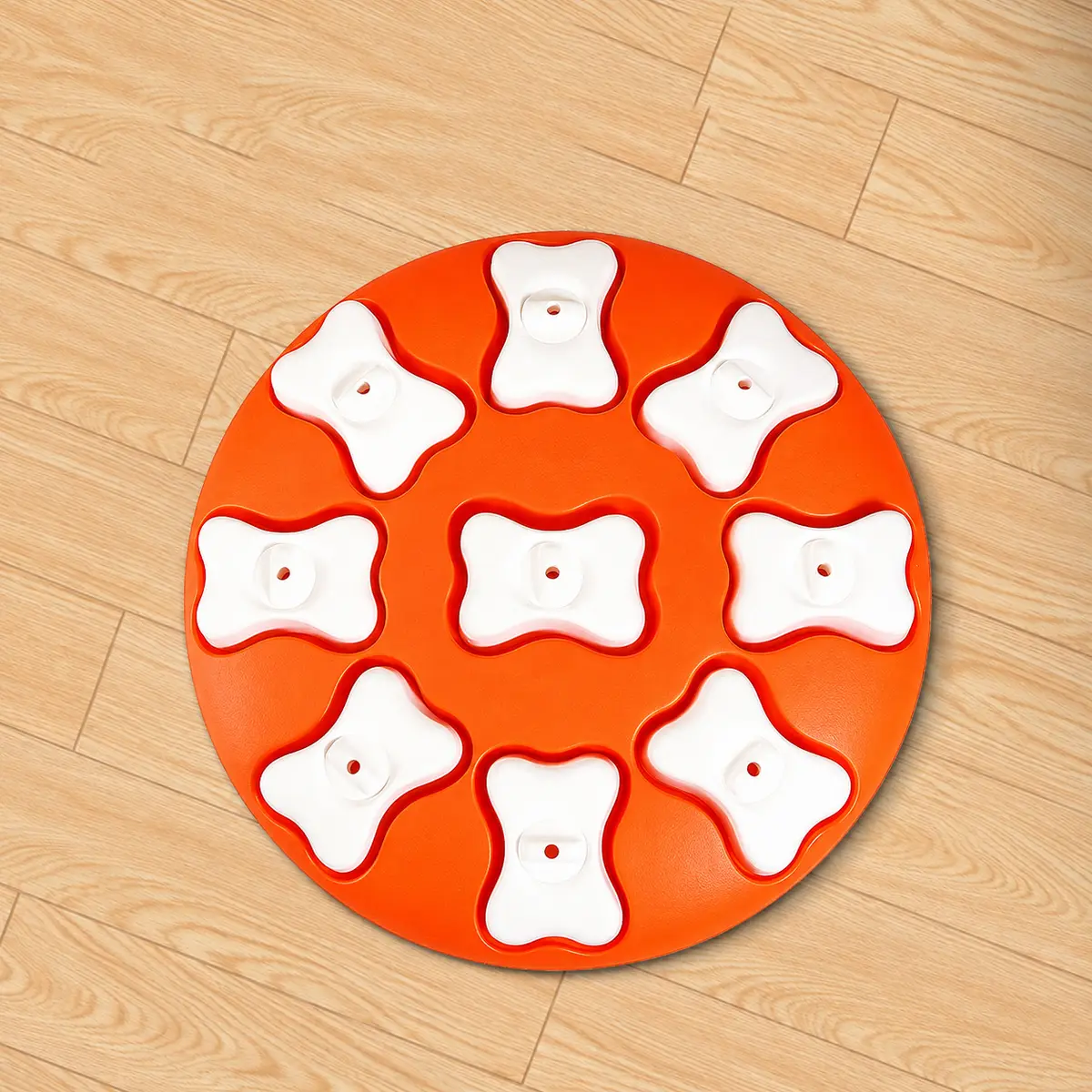
Spreading a few safe pieces across a snuffle mat or packing them into a puzzle toy turns a small treat into a few minutes of sniffing work.
How much peach by dog weight
Peaches are high in sugar, so keep them as an occasional treat inside about 10% of daily calories. For healthy adult dogs: under 20 lb, one or two small cubes; 20–50 lb, two or three cubes or a thin slice; over 50 lb, up to a few slices.
Too much often shows up as loose stools within a day. Dogs who are overweight, diabetic or on a prescription diet should only have peach if the vet agrees, and dogs with sensitive stomachs should start with a single cube and wait a day.
Puppies and peaches
Puppies can taste a tiny piece of soft, peeled peach once they are settled on solid food. Cut it small, give one piece, and watch for diarrhea over the next day. There is no nutritional reason to give more, since a complete puppy food already covers everything they need.
Puppies are the most likely to find and swallow pits, because they mouth anything on the ground. If you have a peach tree, pick up fallen fruit every day in season, and fence off the area if your puppy spends time unsupervised in the yard.
Common questions
What happens if a dog eats a peach pit?
A swallowed pit can block the intestines, and a chewed pit releases cyanide-forming compounds. Call your vet or a poison line the same day, and watch for vomiting, belly pain, red gums or trouble breathing.
Can dogs eat canned peaches?
It is best not to. Canned peaches are usually packed in syrup, which adds a lot of sugar. If your dog steals a slice, it is unlikely to cause more than a mild stomach upset.
Can dogs eat peach skin?
Yes. The fuzzy skin is not harmful, though some dogs find it harder to digest. Wash the peach well, and peel it for puppies or dogs with sensitive stomachs.
Can dogs eat frozen peaches?
Yes, plain frozen peach cubes without added sugar are a good warm-weather treat. Cut them small for small dogs, and check that store-bought frozen mixes contain no syrup or pit fragments.
Can dogs eat nectarines?
Yes, the same way as peaches. Nectarine flesh is fine in small pieces, while the pit, stem and leaves carry the same cyanide and blockage risks and must be kept away from your dog.
Sources we checked
This guide is general information, not veterinary advice. If your pet is unwell or injured, contact your veterinarian.