Food safety
Can Dogs Eat Parmesan Cheese? A Sprinkle, Not a Wedge
Yes, but only a little. A light sprinkle of plain grated parmesan is unlikely to harm a healthy dog, and as a long-aged hard cheese it carries very little lactose. It is, however, one of the saltiest and most calorie-dense cheeses, and the American Kennel Club warns that fatty cheese can lead to pancreatitis. Keep it to a pinch on top of food, never a wedge, and skip parmesan-heavy dishes such as garlic bread, Caesar salad and pasta in cream sauce.
By Matt GarnettUpdated November 13, 20264 min read2 sources
Why a little parmesan is fine
Parmesan is a hard cheese aged for many months, and most of the milk sugar is used up during that time. The AKC notes that cheese has little lactose compared with whole milk, which is why many dogs tolerate a small amount even though dogs with severe lactose intolerance may still react.
Dogs also love the smell, which makes a pinch of grated parmesan a useful way to tempt a fussy eater or coat a pill. The AKC mentions cheese as a good way to hide medication for dogs that need it. Used that way, the amount is tiny and the benefit is real.
Salt and fat: why parmesan needs limits
Parmesan is much saltier than mozzarella or cottage cheese. The ASPCA warns that excessive salt can cause increased thirst and urination, and that salt toxicity can cause vomiting, diarrhea, tremors and seizures. A spoonful is not that, but a small dog that eats a block of cheese has had a lot of salt for its size.
It is also rich. The AKC says cheese is high in fat, that regular feeding can lead to weight gain, and that fatty cheese can cause pancreatitis, which can be serious and potentially fatal. If you want a lower-fat cheese for regular use, the AKC suggests mozzarella, cottage cheese or soft goat cheese.
Parmesan dishes to keep away from dogs
Parmesan usually arrives in food that is the real problem. Garlic bread, chicken parmesan, Caesar dressing, pesto and alfredo sauce contain garlic, and the AKC warns that some cheeses and cheesy foods contain toxic ingredients such as garlic, onions and chives. Pasta in cream sauce is fat on fat.
Shelf-stable grated parmesan in a shaker often contains cellulose and added salt. If your dog ate a plate of garlic bread or a bowl of pesto pasta, call your vet, the ASPCA Animal Poison Control Center at (888) 426-4435 or Pet Poison Helpline at (855) 764-7661; a fee may apply.
How much parmesan by dog size
Use parmesan as a topping, not a treat. As a guide for a healthy adult dog: under 20 lb, a pinch of grated cheese, about a quarter teaspoon; 20 to 50 lb, up to half a teaspoon; over 50 lb, up to a teaspoon. A few times a week is plenty.
Skip it for dogs that are overweight, have had pancreatitis, or have heart or kidney disease, where salt matters more. The AKC advises seeing your vet first if your dog has obesity or food sensitivities.
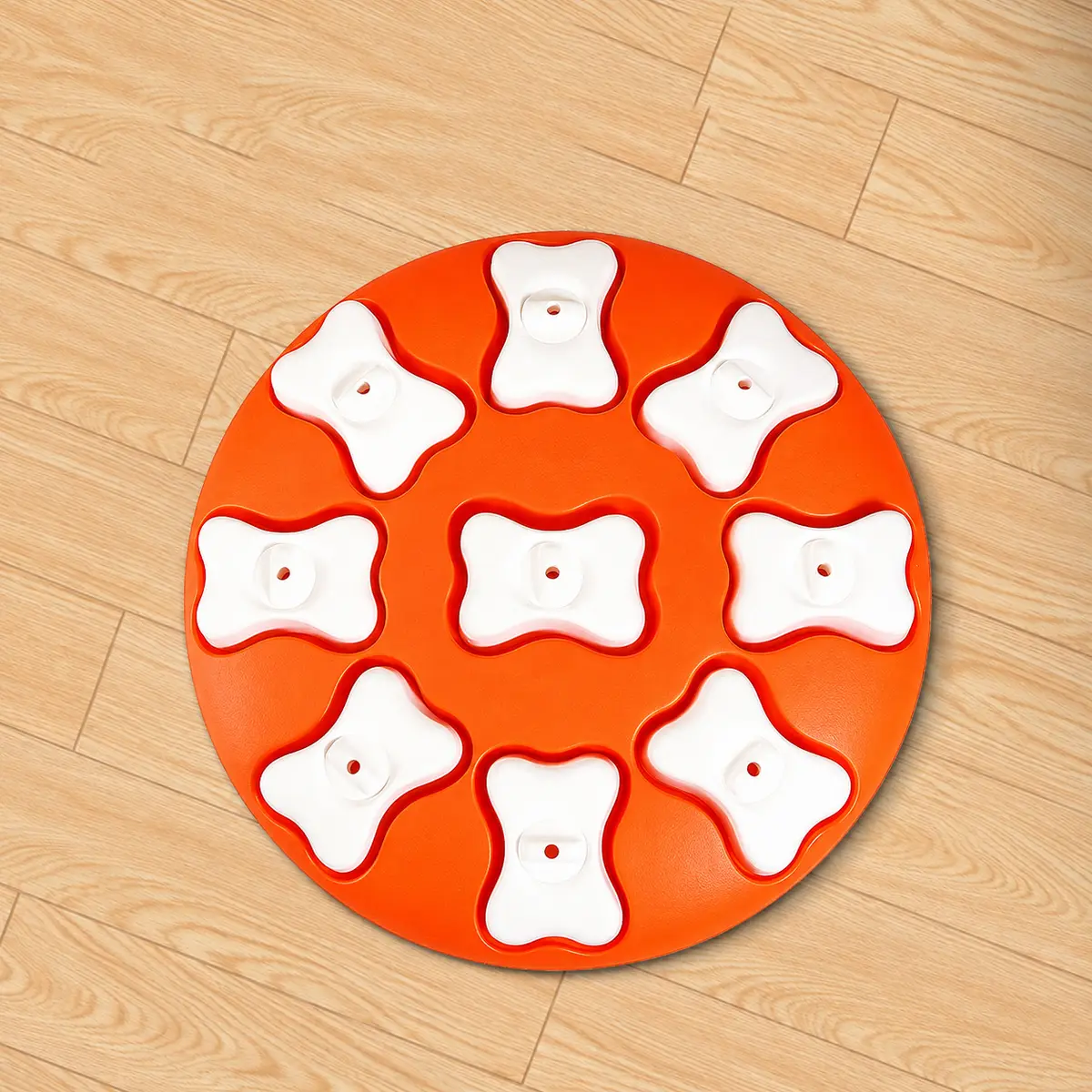
Spreading a few safe pieces across a snuffle mat or packing them into a puzzle toy turns a small treat into a few minutes of sniffing work.
Puppies and parmesan
Puppies do not need cheese. Their stomachs are sensitive, and a salty, rich food is an easy way to cause diarrhea. A puppy's small size also means salt adds up quickly.
If you want to use cheese to tempt a puppy or hide a tablet, a tiny pinch of grated parmesan or a crumb of mozzarella is enough. Introduce it on its own, and stop if your puppy's stool softens.
Signs parmesan disagreed with your dog, and when to call a vet
Mild upset usually shows within a day: gas, softer stool or one bout of diarrhea, plus extra thirst after a salty snack. Make sure fresh water is available and stop the cheese. Things usually settle within a day or two.
Call your vet the same day if vomiting repeats, your dog hunches or seems sore in the belly, or stops eating, because those can follow a fatty food. Tremors, wobbliness or seizures after eating a lot of cheese mean go to a vet immediately.
Better ways to tempt a dog
If you use parmesan to get a dog to eat, a spoonful of warm water over kibble, a little plain cooked chicken, or a lick of plain canned pumpkin often works just as well with less salt.
For treats, mozzarella cubes or a little cottage cheese are gentler options in small amounts, and crunchy vegetables such as carrot coins or green beans have almost no fat at all.
This page is general information, not veterinary advice, and it cannot replace an examination by the vet who knows your pet.
Common questions
Can dogs eat grated parmesan cheese?
Yes, a light sprinkle is fine for most healthy dogs. It is salty and rich, so keep it to a pinch on top of food rather than a regular treat.
Is parmesan cheese bad for dogs?
Not in small amounts. It is low in lactose but high in salt and fat, and the AKC warns that fatty cheese can lead to pancreatitis, so portion control matters.
Can dogs eat parmesan rind?
It is best not to. The rind is very hard and chewy, can be a choking risk, and some rinds are coated in wax. Throw it away where your dog cannot reach it.
Can dogs eat chicken parmesan?
No. Chicken parmesan is fried, salty and topped with tomato sauce that usually contains garlic and onion. Share a piece of plain cooked chicken instead.
Can dogs eat baked parmesan snacks?
Baked parmesan snacks are pure cheese, so they are very salty and fatty. A single crisp is unlikely to harm a large dog, but they are not a good treat, especially for small dogs.
Sources we checked
This guide is general information, not veterinary advice. If your pet is unwell or injured, contact your veterinarian.