Food safety
Can Dogs Eat Oranges? Yes, a Few Peeled Segments
Yes, dogs can eat oranges in small amounts. The juicy flesh is not toxic, and a peeled, seedless segment is a perfectly reasonable treat for most healthy dogs. The parts to keep away are the peel, the white pith in quantity and the seeds. Oranges are also sugary and acidic, so too much leads to an upset stomach, and plenty of dogs simply dislike the citrus smell and will turn it down.
By Matt GarnettUpdated November 13, 20264 min read3 sources
Why oranges are safe in small amounts
The flesh of an orange contains water, natural sugar, vitamin C, potassium and fiber, and nothing that poisons dogs. The AKC says veterinarians consider small amounts fine, and the ASPCA notes that eating small amounts of citrus fruit usually causes nothing worse than minor stomach upset.
Dogs make their own vitamin C, so an orange is not filling a gap in a complete diet. Think of it as a juicy, low-fat change from biscuits. The sugar is the reason to keep portions small, particularly for dogs that are overweight or have diabetes, where you should ask your vet first.
Peel, seeds and citrus oils
Do not feed the peel. It is tough, bitter and hard to digest, and a large piece can cause vomiting or get stuck. The peel also holds most of the citrus oils, which the ASPCA says can irritate and, in large amounts, cause depression of the nervous system. Seeds are a choking risk for small dogs, so remove them.
Keep citrus essential oils, orange cleaning sprays and orange-scented diffuser liquids away from your dog entirely. These are far more concentrated than the fruit. If your dog chews a bottle or licks a spill, call your vet or the ASPCA Animal Poison Control Center at (888) 426-4435; a fee may apply.
How to serve orange to your dog
Peel the orange completely, separate the segments and pull off any seeds. For a dog under 20 lb, cut each segment into two or three pieces. Navel oranges are handy because they are seedless. Serve the fruit fresh and at room temperature, or freeze a few pieces for a cool summer snack.
Skip orange juice, including fresh-squeezed. Juice concentrates the sugar and acid and loses the fiber, so it is more likely to upset the gut. Orange-flavored candy, soda, sherbet and baked goods add sugar and sometimes xylitol, which is highly toxic to dogs.
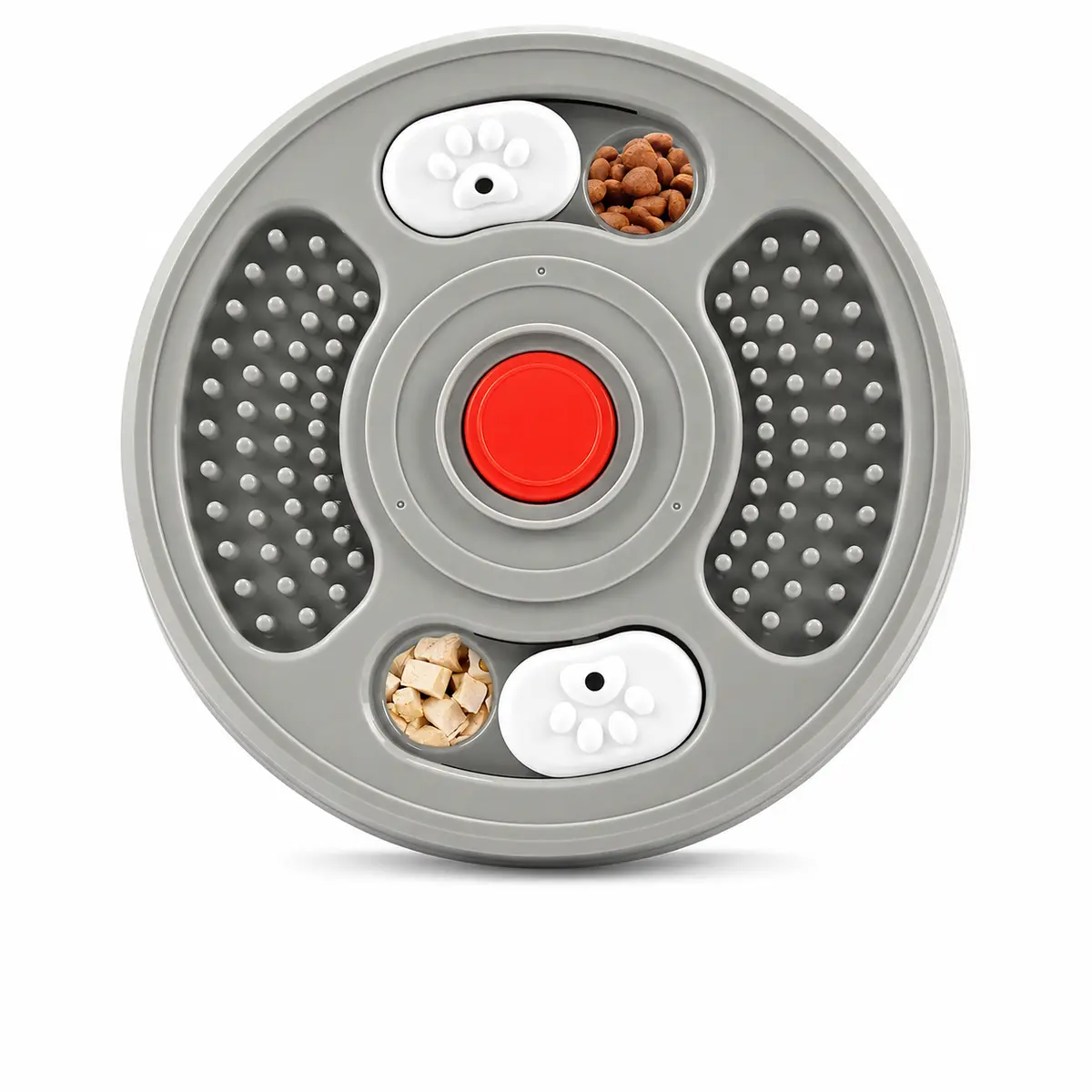
For dogs that gulp anything new, a slow feeder bowl or a lick mat keeps portions small and eating slow.
How much orange by dog size
Under 20 lb: one small piece of a segment, a few times a week. Between 20 and 50 lb: one or two segments. Over 50 lb: up to three segments. Keep total treats near 10 percent of daily calories, and do not offer orange every day.
Give the smallest amount the first time and wait 24 hours. Some dogs get loose stool from citrus even in small portions, and those dogs are better off with a different fruit. Dogs with sensitive stomachs or a history of pancreas trouble should start especially slowly.
Puppies and oranges
Puppies can try a small piece of peeled orange once they are eating solid food well. Their digestion is more sensitive to acid, so start with a piece about the size of a fingernail and see how they handle it before offering more.
Puppy food is balanced for growth, and filling up on fruit dilutes those nutrients. Save orange for an occasional reward, and keep peels out of reach, since puppies love to chew and swallow anything that rolls across the floor.
Signs of trouble and when to call the vet
Too much orange usually causes vomiting or diarrhea within a few hours to a day. Offer water, skip treats for the rest of the day, and most dogs recover without help.
Call your vet the same day if vomiting is repeated, your dog cannot keep water down, the belly seems painful or bloated, or your dog swallowed a large piece of peel and is straining or off their food. Those can point to a blockage that needs to be checked.
Common questions
Can dogs eat orange peels?
No. Orange peels are not considered toxic, but they are tough to digest, contain concentrated citrus oils and can cause vomiting or a blockage. Always peel the fruit before sharing it.
Can dogs drink orange juice?
It is best avoided. Orange juice is concentrated sugar and acid without the fiber of the fruit, so it is more likely to cause stomach upset. Fresh water is all your dog needs.
Can dogs eat oranges every day?
Daily orange is not recommended. The sugar and acid add up, and a balanced dog food already provides the nutrients. Keep it to an occasional segment a few times a week.
Are orange seeds poisonous to dogs?
Orange seeds are not known to poison dogs, but they can be a choking hazard for small breeds and add nothing useful. Pick them out, or choose seedless navel oranges.
Why does my dog hate oranges?
Many dogs dislike the strong citrus smell and sour taste, which is normal. There is no need to persuade them. Offer a fruit they enjoy, like blueberries or banana, instead.
Sources we checked
This guide is general information, not veterinary advice. If your pet is unwell or injured, contact your veterinarian.