Food safety
Can Dogs Eat Orange Peels? No — They Can Block the Gut
No. Orange peels are not a safe treat: the American Kennel Club says they are tough, fibrous and difficult to digest, which raises the risk of a gut blockage, and the ASPCA notes citrus peels contain essential oils and citric acid that can upset the stomach. If your dog ate a large amount of peel, call your vet, the ASPCA Animal Poison Control Center at (888) 426-4435 or Pet Poison Helpline at (855) 764-7661; a fee may apply. Peeled orange segments are fine in small amounts.
By Matt GarnettUpdated November 13, 20264 min read2 sources
Why orange peels are a problem for dogs
The AKC says orange peels are not considered toxic, but they are tough, fibrous and difficult to digest, and that raises the risk of a gastrointestinal blockage that may need veterinary care. A strip of peel does not soften much in the stomach, and dogs rarely chew it properly.
The ASPCA adds that the stems, leaves, peels, fruit and seeds of citrus plants contain citric acid and essential oils. Eating the fruit is unlikely to cause more than minor stomach upset, but the peel holds more of the oils, and large amounts can irritate the gut.
What to do if your dog ate orange peel
Take away any peel that is left and check your dog is not gagging or choking. Estimate how much was eaten: a strip from your snack, the peel of a whole orange, or a bag of peels from the trash. Note your dog's weight too.
For a small strip in a medium or large dog, watching at home is usually enough. For a whole orange's peel in a small dog, or a lot of peel in any dog, call your vet the same day. Do not make your dog vomit unless a vet tells you to.
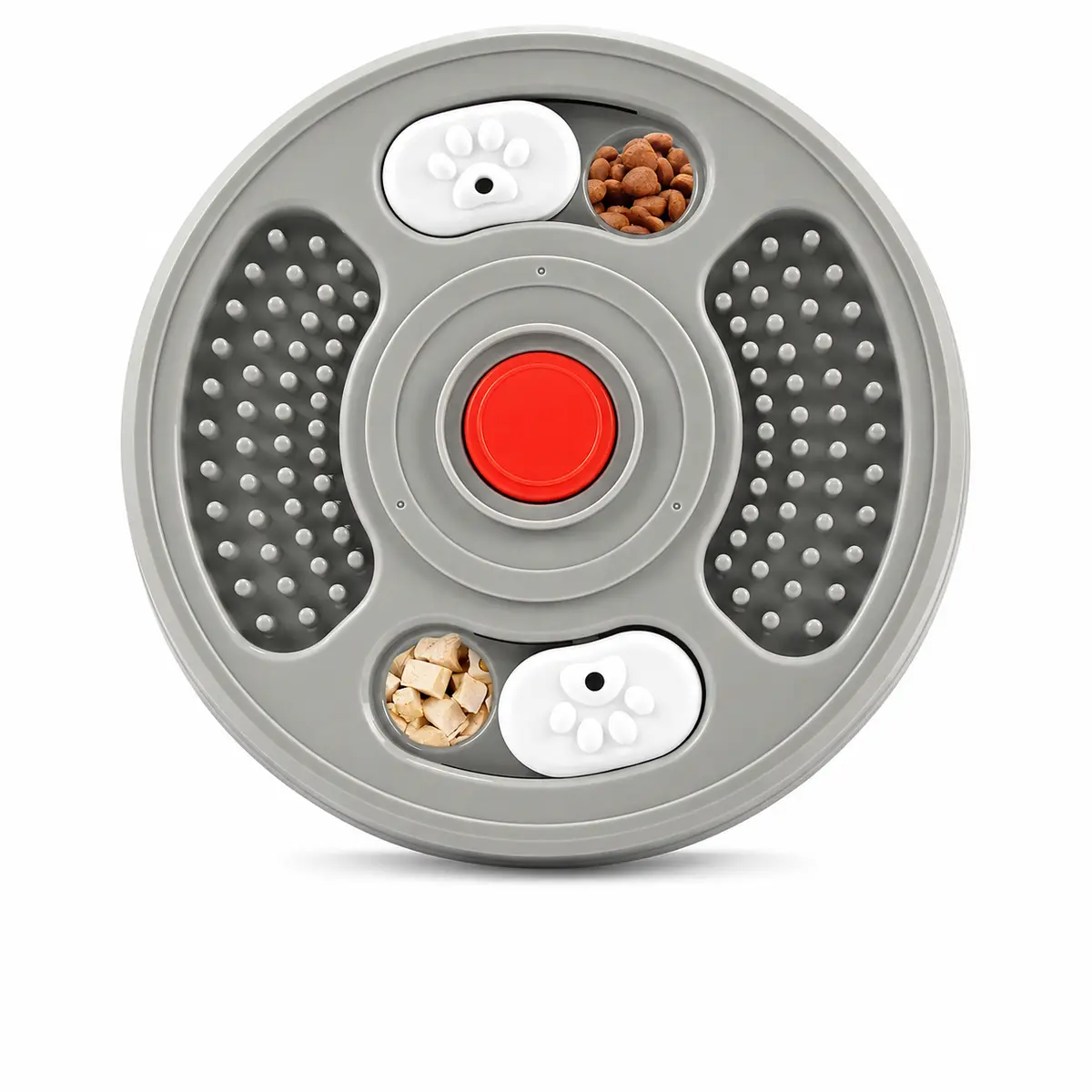
For dogs that gulp anything new, a slow feeder bowl or a lick mat keeps portions small and eating slow.
Signs of stomach upset or a blockage
Mild irritation usually shows within a day as drooling, vomiting once, or a soft stool. If your dog is otherwise bright and eating, it usually settles within a day or two.
Call your vet the same day for vomiting that repeats, retching, loss of appetite, a sore or swollen belly, straining or not passing stool, or lethargy over the next few days. Those can be signs that peel is stuck. Go immediately if your dog is choking or collapses.
Orange zest, candied peel and orange oil
Grated zest in baking is a small amount, but the cakes, muffins and cookies it goes into bring sugar and fat, and sometimes raisins or chocolate, which are toxic to dogs. Candied orange peel is sugar-coated and still tough.
Orange essential oil and citrus-scented cleaners are far more concentrated than peel. Do not put citrus oil on your dog or in food or water, and keep bottles and diffusers out of reach. Call your vet or a poison line if your dog licked or swallowed an essential oil.
Puppies and orange peels
Puppies chew whatever they find, and a peel from the floor or trash is an easy target. Their intestines are narrow, so a piece of peel that an adult dog would pass can block a puppy. Keep peels in a lidded can.
If you want to share orange with a puppy, a small piece of a peeled, seedless segment is enough. Introduce it alone and watch for a soft stool over the next day. Call your vet straight away if a puppy swallowed a large piece of peel.
Other citrus and fruit to give instead
The AKC suggests small pieces of orange or tangerine flesh, without the peel, if your dog enjoys citrus. Lemons, limes and grapefruit are more acidic and better avoided.
Many dogs prefer fruit that is easier on the stomach: blueberries, cored apple slices, seedless watermelon or a few slices of banana. Keep any fruit to a small share of what your dog eats in a day.
This page is general information, not veterinary advice, and it cannot replace an examination by the vet who knows your pet.
Common questions
Are orange peels toxic to dogs?
The AKC says they are not considered toxic, but they are tough and hard to digest and can cause a blockage. The ASPCA notes citrus peels contain oils that can upset the stomach.
My dog ate a whole orange with the peel. What should I do?
Watch closely for vomiting, retching, loss of appetite or straining, and call your vet for advice, especially if your dog is small. Do not make your dog vomit unless told to.
Can dogs eat clementine or tangerine peels?
No. Thinner peels are still fibrous and hold citrus oils. Peel the fruit and share a small piece of the flesh with the seeds removed instead.
Can dogs eat the white part of an orange?
A little white pith is not harmful, but it is bitter and adds fiber that can upset some stomachs. Remove as much as you easily can before sharing.
Can orange peel keep dogs away from plants?
Citrus scents put some dogs off, but peels left in the garden can be eaten and cause a blockage. Ask your vet or a trainer about safer ways to protect plants.
Sources we checked
This guide is general information, not veterinary advice. If your pet is unwell or injured, contact your veterinarian.