Food safety
Can Dogs Eat Nutella? No — It Contains Cocoa
No, dogs should not eat Nutella, because it contains cocoa, which is toxic to dogs. It is mostly sugar and palm oil, with hazelnuts and cocoa. The ASPCA lists chocolate and cocoa as causing vomiting, diarrhea, a racing heart, tremors and seizures, and Nutella's fat and sugar can cause stomach upset or pancreatitis. A lick is unlikely to be serious for a large dog, but a jar is. If your dog ate Nutella, call your vet or ASPCA Animal Poison Control at (888) 426-4435; a fee may apply.
By Matt GarnettUpdated November 13, 20264 min read2 sources
Why Nutella is unsafe for dogs
Chocolate and cocoa contain methylxanthines, mainly theobromine and caffeine. The ASPCA explains that these can cause vomiting, diarrhea, an abnormal heart rhythm, tremors, seizures and in severe cases death, and that the darker the chocolate and the more cocoa, the greater the risk.
Nutella contains less cocoa than dark or baking chocolate, which is why a lick is rarely an emergency. But it is also very high in sugar and fat. The AKC notes that fatty foods can trigger pancreatitis, and the AKC lists chocolate among foods dogs should never eat.
My dog ate Nutella: what to do
Move the jar out of reach and work out how much is gone: a lick, a spoonful, a sandwich, or most of a jar. Note your dog's weight and the time. Do not try to make your dog vomit unless a vet or poison control tells you to.
Call your vet, ASPCA Animal Poison Control at (888) 426-4435 or Pet Poison Helpline at (855) 764-7661. They can tell you whether the amount needs treatment based on your dog's size. A fee may apply. Have the label to hand, especially if it is not Nutella but another spread.
How much Nutella is a concern by weight
There is no safe amount to give on purpose. As a guide to urgency: a lick off a knife is unlikely to cause more than mild upset in a dog over 50 lb; a spoonful is more concerning for a dog under 20 lb; dogs of 20 to 50 lb fall in between.
A large part of a jar is a concern for any dog, both for the cocoa and the fat, and needs a call to your vet straight away. Dogs with heart disease, a history of pancreatitis or seizures should be seen after any amount.
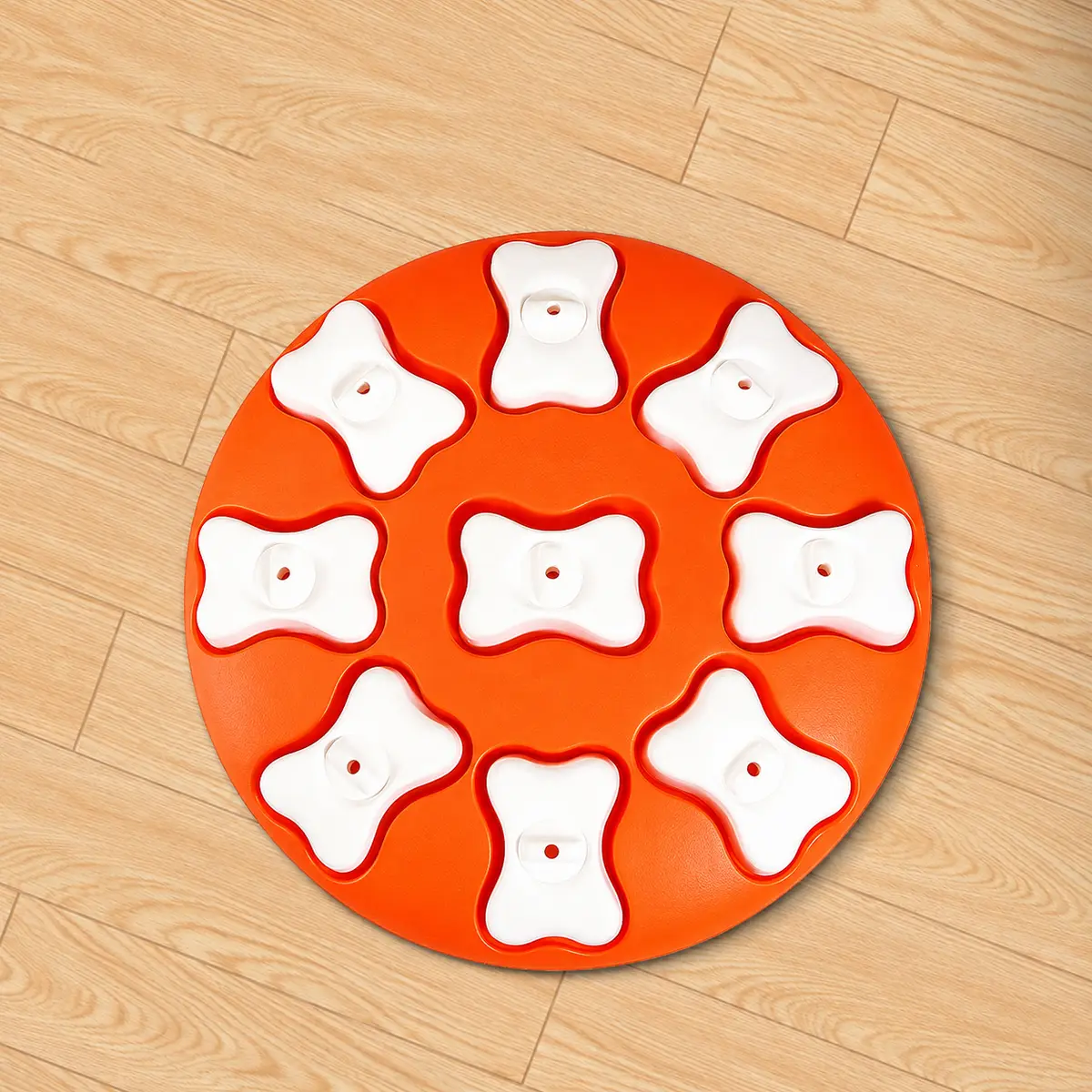
Spreading a few safe pieces across a snuffle mat or packing them into a puzzle toy turns a small treat into a few minutes of sniffing work.
Puppies and Nutella
Puppies are small, so a given amount of cocoa and fat has a bigger effect, and their stomachs are sensitive. Puppies are also the most likely to lick a knife left on a plate or chew open a jar or snack pack.
If a puppy ate any Nutella, call your vet or poison control for advice the same day. Keep spreads, cookies and chocolate snacks in high cupboards, and do not leave breakfast plates where a puppy can reach them.
Signs of chocolate poisoning and when to call a vet
Signs usually start within several hours: vomiting, diarrhea, increased thirst and urination, restlessness, panting and a racing heart. More severe signs include tremors, a high temperature, wobbling and seizures. Pancreatitis from the fat can appear a day or two later as vomiting, a painful belly and refusing food.
Go to an emergency vet immediately for tremors, seizures, collapse or a very fast heartbeat. Call your vet the same day for repeated vomiting or diarrhea, unusual restlessness or a painful belly, and mention the Nutella and how much was eaten.
Safer spreads and treats for dogs
If your dog loves to lick a spread, a thin smear of plain, unsalted peanut butter that contains no xylitol is a safer choice. The AKC lists it as an occasional treat in small portions.
Plain canned pumpkin or plain yogurt for dogs that tolerate dairy can be spread on a lick mat and frozen. Keep Nutella and other chocolate products for people only.
This page is general information, not veterinary advice, and it cannot replace an examination by the vet who knows your pet.
Common questions
Is Nutella toxic to dogs?
Yes. Nutella contains cocoa, and chocolate and cocoa are toxic to dogs. It has less cocoa than dark chocolate, so a lick is rarely serious, but it is also high in sugar and fat and should never be shared.
My dog licked a Nutella knife. Should I worry?
A single lick is unlikely to harm a healthy dog. Watch for vomiting or diarrhea, and call your vet if your dog is very small, has heart problems or seems unwell.
How much Nutella is dangerous for a dog?
It depends on your dog's weight and how much was eaten. A spoonful is more concerning for a small dog, and a large part of a jar is a concern for any dog. Call your vet or poison control for advice.
Can dogs eat hazelnuts?
Hazelnuts are not toxic like macadamias, but they are high in fat and can be a choking hazard. They are not a good treat. Call your vet if your dog ate a lot of them.
Can dogs eat chocolate spread or Nutella crepes?
No. Any chocolate spread contains cocoa, and crepes and pastries add more fat and sugar. Call your vet or poison control if your dog ate a large amount.
Sources we checked
This guide is general information, not veterinary advice. If your pet is unwell or injured, contact your veterinarian.