Food safety
Can Dogs Eat Mushrooms? Store-Bought Yes, Wild Never
Plain store-bought mushrooms are generally safe for dogs, but wild mushrooms can poison them, and some species are deadly. If your dog ate a mushroom from the yard, a park or a trail, call your vet, ASPCA Animal Poison Control at (888) 426-4435 or Pet Poison Helpline at (855) 764-7661 now; a consultation fee may apply. Do not wait for symptoms, and do not try to identify the mushroom yourself.
By Matt GarnettUpdated November 13, 20264 min read2 sources
Why wild mushrooms are so dangerous
Only a small share of the thousands of mushroom species in the United States are toxic, but the dangerous ones look a lot like harmless ones, and even experts struggle to tell them apart from a photo. Pet Poison Helpline notes that most confirmed fatal cases in pets involve Amanita, Galerina or Lepiota mushrooms, and the AKC adds false morels, fly agaric and Inocybe and Clitocybe species to the list of concerns.
Depending on the species, mushroom toxins can attack the gut, the nervous system, the liver or the kidneys. Death cap mushrooms are especially treacherous: a dog can seem to recover after the first bout of vomiting and diarrhea, and then develop liver failure a day or two later. That is why every wild mushroom a dog eats is treated as toxic until proven otherwise.
What to do if your dog ate a wild mushroom
Call your vet, an emergency clinic, ASPCA Animal Poison Control at (888) 426-4435 or Pet Poison Helpline at (855) 764-7661 immediately, even if your dog seems fine. Note the time, roughly how much was eaten, and your dog's weight. Do not make your dog vomit unless a vet tells you to.
If you can do it safely, collect a sample of the mushroom, including the base, and any others growing nearby. The AKC suggests wrapping it in a damp paper towel and putting it in a paper bag, not plastic. Take a few photos of where it was growing. Bring the sample to the clinic, but do not delay leaving to go looking for one.
Signs of mushroom poisoning and their timing
Some toxins cause signs within 15 to 30 minutes, while others take up to 24 hours or longer to appear. Early signs include vomiting, diarrhea, belly pain, heavy drooling, weakness and lethargy. Nervous system signs include a staggering walk, tremors, agitation, seizures and collapse.
Later signs of liver or kidney damage include yellow gums or eyes, black or tarry stool, refusing food, drinking and urinating more or less than usual, and extreme tiredness. Any of these after possible mushroom exposure needs veterinary care today, and a seizure or collapse needs an emergency clinic now.
Store-bought mushrooms: how to serve them
Plain grocery mushrooms such as white button, cremini and portobello are generally considered safe for dogs. Wash them, cook them plain by steaming, boiling or dry roasting, and cut them into small pieces. Never share mushrooms cooked with butter, oil, salt, garlic or onion, which is how most people eat them, because those additions are the real hazard.
Mushrooms are not a necessary part of a dog's diet, so there is no reason to give them often. A raw mushroom is harder to digest, so cooked and plain is the better choice if you share any at all.
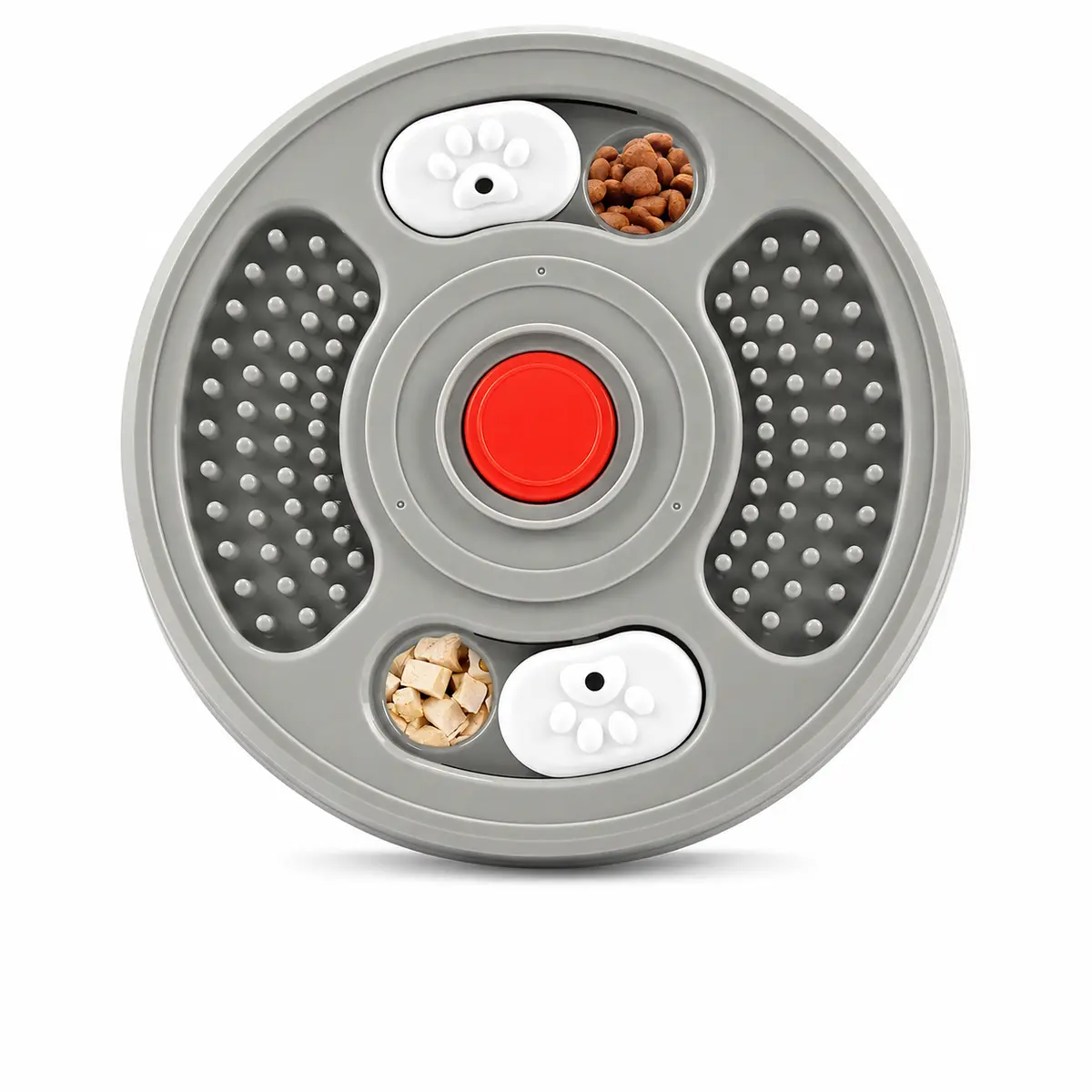
For dogs that gulp anything new, a slow feeder bowl or a lick mat keeps portions small and eating slow.
How much store-bought mushroom by weight
Keep the portion small and inside the 10 percent treat allowance. A dog under 20 lb needs no more than one or two small slices of plain cooked mushroom, a dog of 20 to 50 lb a few slices, and a dog over 50 lb a small spoonful.
Offer a little the first time and watch for loose stool or vomiting over the next day. Skip it altogether for dogs with sensitive stomachs or on prescription diets, and for puppies, who are better off with no mushrooms at all.
Keeping your dog safe on walks and in the yard
Mushroom poisoning cases rise in late summer and fall and after rainy spells, when mushrooms pop up overnight on lawns, mulch beds and woodland trails. Walk your yard after rain and pull up and bag any mushrooms before letting your dog out, and keep dogs leashed in wooded areas during mushroom season.
Puppies and young dogs that mouth everything are at the greatest risk. Teaching a solid leave-it cue helps. If you see your dog chewing anything that looks like a mushroom, treat it as an emergency and call for advice straight away.
This page is general information, not veterinary advice, and it cannot replace an examination by the vet who knows your pet.
Common questions
Can dogs eat cooked mushrooms?
Plain cooked store-bought mushrooms are generally safe in small amounts. Mushrooms cooked with butter, oil, salt, garlic or onion are not, and those additions are how most cooked mushrooms are served, so set a plain portion aside if you share any.
Can dogs eat raw mushrooms?
A raw store-bought mushroom is not toxic, but it is harder to digest than a cooked one. Never let your dog eat raw wild mushrooms, which can be deadly. If you are unsure where a mushroom came from, treat it as wild.
How long does it take for mushroom poisoning to show in dogs?
It varies by species. Some toxins cause vomiting within 15 to 30 minutes, while others take up to a day, and liver damage from death caps can appear after a false recovery. Call for advice right away rather than waiting.
Are yard mushrooms poisonous to dogs?
Some are and some are not, and you cannot reliably tell which by looking. Treat every yard mushroom as potentially toxic. Remove them after rain, and call your vet or a poison control line if your dog eats one.
Can dogs eat portobello mushrooms?
Plain portobello mushrooms from the grocery store are generally considered safe for dogs in small, cooked pieces. Avoid grilled portobellos that were marinated or seasoned with garlic, onion, salt or oil.
Sources we checked
This guide is general information, not veterinary advice. If your pet is unwell or injured, contact your veterinarian.