Food safety
Can Dogs Eat Mac and Cheese? Not a Good Idea — Here's Why
No, mac and cheese is not a good food for dogs, though a stolen spoonful is rarely dangerous. Plain pasta is harmless, but the sauce is butter, milk and cheese, which the ASPCA notes many pets cannot digest well, plus a lot of salt and fat. Boxed mixes and restaurant versions may also use garlic or onion powder, and baked recipes are often topped with breadcrumbs, bacon or more cheese. Here is when a bite is fine, what to watch for, and when to call a vet.
By Matt GarnettUpdated November 13, 20264 min read2 sources
Why mac and cheese is a poor choice for dogs
Macaroni on its own is cooked wheat pasta, and the American Kennel Club notes that plain, fully baked bread and other plain grains are fine for most dogs in small amounts. The problem is the sauce, which combines butter, milk and cheese into one rich, salty mix.
The ASPCA explains that pets have little lactase, the enzyme that digests milk sugar, so dairy can cause diarrhea and other digestive upset. The AKC adds that cheese is high in fat and some dogs have trouble digesting dairy, which is why it suggests lower-fat cheeses even as an occasional treat.
If your dog ate mac and cheese
A spoonful of plain mac and cheese stolen from a plate will usually cause nothing worse than soft stool or gas in a healthy adult dog. Offer water, keep feeding their normal meals and watch for vomiting or diarrhea over the next day.
If your dog ate a large bowl, a whole tray or a version with garlic or onion, call your vet. If the label lists garlic or onion in quantity, or your dog is small, you can also call ASPCA Animal Poison Control at (888) 426-4435 or Pet Poison Helpline at (855) 764-7661. A fee may apply.
How much is too much by weight
There is no portion of mac and cheese that does a dog good, so it should not be a planned treat. As a guide to how worried to be: a teaspoon or two is unlikely to upset dogs under 20 lb, a tablespoon or two is unlikely to upset dogs of 20 to 50 lb, and up to a few tablespoons for dogs over 50 lb.
More than that, especially a plateful, is a big hit of fat and salt and more likely to cause vomiting, diarrhea or pancreatitis. Dogs that are overweight, have had pancreatitis or have kidney or heart disease should not have any.
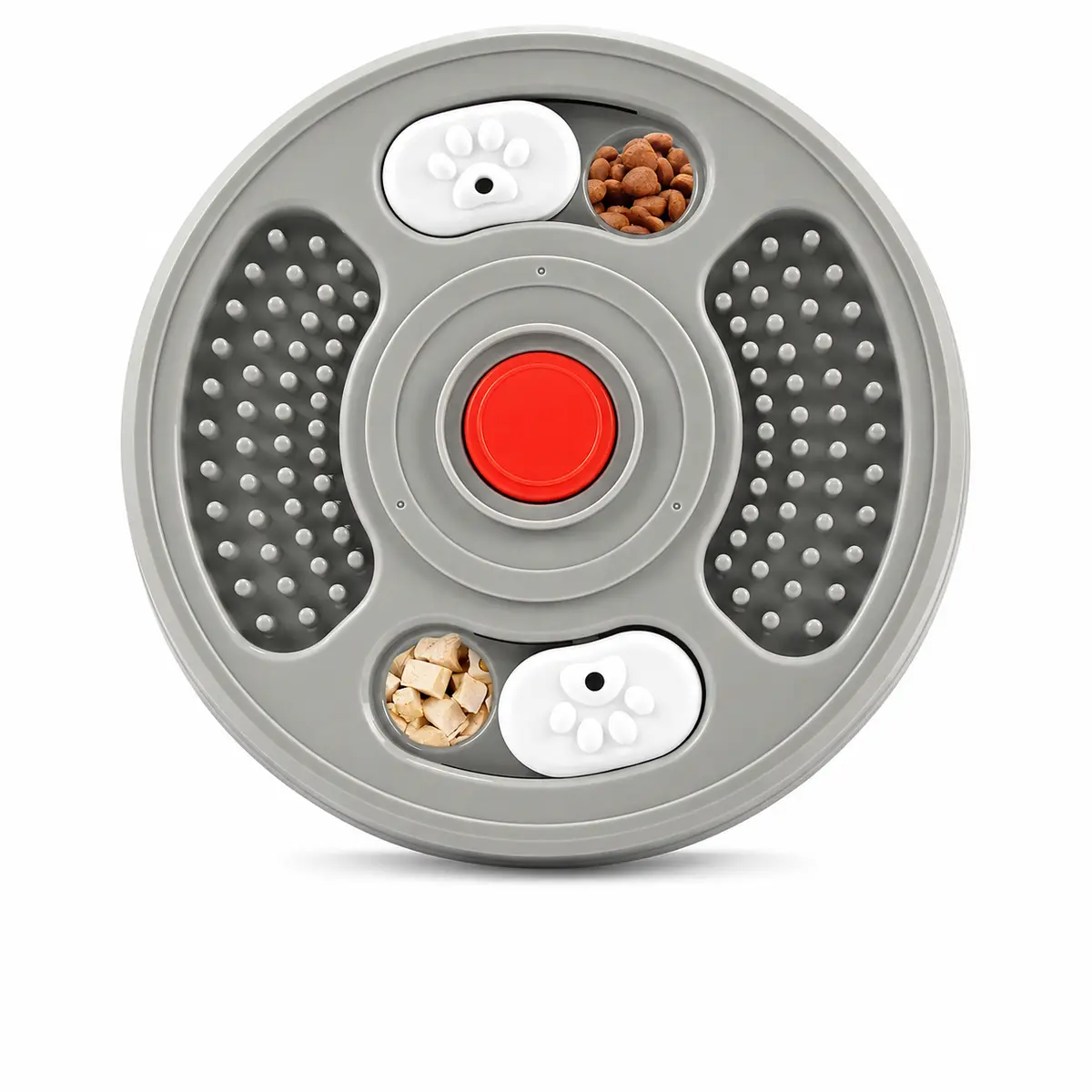
For dogs that gulp anything new, a slow feeder bowl or a lick mat keeps portions small and eating slow.
Puppies and mac and cheese
Puppies have small, sensitive stomachs, and a rich, cheesy food is more likely to give them diarrhea. They also need their calories from puppy food balanced for growth, so there is no room for comfort food.
If a puppy grabbed a mouthful, watch for loose stool or vomiting and keep it drinking. Call your vet if diarrhea lasts more than a day, contains blood, or if the puppy seems tired or will not eat.
Signs of trouble and when to call a vet
Most dogs that eat mac and cheese show mild signs within a few hours: gas, a gurgling belly, soft stool or one vomit. These usually settle within a day. Excessive thirst and urination can follow a very salty meal.
Call your vet the same day for repeated vomiting, a hunched or painful belly, refusing food or lethargy, which can follow a fatty meal. If garlic or onion was involved, watch over the next few days for weakness, pale gums, fast breathing or dark urine, and call your vet if you see any.
Better options for your dog
If you want to share pasta night, set aside a few pieces of plain cooked macaroni before the sauce goes on. A spoonful of plain cooked pasta is a better occasional treat than the finished dish.
For a cheesy reward, the AKC suggests lower-fat cheeses such as a small cube of part-skim mozzarella or a spoonful of cottage cheese, for dogs that tolerate dairy. Keep it small, and save it for training rather than mealtimes.
This page is general information, not veterinary advice, and it cannot replace an examination by the vet who knows your pet.
Common questions
Can dogs eat Kraft mac and cheese?
A small taste is unlikely to harm a healthy dog, but boxed mac and cheese is salty, fatty and dairy-based, and some flavors contain garlic or onion. Check the label, and do not make it a regular treat.
Can dogs eat plain macaroni noodles?
Yes. Plain cooked macaroni with no butter, salt or sauce is safe for most dogs in small amounts. It offers little nutrition, so keep it to a few pieces as an occasional treat.
Can mac and cheese give a dog diarrhea?
Yes. The dairy in the sauce can cause diarrhea in dogs that digest lactose poorly, and the fat can upset the stomach. Call your vet if diarrhea lasts more than a day or contains blood.
Can puppies eat mac and cheese?
It is best not to give puppies mac and cheese. Their stomachs are sensitive to rich, fatty, dairy-heavy food, and they need their calories from puppy food designed for growth.
Can dogs eat baked mac and cheese?
Baked mac and cheese is usually richer, with extra cheese, butter and breadcrumbs, and sometimes bacon. It is more likely to upset your dog's stomach, so keep the dish out of reach.
Sources we checked
This guide is general information, not veterinary advice. If your pet is unwell or injured, contact your veterinarian.