Food safety
Can Dogs Eat Kiwi? Yes, Peeled and Cut Small
Yes, dogs can eat kiwi as an occasional treat. The green or golden flesh is not toxic, and it carries vitamin C, vitamin K, potassium and fiber. The precautions are about preparation: peel off the fuzzy skin, which is tough and hard to digest, and always cut the fruit into small pieces, since a whole kiwi is the right size to block a dog's airway. Too much at once can also cause diarrhea.
By Matt GarnettUpdated November 13, 20264 min read2 sources
Why kiwi is safe for dogs
Kiwi fruit has no compound known to be toxic to dogs, and the ASPCA lists kiwi among fruits that are fine to share with pets once peeled and cut. The flesh is soft and sweet, and the tiny black seeds are small enough to pass through without trouble at normal treat sizes.
The AKC notes that kiwi is high in fiber. That is the reason for moderation: a few pieces can be a pleasant change, but a dog that eats several kiwis may get loose stools or an upset stomach. Kiwi is also fairly acidic, which some dogs do not tolerate well.
The warning: whole kiwis and the skin
The biggest risk with kiwi is choking. A whole kiwi is smooth, firm and roughly the width of a large dog's throat, and the AKC warns that a dog could swallow one in a single gulp and block its airway. Never toss a whole kiwi to a dog, and keep fruit bowls out of reach.
The skin is not toxic, but it is fuzzy, tough and high in fiber, and it can upset the stomach. If your dog grabs a whole kiwi or chews a lot of peel, watch closely, and call your vet straight away if your dog is gagging, coughing or struggling to breathe.
How to serve kiwi to your dog
Choose a ripe kiwi that gives slightly when pressed, and wash it. Cut off both ends, then peel away the skin with a knife or scoop out the flesh with a spoon. Slice it into rounds and cut those into pieces: blueberry-sized cubes for a dog around 10 lb, thumbnail-sized pieces for larger dogs.
Plain fresh kiwi is best. Frozen cubes make a cool summer treat once they soften slightly. Avoid dried kiwi, which is often sugared, and fruit cups or desserts packed in syrup. Kiwi-flavored candy and drinks have no fruit benefit and may contain sweeteners.
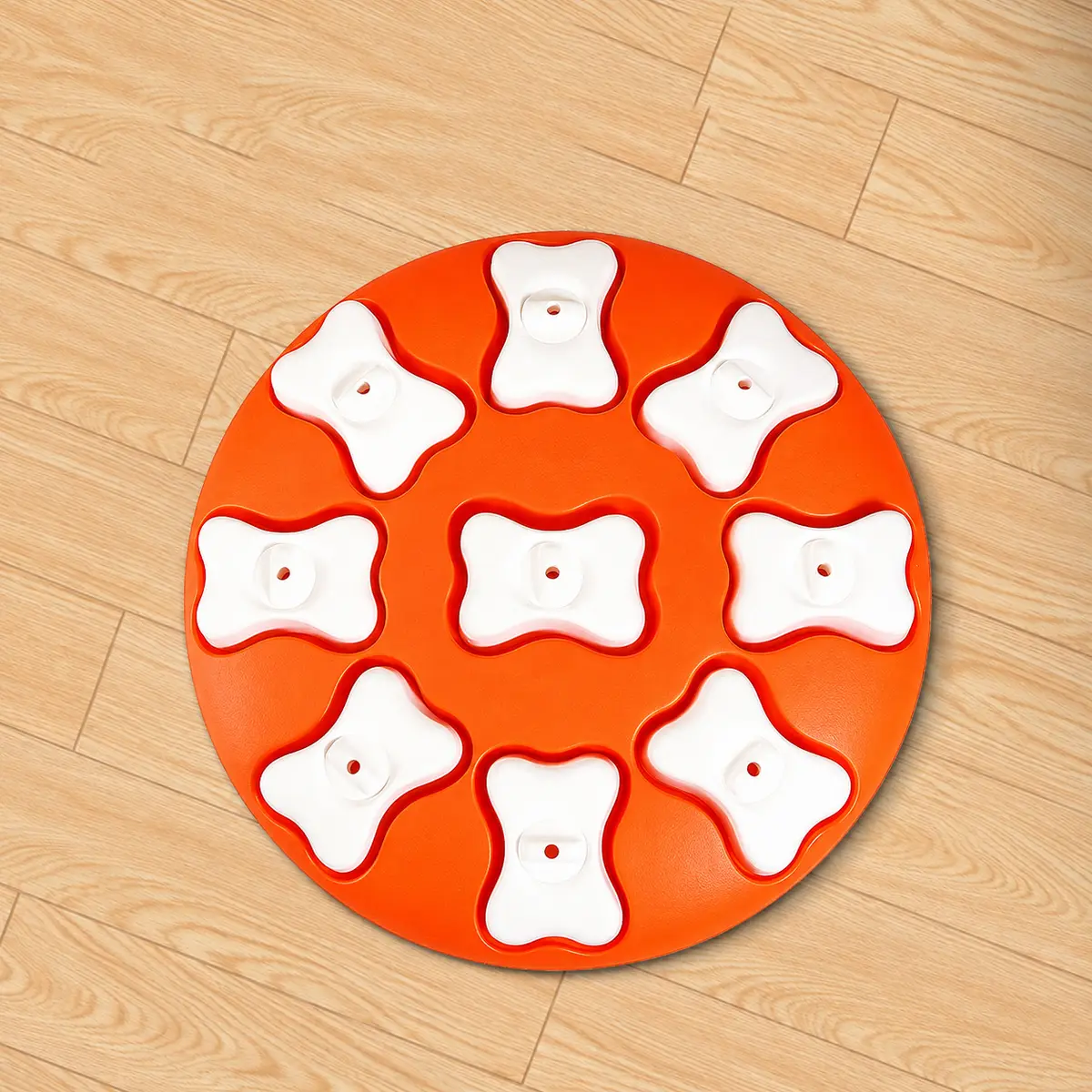
Spreading a few safe pieces across a snuffle mat or packing them into a puzzle toy turns a small treat into a few minutes of sniffing work.
How much kiwi by dog weight
Keep treats under about 10 percent of your dog's daily calories. For a dog under 20 lb, two or three small cubes is plenty. For a dog of 20 to 50 lb, a few thin slices, about a quarter of a kiwi, is a sensible occasional amount.
For a dog over 50 lb, up to half a kiwi cut into pieces is enough. Start with a single piece the first time to see how your dog's stomach handles it, and offer kiwi a couple of times a week at most rather than every day.
Puppies and dogs that should skip kiwi
Puppies can try a tiny peeled cube once they are on solid food. Their airways are narrow and they tend to gulp, so cut it very small and supervise. A complete puppy food covers everything they need, so fruit should be an occasional taste only.
Dogs with diabetes should check with their vet first, since kiwi contains natural sugar. Dogs with kidney disease need their vet's approval because of the potassium, and dogs with sensitive stomachs or a history of reacting to acidic foods may be better off skipping it altogether.
Signs it disagreed with them, and what to give instead
Too much kiwi usually shows as diarrhea, gas or vomiting within a day. Call your vet the same day if vomiting repeats, your dog seems uncomfortable or lethargic, or you notice itching, hives or facial swelling, which can suggest a food sensitivity. Choking or trouble breathing is an emergency.
If kiwi does not suit your dog, blueberries, seedless watermelon with the rind removed and banana slices are soft, low-risk fruit options. Keep every fruit to a few pieces and count it in the daily treat allowance.
This page is general information, not veterinary advice, and it cannot replace an examination by the vet who knows your pet.
Common questions
Can dogs eat kiwi skin?
It is best to peel kiwi first. The skin is not toxic, but it is fuzzy, tough and high in fiber, which can upset a dog's stomach. A small piece of skin is unlikely to cause harm, but do not feed it on purpose.
Can dogs eat kiwi seeds?
Yes. Kiwi seeds are tiny and soft and are not known to be harmful to dogs at normal treat amounts. Unlike apple seeds or cherry pits, there is no need to remove them.
Can dogs eat golden kiwi?
Yes. Golden kiwi is a slightly sweeter variety with smoother skin, and it is just as safe as green kiwi. Peel it, cut it small and keep the portion the same.
Can dogs eat dried kiwi?
Dried kiwi is usually coated in added sugar, which is not good for dogs. It is also chewy and concentrated. Fresh, peeled kiwi in small pieces is the better choice.
Is kiwi good for dogs?
Kiwi is not harmful and adds fiber and vitamin C, but dogs make their own vitamin C and do not need fruit in their diet. Its value is as an occasional, low-calorie treat that some dogs enjoy.
Sources we checked
This guide is general information, not veterinary advice. If your pet is unwell or injured, contact your veterinarian.