Food safety
Can Dogs Eat Honey? Yes, but Only a Little
Yes, healthy adult dogs can eat a small amount of honey. It is not toxic, and both the AKC and Tufts veterinary nutritionists describe natural sugars such as honey as safe in moderation. Honey is almost pure sugar, though, so it suits a lick from a spoon rather than a regular treat. Raw honey should not go to puppies or dogs with weak immune systems, and dogs with diabetes or a weight problem should skip it.
By Matt GarnettUpdated November 13, 20264 min read2 sources
Why honey is safe in small amounts
Honey is made of natural sugars, mostly fructose and glucose, with tiny amounts of other compounds. Nothing in it is poisonous to dogs. The AKC says honey is safe for dogs in small quantities, and the Tufts Petfoodology team lists honey alongside maple syrup and fruit as natural sugars that are generally safe for pets.
The reason to keep it small is sugar, not toxicity. A teaspoon of honey has roughly 20 calories, which is a noticeable chunk of a small dog's daily treat budget, and frequent sugar adds up in weight and dental wear.
Dogs that should not have honey
Raw honey can contain botulism spores. Healthy adult dogs usually handle them, but the AKC advises against giving raw honey to puppies or to dogs with weakened immune systems, such as those having chemotherapy or on immune-suppressing medicines.
Dogs with diabetes should not have honey, because it raises blood sugar quickly. Overweight dogs are also better off without it. If your dog has any long-term condition, ask your vet before adding a sweet extra, even a small one.
How to give honey to your dog
The simplest way is a small lick from a spoon, or a thin smear on a lick mat or inside a rubber toy. Spread it thinly so it lasts longer and so your dog gets the taste without a large dose of sugar.
Use plain honey from a jar you would eat yourself. Check that it really is honey: some cheap blends and honey-flavored syrups are cut with other sweeteners. Brush your dog's teeth or give a dental chew afterward, since sugar on the teeth feeds plaque.
How much honey by dog weight
Keep it tiny and occasional. As a rough guide for healthy adult dogs: under 20 lb, no more than a quarter teaspoon; 20 to 50 lb, up to half a teaspoon; over 50 lb, up to a teaspoon. That is a once-in-a-while amount, not a daily one.
Treats of all kinds should stay within about 10 percent of daily calories, and the Tufts guidance is to count sweet extras inside that limit. If your dog has had honey in a treat that day, skip the spoonful.
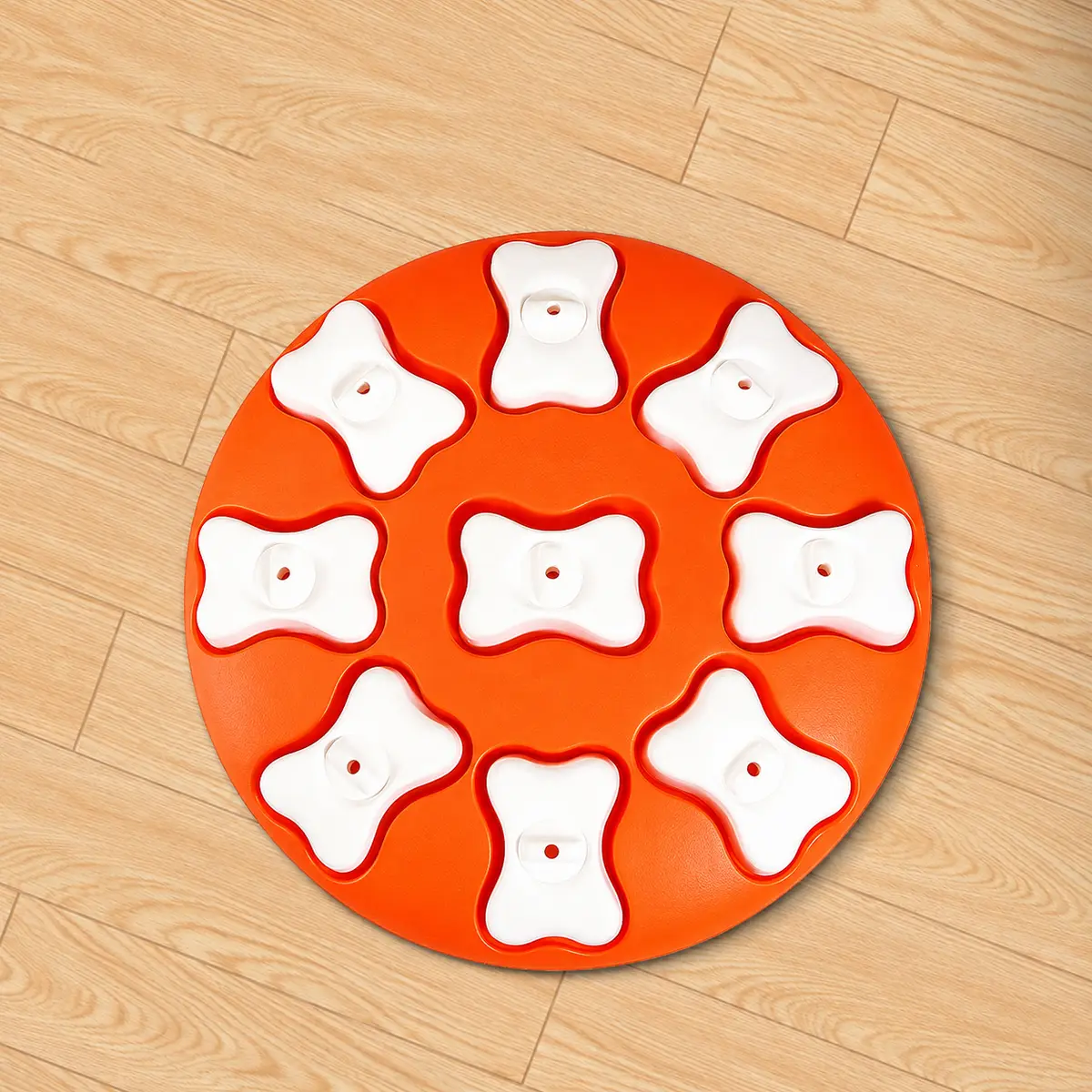
Spreading a few safe pieces across a snuffle mat or packing them into a puzzle toy turns a small treat into a few minutes of sniffing work.
Honey and puppies
Puppies should not have raw honey because their immune systems are still developing and may not cope with botulism spores. Pasteurized honey removes that particular risk, but there is still no nutritional reason to give sugar to a growing puppy.
Puppies get everything they need from a complete puppy food. Rewards for training work just as well as a small piece of their regular kibble or a puppy treat sized for their mouth.
Signs honey disagreed with your dog
A dog that gets into a whole jar of honey may have vomiting, diarrhea or a very full, uncomfortable belly within a few hours. Most recover on their own, but call your vet if vomiting continues, if your dog seems weak or wobbly, or if your dog has diabetes.
Glass jars add a second risk: a dog that knocks over and licks a broken jar can cut its mouth or paws. Check for blood or limping and call your vet if you see either.
Honey snacks to avoid, and what to give instead
Honey-roasted nuts, honey-glazed ham and honey candies come with salt, fat or spices that are worse for dogs than the honey itself. Honey-sweetened baked goods may also contain chocolate, raisins or xylitol, all of which are toxic to dogs. If a dog eats a product containing xylitol, call ASPCA Animal Poison Control at (888) 426-4435 or Pet Poison Helpline at (855) 764-7661 straight away; a fee may apply.
For a naturally sweet treat with fewer calories, try a few blueberries or a slice of apple with the core removed. For lick mats, plain unsweetened yogurt or plain pumpkin puree spreads just as well as honey.
This page is general information, not veterinary advice, and it cannot replace an examination by the vet who knows your pet.
Common questions
Can dogs eat raw honey?
Healthy adult dogs can have a little raw honey. It should not be given to puppies or to dogs with weakened immune systems, because raw honey can contain botulism spores that a mature immune system usually handles.
Can dogs eat honey every day?
It is better not to. Honey is almost pure sugar, and daily servings add calories and wear on the teeth. Keep it as an occasional lick rather than part of your dog's routine.
Can dogs have honey for a cough?
Do not use honey to treat a cough at home. A cough in a dog can have many causes, from kennel cough to heart disease, and it needs to be checked by your vet before anything is given.
Can dogs eat honey nut Cheerios?
A few are unlikely to harm a healthy dog, but they are sugary cereal with nothing a dog needs. Plain Cheerios are a lower-sugar option if you want something small and crunchy for training.
Can dogs eat honey roasted peanuts?
They are not a good choice. Honey roasted peanuts carry added sugar, salt and oil. Plain, unsalted peanuts in small amounts are safer, and check that peanut butter contains no xylitol before sharing it.
Sources we checked
This guide is general information, not veterinary advice. If your pet is unwell or injured, contact your veterinarian.