Food safety
Can Dogs Eat Gum? Check Xylitol Immediately
No, dogs should not eat chewing gum because products containing xylitol can cause life-threatening poisoning. The risk depends on the actual ingredients, not whether the gum looks ordinary or was found on a sidewalk. VCA explains that xylitol triggers insulin release in dogs and can sharply lower blood sugar; liver injury is another concern. Remove access, keep the package if available, and contact a veterinary professional promptly after a known or uncertain exposure.
By Matt GarnettUpdated November 13, 20264 min read4 sources
Xylitol changes the urgency of a gum ingestion
VCA explains that dogs absorb xylitol rapidly and release insulin in response, which can produce a dangerous fall in blood sugar. Serious exposure can also damage the liver. Chewing gum is one of the products in which this sweetener is used, so a human sugar-free benefit is not a safety benefit for a dog.
Do not offer gum as a treat or to address bad breath. If you know it contains xylitol, seek professional advice immediately rather than calculating an acceptable number of pieces. Report uncertainty when the product is unidentified, and do not assume a dog must show weakness before the exposure deserves attention.
Check the particular flavor and full ingredient list
Pet Poison Helpline notes that xylitol content varies widely among products and can differ between flavors of the same gum. VCA also identifies alternate label names including birch sugar and wood sugar. A familiar package design or a previous purchase does not establish what is in the gum involved now.
Keep the original package, wrappers, and any remaining pieces. Photograph both the ingredients and the product description before discarding anything. Tell the professional whether the gum came from an identifiable pack or was found outside. A guess about the flavor should not be presented as a confirmed ingredient list.
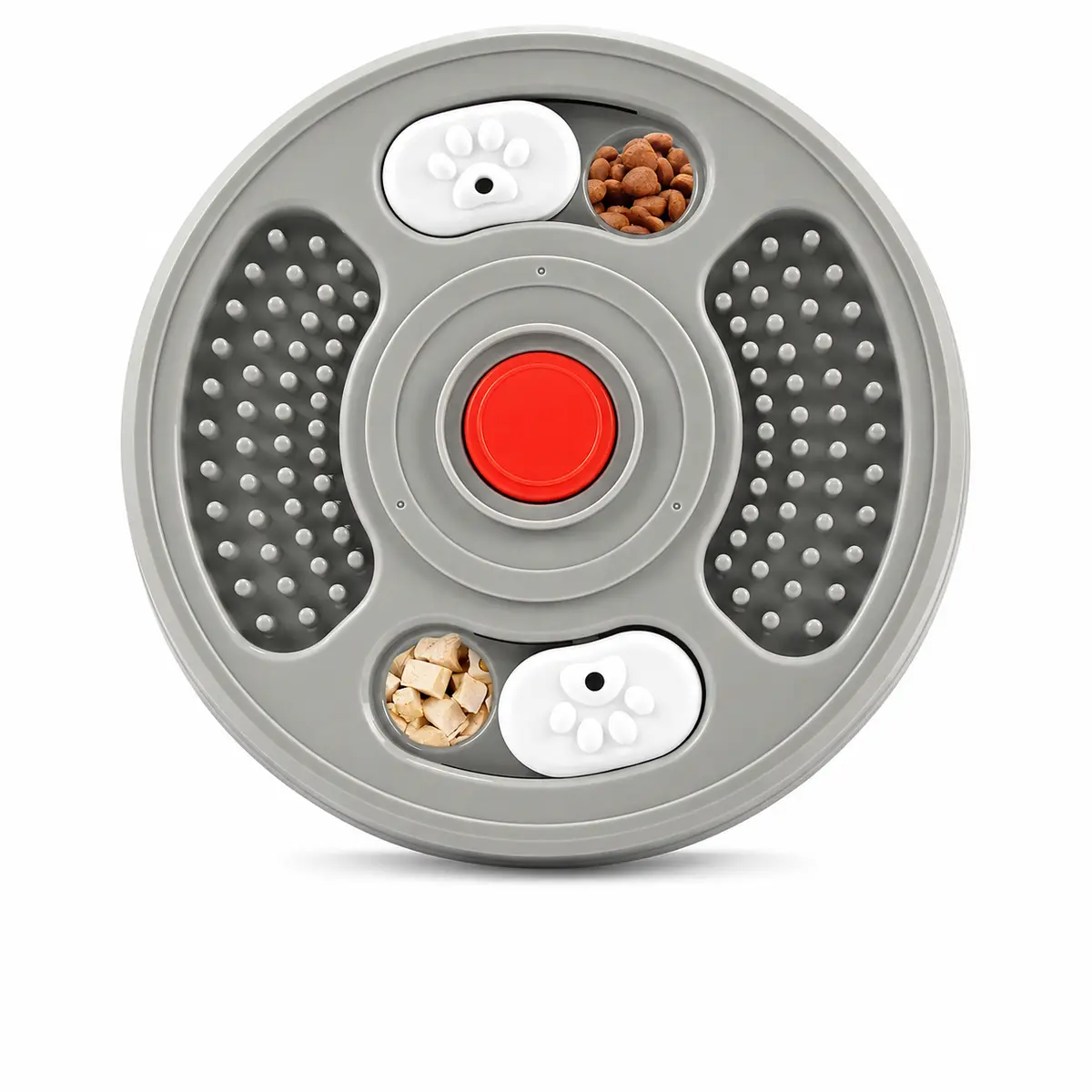
For dogs that gulp anything new, a slow feeder bowl or a lick mat keeps portions small and eating slow.
Already-chewed gum and missing wrappers still need a history
Do not assume a discarded piece is safe because somebody chewed it first. If you cannot establish the product or what remains, explain that uncertainty during the call. The professional needs to assess the actual incident rather than a general claim about what chewing may have removed.
Mention missing wrappers or packaging separately. Pet Poison Helpline’s candy guidance warns that swallowed wrappers can cause blockage, which is a different question from the sweetener. Count what remains when possible, but do not delay advice because every piece cannot be accounted for. Keep the dog away from the rest of the bag or purse.
Call promptly with the details available
Note when access occurred, estimate what is missing, and have the dog’s weight in pounds, medical history, medications, and current symptoms ready. Tell the professional whether other foods or products were accessible. Be clear about what you witnessed and what you inferred from the packaging found afterward.
Contact your veterinarian, ASPCA Animal Poison Control at (888) 426-4435, or Pet Poison Helpline at (855) 764-7661; a fee may apply. Do not wait for a home blood-sugar check or an online calculation. Follow individual instructions about examination and transport rather than deciding that an initially normal dog can be left alone.
Avoid home vomiting remedies or improvised feeding
VCA specifically advises against inducing vomiting or giving anything by mouth after a suspected xylitol ingestion unless directed by the veterinarian. A dog may already have dangerously low blood sugar, and an attempted home response can complicate the situation. Tell the clinic if anyone has already tried a remedy.
Vomiting, weakness, difficulty walking, tremors, or seizures after exposure needs prompt attention; collapse, severe weakness, or breathing difficulty requires emergency care. Do not diagnose the cause from these signs or assume that absence of one sign rules out risk. Keep the exposure history available and follow the treating professional’s directions.
Prevent access and address breath concerns properly
Keep gum in closed storage rather than an accessible purse, backpack, bedside drawer, or open trash container. Watch the ground during walks and move away from discarded items instead of letting the dog investigate. Pet Poison Helpline advises that gum is not a solution for a dog’s breath. Discuss persistent mouth odor or discomfort with the veterinarian and use only products selected for that animal.
This page is general information, not veterinary advice, and it cannot replace an examination by the vet who knows your pet.
Common questions
Is every kind of gum equally poisonous to dogs?
No. Xylitol-containing gum creates a specific poisoning risk, while the actual product and any swallowed packaging still need assessment. Keep the ingredients and report uncertainty rather than treating all gum as identical.
Is gum safe if someone already chewed it?
Do not assume that. If the product or remaining ingredients are uncertain, explain the circumstances to a veterinary professional. Keep any available package and describe when the dog found the gum.
Should I make my dog vomit after eating gum?
Do not induce vomiting or give anything by mouth unless the veterinarian directs it. VCA warns that a dog may already have low blood sugar after xylitol exposure, making improvised treatment inappropriate.
What if I cannot find the gum package?
Call with the information you have, including timing, estimated amount, dog’s weight, symptoms, and where it was found. Do not delay a concerning exposure assessment while trying to reconstruct an exact label.
Sources we checked
This guide is general information, not veterinary advice. If your pet is unwell or injured, contact your veterinarian.