Food safety
Can Dogs Eat Grits? Plain Ones, Yes — Skip the Butter
Yes, dogs can eat plain grits in small amounts. Grits are ground corn, and the AKC lists plain corn as safe for dogs when it is served without butter, salt, oil or seasoning. The problem is how grits are usually served: cooked in milk, finished with butter and cheese, salted, and topped with shrimp, bacon or sausage gravy. A spoonful of plain grits cooked in water is fine as an occasional extra, but a bowl of breakfast grits from your plate is not a good idea.
By Matt GarnettUpdated November 13, 20264 min read3 sources
Why plain grits are safe for dogs
Grits are coarsely ground dried corn, often hominy, cooked into a soft porridge. Corn itself is not toxic to dogs, and the AKC says plain corn kernels are fine when served without butter, salt, oil or seasoning. Many commercial dog foods use corn as a carbohydrate source.
Cooked grits are soft, easy to swallow and gentle on the stomach, so a small spoonful is unlikely to cause trouble in a healthy dog. They are mostly starch, though, and add calories rather than nutrients a complete dog food lacks.
What makes most grits a poor choice
Southern-style grits are often cooked in milk or cream and finished with butter and shredded cheese. The ASPCA notes that pets do not digest dairy well, and the AKC warns that fatty foods can lead to weight gain and pancreatitis. Cheese grits can be very rich.
Salt and toppings add more risk. Grits are usually salted generously, and the ASPCA warns that excess salt causes thirst and, in large amounts, salt toxicity. Shrimp and grits, sausage gravy and seasoned grits may contain garlic, onion, hot sauce or Cajun spice, which should not be shared.
How to make grits for a dog
Cook plain stone-ground or quick grits in water only, with no salt, butter, milk or cheese. Cook them until fully soft and thick, then let them cool to room temperature, since hot grits stick to the mouth and can burn.
Serve a spoonful on its own or mixed into your dog's usual food. Avoid instant grits packets with flavoring, which often contain salt, butter powder, cheese powder or bacon flavor. Check the label: the only ingredient should be corn.
How much grits by dog weight
Keep it to a small, occasional extra. As a rough guide: under 20 lb, one to two tablespoons of plain cooked grits; 20 to 50 lb, two to four tablespoons; over 50 lb, up to about a quarter cup, now and then.
Because grits are starchy, they are best skipped for overweight or diabetic dogs unless your vet says otherwise. If you add grits to a meal, reduce the regular food slightly so your dog is not getting extra calories every time.
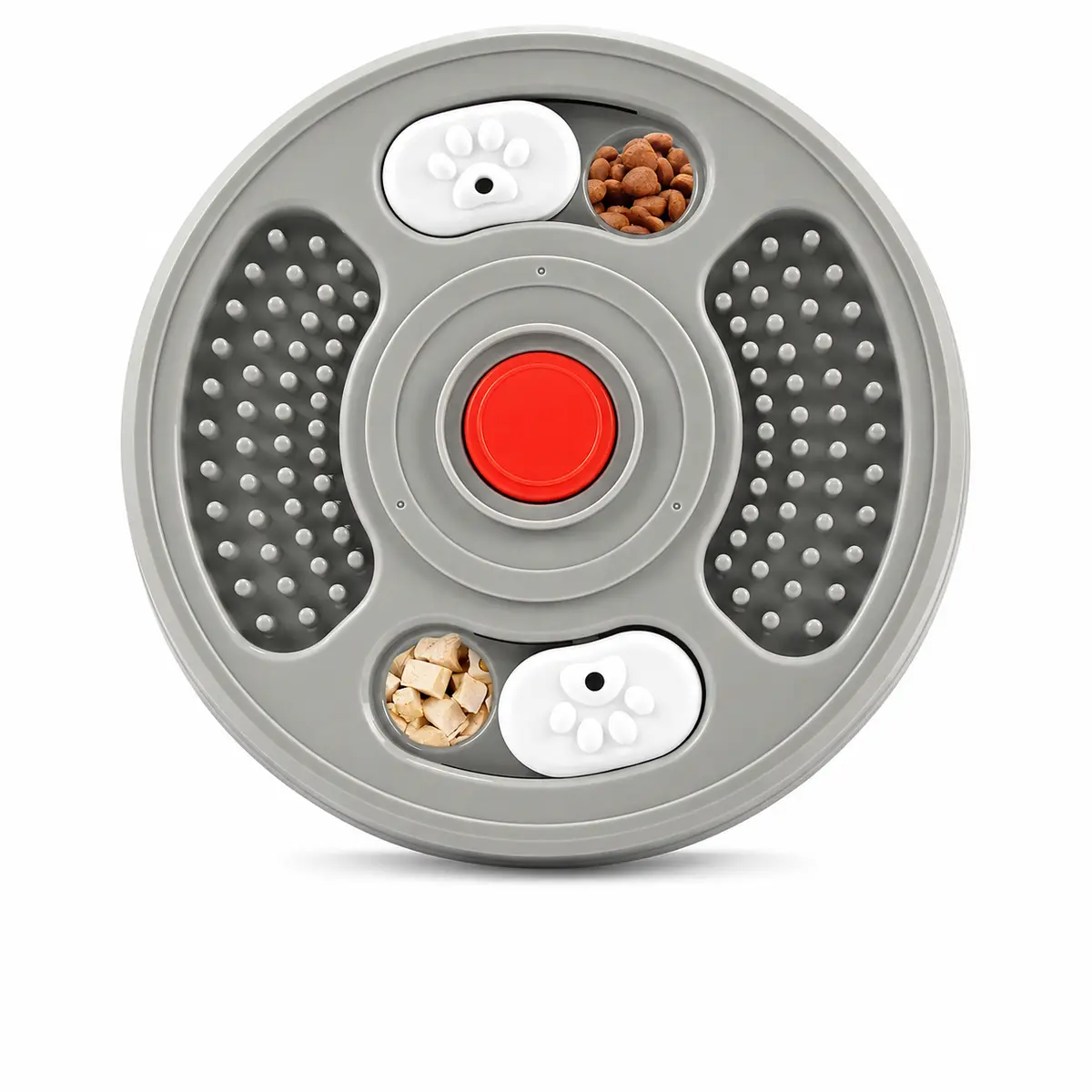
For dogs that gulp anything new, a slow feeder bowl or a lick mat keeps portions small and eating slow.
Puppies and grits
Puppies can have a small taste of plain grits cooked in water, cooled and smooth, once they are eating solid puppy food. Start with a teaspoon, since any new food can loosen a puppy's stool.
Growing puppies need nutrients balanced for development, which grits do not provide, so keep them as a rare taste rather than a regular part of meals. Never give a puppy leftover cheese grits or grits with gravy.
Signs grits disagreed with your dog and when to call a vet
Plain grits rarely cause problems. Rich, buttery or cheesy grits can cause vomiting, loose or greasy stools and gas within a few hours. Salty grits may make your dog very thirsty. Mild signs usually settle within a day.
Call your vet the same day for repeated vomiting, diarrhea lasting more than 24 hours, a painful belly, lethargy or refusing food, especially after a large or fatty serving. Call promptly if the grits contained garlic, onion or a lot of salt.
Other plain grains and starches for dogs
Plain cooked white rice, plain cooked oatmeal made with water, and plain cooked potato or sweet potato are other gentle starches dogs can share in small amounts. The AKC also lists plain popcorn and plain corn kernels as fine without butter or salt.
Never give your dog a whole corn cob, which the AKC warns can cause an intestinal obstruction. Keep all extras to a small part of the daily food so the complete diet still does its job.
This page is general information, not veterinary advice, and it cannot replace an examination by the vet who knows your pet.
Common questions
Can dogs eat cheese grits?
A lick is unlikely to hurt, but cheese grits are rich in fat, salt and dairy, which can cause vomiting, diarrhea or pancreatitis. Plain grits cooked in water are the only kind worth sharing.
Can dogs eat shrimp and grits?
It is best not to share it. The dish is usually made with butter, cheese, bacon, garlic and spices. Plain cooked, peeled shrimp and plain grits are fine separately in small amounts.
Are grits good for dogs with an upset stomach?
Plain grits are gentle, but they are not a treatment. Vets more often suggest plain white rice for a bland diet. A dog with vomiting or diarrhea lasting more than a day needs a vet.
Can dogs eat instant grits?
Plain instant grits cooked in water are fine. Flavored packets usually contain salt, butter or cheese powder and other flavorings, so check the label before sharing any.
Is corn bad for dogs?
Plain corn kernels and corn products are not toxic and appear in many dog foods. The AKC warns never to give a corn cob, which can block the intestines.
Sources we checked
This guide is general information, not veterinary advice. If your pet is unwell or injured, contact your veterinarian.