Food safety
Can Dogs Eat Gravy? Why to Keep It Off Their Food
No, skip gravy as a dog food topping; recipes containing onion or garlic can be toxic, and rich fatty gravy can cause digestive illness. Pet Poison Helpline specifically warns about gravy among fatty table scraps. The concern depends on the actual recipe, so keep the label or ingredient list if your dog already ate some. Contact your veterinarian when ingredients are concerning, the amount is uncertain, or symptoms develop.
By Matt GarnettUpdated November 13, 20264 min read4 sources
Gravy is a recipe rather than a single food
A homemade pan gravy and a packaged mix can have very different ingredients. Find out what was added instead of judging the sauce by its color or the meat it accompanied. Include the broth, seasonings, and drippings when checking a homemade recipe, and keep the complete label for a packaged product.
Do not assume that a sauce is suitable because the underlying meat was plain. The practical choice is to keep the gravy off the dog’s portion. Pet Poison Helpline’s table-food guidance identifies gravy as a concern without suggesting that every recipe produces the same type or severity of illness.
Rich drippings can cause more than a brief upset
Pet Poison Helpline explains that fatty table foods can cause gastrointestinal upset and can lead to pancreatitis, which may be severe. Its autumn guidance specifically includes rich gravies among foods to avoid sharing. This is a reason to decline the topping even when no poisonous ingredient has been identified.
A dog’s eagerness to lick a plate cannot predict whether the food will agree with them. Likewise, a previous meal without an obvious problem does not establish that a new recipe or larger helping is appropriate. Keep the regular diet consistent rather than using rich leftovers to make every meal more tempting.
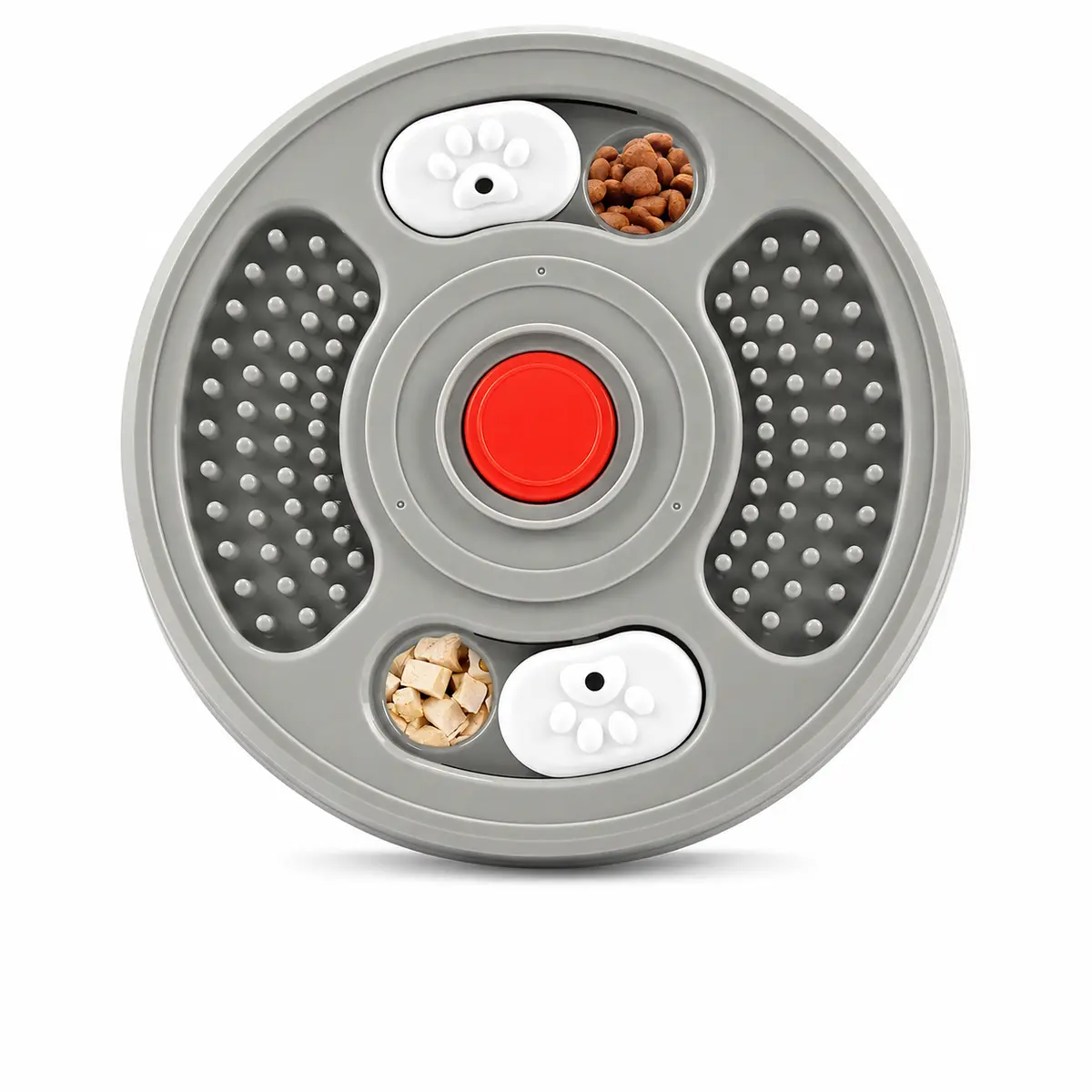
For dogs that gulp anything new, a slow feeder bowl or a lick mat keeps portions small and eating slow.
Onion and garlic create a separate toxic risk
The ASPCA identifies onions, garlic, and related vegetables as foods that can damage pets’ red blood cells. Gravy may contain these ingredients directly or through a prepared broth or seasoning. Read each component rather than assuming a smooth sauce contains none because you cannot see vegetable pieces.
If onion or garlic exposure is possible, call your veterinarian or poison control for case-specific advice. Do not use a household serving size as a safety threshold. Explain the recipe, the dog’s weight in pounds, the estimated amount, and the time of eating so the professional can assess the actual exposure.
What to do when the dog has already eaten gravy
Remove the dish and save the recipe or package. Note what else the dog could have eaten, including bones, skewers, wrapping, or other leftovers. A dog that reached a serving platter may have encountered more than sauce, and the clinic needs that wider account rather than a guess about one ingredient.
For suspected poisoning, contact your veterinarian, ASPCA Animal Poison Control at (888) 426-4435, or Pet Poison Helpline at (855) 764-7661; a fee may apply. Do not wait for symptoms to confirm a concerning ingredient. Do not induce vomiting or give a home remedy unless a veterinary professional directs you.
Symptoms may not appear during dinner
Pet Poison Helpline notes that illness after fatty meals can be delayed. Vomiting, diarrhea, abdominal pain, poor appetite, or lethargy need veterinary attention, particularly when persistent or worsening. A quiet evening immediately after the meal does not establish that the food has caused no problem.
Tell the clinic when the food was eaten even if symptoms start later. The timing can help the veterinarian interpret the history, but it cannot diagnose pancreatitis or another condition at home. Collapse, breathing difficulty, severe weakness, or marked distress requires urgent veterinary care rather than an attempt to manage the situation with another food.
Address an appetite change instead of covering it up
If you are considering gravy because the dog has stopped enjoying normal meals, discuss that change with your veterinarian. VCA emphasizes appropriate balanced nutrition and individual feeding needs. A rich topping does not explain a new loss of appetite, and it can complicate the history if digestive symptoms follow.
This page is general information, not veterinary advice, and it cannot replace an examination by the vet who knows your pet.
Common questions
Can dogs have gravy without onion or garlic?
Leaving out those ingredients avoids one concern, but rich fatty gravy can still cause digestive illness. Pet Poison Helpline advises against sharing fatty table scraps, including gravy, with dogs.
Does cooking make onion gravy suitable for dogs?
Do not use cooking as a reason to offer an onion-containing recipe. The ASPCA warns about onion and garlic exposure. Ask your veterinarian or poison control about any suspected ingestion.
What information should I save after my dog eats gravy?
Keep the label or complete recipe, note the time and estimated amount, and record other leftovers the dog accessed. Give the veterinary professional the dog’s weight in pounds and current symptoms.
Can gravy make a dog ill the next day?
Yes, Pet Poison Helpline describes delayed illness after fatty meals. Call the veterinarian about vomiting, diarrhea, pain, low energy, or poor appetite, and explain the earlier meal even if symptoms began later.
Sources we checked
This guide is general information, not veterinary advice. If your pet is unwell or injured, contact your veterinarian.