Food safety
Can Dogs Eat Frozen Blueberries? Plain Berry Safety
Yes, dogs can eat plain frozen blueberries in moderation as an occasional treat. The AKC explicitly permits fresh or frozen berries, while the ASPCA includes frozen blueberries among simple pet snacks. Their small size still deserves attention, especially for very small dogs that may need cut pieces. Check that the product is just berries, and ask your veterinarian whether a new extra fits any existing dietary restrictions.
By Matt GarnettUpdated November 13, 20264 min read4 sources
Choose berries rather than a blueberry dessert
The AKC’s recommendation concerns the fruit, including its frozen form. A frozen pastry, syrupy topping, or mixed dessert is a different product with additional ingredients. Read the full label rather than applying berry advice to everything with blueberry in its name or picture.
Keep the bag for reference when introducing a new product. If it is a mixed fruit bag, identify every fruit before sharing any. When you cannot establish the ingredients, use a known reward instead. There is no need to give an unknown mixture simply because the dog has previously enjoyed plain blueberries.
Prepare the texture for the dog eating them
The AKC notes that the size and shape of blueberries can create a choking concern, particularly for very small dogs, and suggests cutting berries for those dogs. Do not assume a berry is automatically manageable because it seems small compared with a human mouth.
Check the individual pieces before offering them and supervise the dog while eating. If you are unsure about an appropriate texture for a dog with dental or swallowing concerns, ask the veterinarian. Stop if the dog struggles, coughs, or gags; breathing difficulty, collapse, or severe distress requires immediate veterinary help rather than continuing the snack.
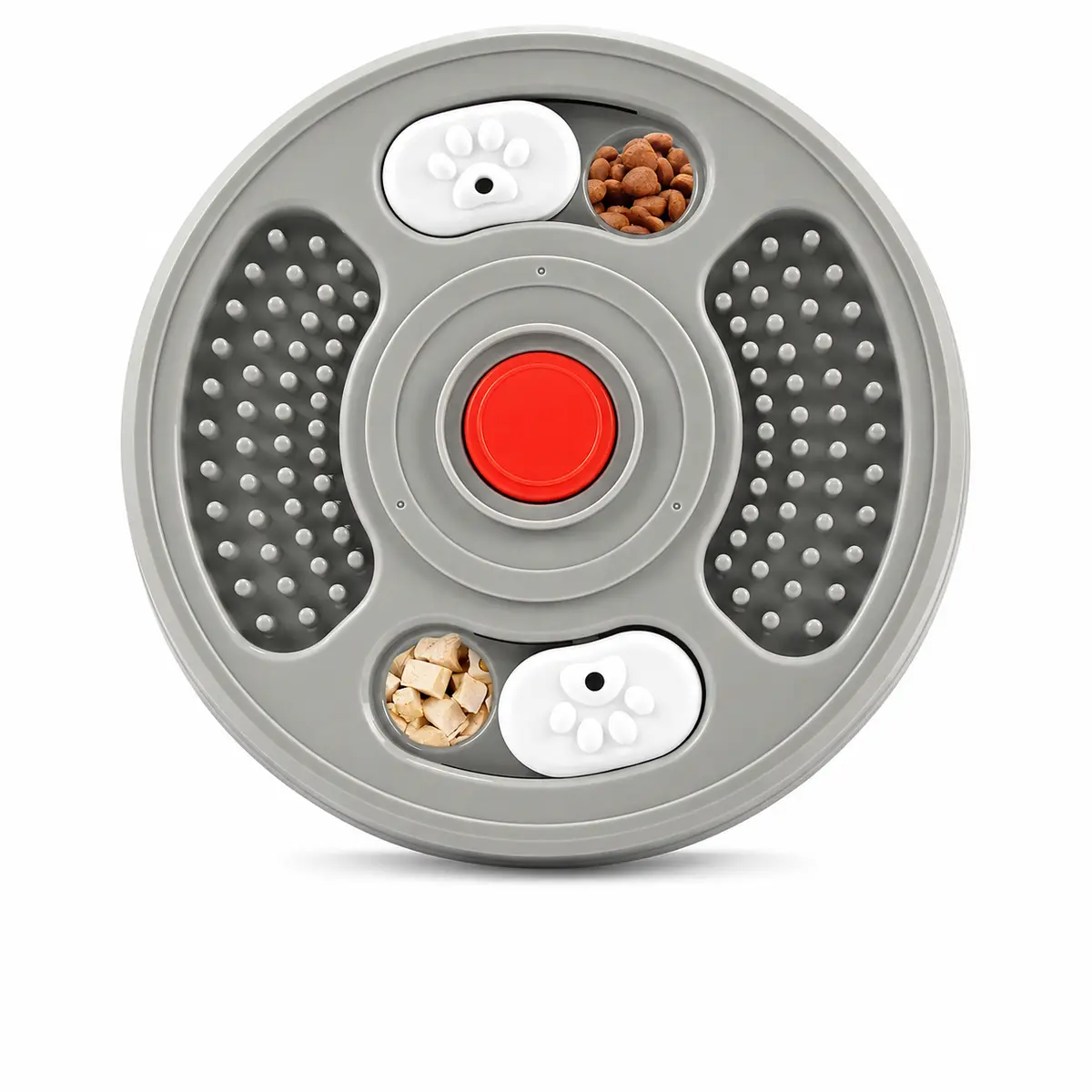
For dogs that gulp anything new, a slow feeder bowl or a lick mat keeps portions small and eating slow.
Handle the fruit as food, not a chew toy
The AKC advises washing blueberries before serving. If you freeze fresh fruit yourself, prepare and wash it first, then store it as food in a clean container. Follow the package instructions for purchased frozen berries and do not use a bag that you cannot identify or whose handling history concerns you.
Offer the prepared portion calmly rather than throwing a handful for the dog to catch. A snack does not need to become a test of speed or enthusiasm. Keep the remaining fruit out of reach so the dog does not turn a small supervised extra into an unplanned serving from the entire bag.
Keep the complete diet in first place
VCA explains that dogs need an appropriate balance of nutrients. Blueberries may contribute nutrients, but they do not replace a complete diet suited to the dog’s life stage. The ASPCA’s game-day guidance likewise describes frozen blueberries as a snack to give in moderation, not as the basis for a meal.
Count other rewards when deciding whether to add fruit. The AKC’s treat guidance considers extras together, including human food and training treats. Tell everyone in the household what has already been given so each person does not unknowingly offer another serving after someone else has done the same.
Puppies and dogs with restrictions need individual advice
The AKC permits blueberries for puppies when introduced gradually and prepared to reduce choking risk. That is not a recommendation to replace growth food with fruit. Ask the veterinarian how optional extras fit a puppy’s size and developmental needs rather than copying the snack habits of an adult dog.
The same individual approach applies when a dog has a prescribed diet, digestive disease, weight-management needs, or another restriction. A food acceptable to many healthy dogs may still be unsuitable for that plan. Ask about the actual product and preparation, including whether it is frozen, rather than simply asking about fruit in general.
Stop the snack if the dog feels unwell
Introduce a small amount and observe the dog, as the AKC advises for a new food. Stop and contact the veterinarian if vomiting, diarrhea, reduced appetite, or unusual behavior follows. Save the label and explain the timing and other recent foods; symptoms alone cannot establish that blueberries caused the change.
This page is general information, not veterinary advice, and it cannot replace an examination by the vet who knows your pet.
Common questions
Are frozen blueberries different from blueberry-flavored desserts?
Yes. Plain berries are the food addressed by the AKC’s guidance. A flavored dessert contains other ingredients, so read the complete label and do not assume the same answer applies.
Can a very small dog have whole frozen blueberries?
The AKC highlights choking concerns for very small dogs and suggests cut pieces. Ask the veterinarian about suitable texture if chewing or swallowing is difficult, and supervise any snack directly.
Can puppies eat frozen blueberries?
The AKC permits blueberries for puppies when introduced gradually and appropriately sized. Keep growth nutrition as the foundation and ask your veterinarian how any optional fruit fits the puppy’s current diet.
Can frozen blueberries replace dog treats every time?
They remain an extra that must fit the whole diet. Count all rewards and discuss restrictions with your veterinarian rather than assuming that a fruit snack can be offered without limits.
Sources we checked
This guide is general information, not veterinary advice. If your pet is unwell or injured, contact your veterinarian.