Food safety
Can Dogs Eat French Fries? Not a Good Idea — Here's Why
Not really. One plain, unsalted fry will not hurt most dogs, but french fries are not a good thing to share. They are fried in oil and usually heavily salted, and the American Kennel Club singles out fried potato dishes such as fries and hash browns as where potato stops being a harmless treat. Fat can trigger pancreatitis, salt can cause thirst and, in large amounts, salt poisoning, and seasoned fries may contain garlic or onion powder. Ketchup and dips add more.
By Matt GarnettUpdated November 13, 20264 min read3 sources
Why fries are a problem when plain potato is not
Plain, cooked potato is fine for dogs in small amounts, the AKC says, as long as it is soft and has no butter, salt or seasoning. Frying changes that. A fry soaks up oil as it cooks, so a handful carries far more fat than the same amount of boiled potato, and fat is what the AKC links to pancreatitis.
Then there is the salt. The ASPCA warns that excessive salt causes increased thirst and urination, and that salt toxicity can cause vomiting, diarrhea, depression, tremors, seizures and even death. One fry is not that, but a small dog that clears a carton of salted fries has eaten a lot of salt for its size.
Seasoned fries, ketchup and dips
Seasoned, curly, Cajun and garlic fries are often dusted with garlic powder or onion powder. The ASPCA says the onion family can cause stomach irritation and damage red blood cells, which can lead to anemia. Truffle and loaded fries add cheese, bacon, sour cream and chives, which is more fat and more onion family.
Ketchup is sugary and may contain onion powder, and ranch, aioli and cheese sauce are fat and salt, often with garlic. If your dog ate seasoned fries or a dip with garlic or onion, call your vet, the ASPCA Animal Poison Control Center at (888) 426-4435 or Pet Poison Helpline at (855) 764-7661; a fee may apply.
If your dog ate french fries
One or two plain fries: no action is usually needed beyond making sure fresh water is available. A whole serving, or fries from a seasoned or loaded order, is worth a call to your vet, especially for a small dog or one with a history of pancreatitis.
Take away the bag and packaging too. Dogs that raid a takeout bag often swallow wax paper, foil or a sauce cup, which can cause a blockage. Note roughly how much your dog ate and what kind of fries they were before you call, because that is what your vet will ask.
How much is too much, by dog size
There is no healthy serving of fries, but as a guide to when to worry: under 20 lb, more than a couple of fries; 20 to 50 lb, more than a small handful; over 50 lb, more than a small order. Any amount of seasoned fries with garlic or onion is worth a call for a dog under 20 lb.
Dogs with pancreatitis in the past, diabetes, heart or kidney disease, or a sensitive stomach should not have fries at all, because both the fat and the salt matter more for them.
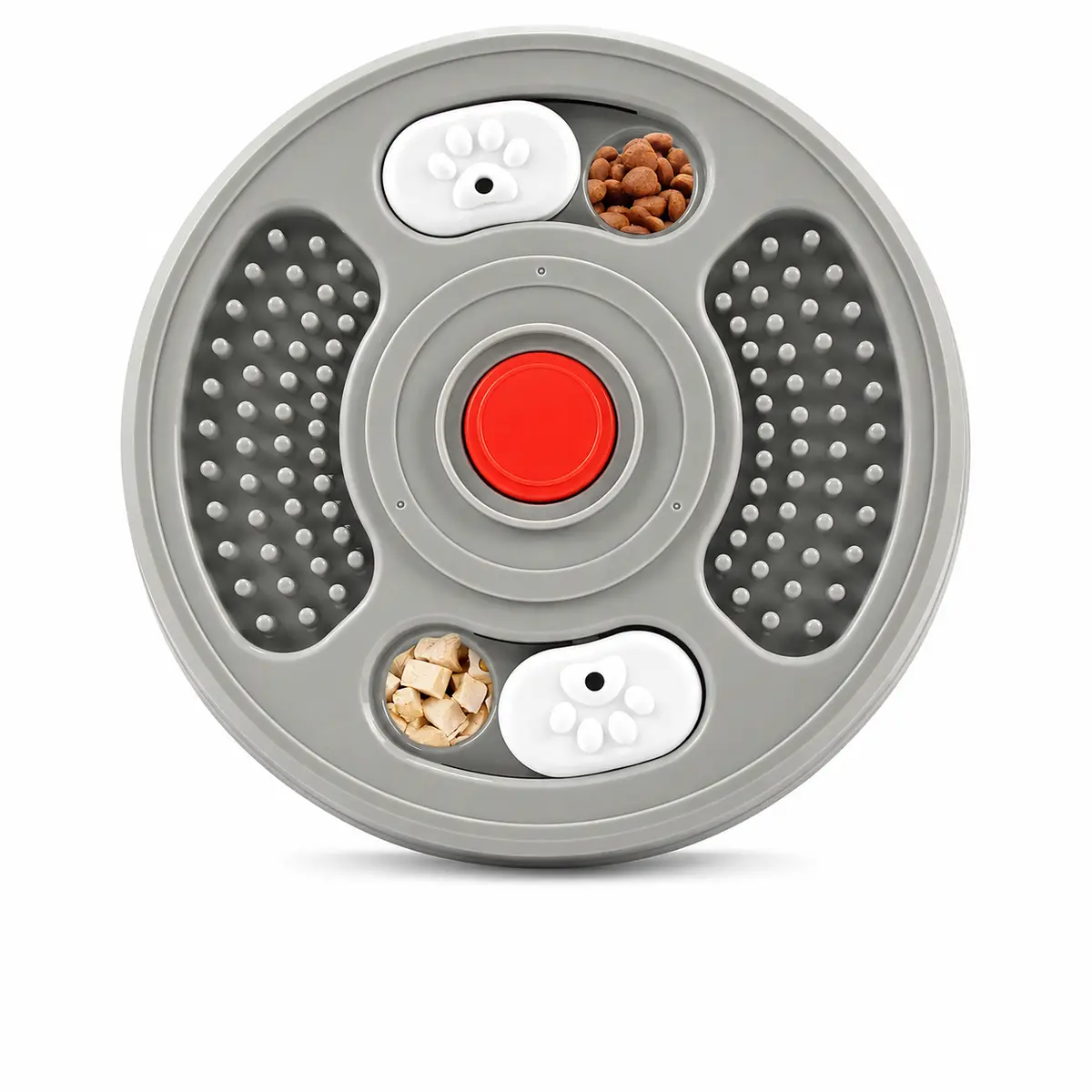
For dogs that gulp anything new, a slow feeder bowl or a lick mat keeps portions small and eating slow.
Puppies and french fries
Puppies should not have fries. Their stomachs are easily upset, their small size means salt adds up quickly, and a puppy that gulps a hot fry can burn its mouth. A puppy is also more likely to swallow the wrapper along with the food.
If your puppy grabbed a fry or two, watch for vomiting or diarrhea over the next day. If they ate more, or fries with seasoning or dips, call your vet, because puppies can become dehydrated quickly.
Signs fries disagreed with your dog, and when to call a vet
Mild upset usually shows within a day: vomiting once, softer stool or extra thirst. Pancreatitis can take a day or two to appear after a fatty meal, and the AKC lists vomiting, lethargy, diarrhea and loss of appetite as its signs. Call your vet the same day if vomiting repeats, your dog hunches or seems sore in the belly, or stops eating.
Get help immediately for signs the ASPCA links to salt poisoning, such as tremors, wobbliness or seizures, or for weakness and pale gums in the days after fries seasoned with garlic or onion.
Better treats than fries
If you want to share potato, cook a little plain potato or sweet potato until soft with nothing added, let it cool and offer a few small pieces. Oven-baked sweet potato strips with no oil or salt make a chewy treat many dogs like.
For crunch without fat, try green beans, carrot coins or cucumber slices. At a drive-through, a plain dog treat from your pocket is easier on everyone than a fry from the bag.
This page is general information, not veterinary advice, and it cannot replace an examination by the vet who knows your pet.
Common questions
Can dogs eat McDonald's fries?
They are best avoided. Fast-food fries are fried and salted, and one or two will not usually harm a dog, but a full portion is a lot of fat and salt, especially for a small dog.
Can dogs eat sweet potato fries?
Restaurant sweet potato fries are fried, salted and often seasoned, so skip them. Plain baked sweet potato strips with no oil, salt or seasoning are a safer homemade treat.
Can dogs eat unsalted french fries?
An unsalted fry is less risky, but it is still fried in oil and high in fat. A piece or two is unlikely to harm a healthy dog; plain cooked potato is a much better choice.
What happens if a dog eats a lot of french fries?
A large amount can cause vomiting and diarrhea, extra thirst from the salt, and pancreatitis from the fat a day or two later. Call your vet, especially if your dog is small or the fries were seasoned.
Can dogs eat fries with ketchup?
It is better not to. Ketchup is sugary and may contain onion powder, which is toxic to dogs. A small lick is unlikely to be serious, but do not share fries dipped in it.
Sources we checked
This guide is general information, not veterinary advice. If your pet is unwell or injured, contact your veterinarian.