Food safety
Can Dogs Eat Fish? Yes, Cooked, Plain and Boneless
Yes, dogs can eat fish, as long as it is cooked, plain and boneless. The AKC says plain cooked, steamed or grilled fish is fine in moderation, and many commercial dog foods use it. The best choices are shorter-lived fish such as salmon, whitefish, flounder, herring and Arctic char. Raw fish, small bones, fried or heavily seasoned fish, and large species like swordfish and albacore tuna are the ones to avoid.
By Matt GarnettUpdated November 13, 20264 min read3 sources
Why cooked fish is good for dogs
Fish is a lean, digestible protein with omega-3 fatty acids, and it is a common ingredient in dog foods for dogs that do not tolerate chicken or beef. A few flakes of plain cooked salmon or cod are a high-value reward that most dogs will work hard for.
The key word is cooked. Heat kills the bacteria and parasites that raw fish can carry, and it softens the flesh so you can easily find and remove bones. Keep the fish plain, because butter, oil and seasoning cause more stomach trouble than the fish itself.
Fish and preparations to avoid
Raw fish can carry Salmonella and Listeria, which can make dogs and people sick, and raw salmon from the Pacific Northwest can carry a parasite that causes a serious illness known as salmon poisoning disease. Raw shellfish carries similar risks. Do not share sushi, ceviche or raw fish scraps.
Avoid fried fish, fish sticks with batter, and fish cooked with garlic, onion, lemon butter or heavy spices. Smoked and cured fish are very salty. Large predatory fish such as swordfish, king mackerel and albacore tuna can carry high mercury levels, so stick to smaller species.
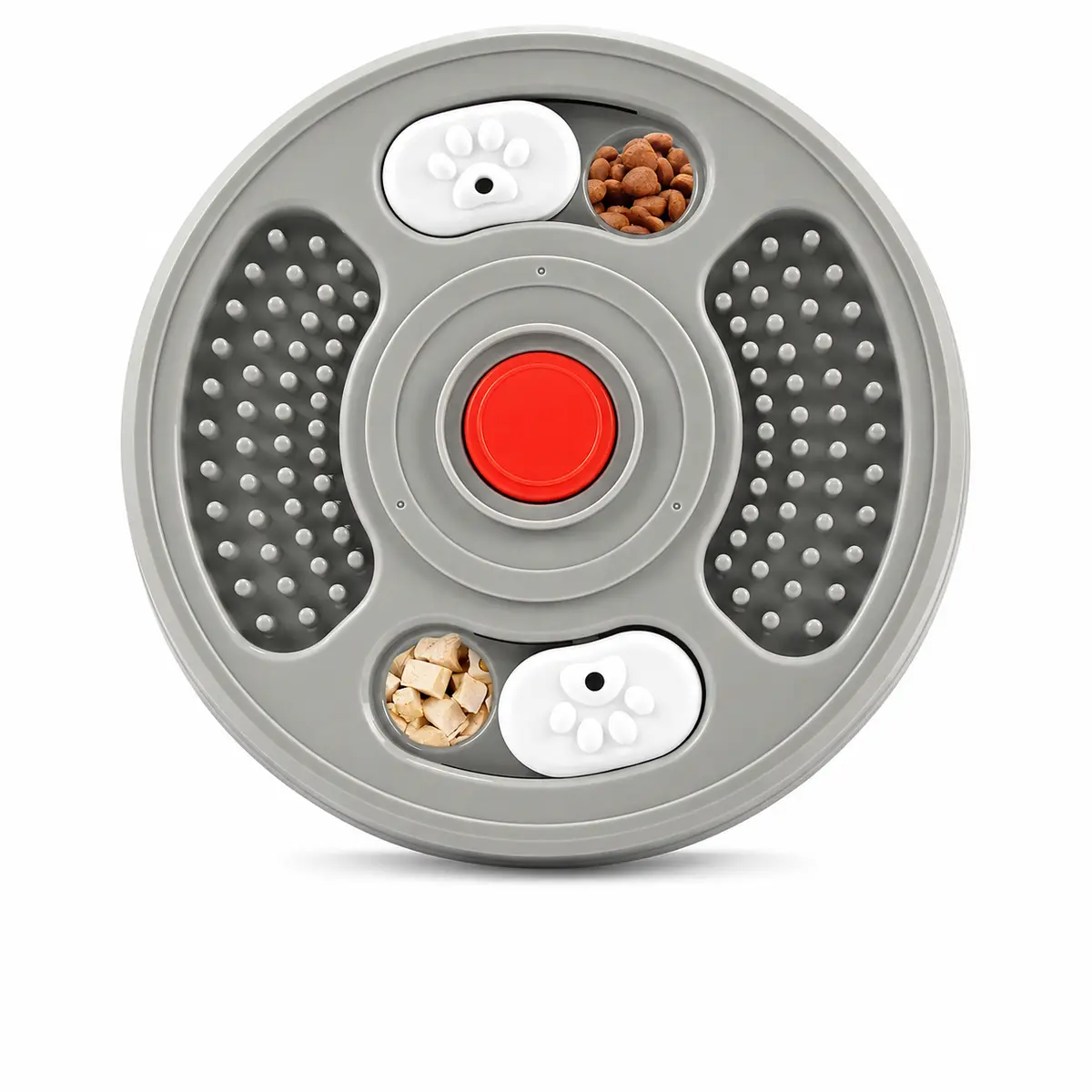
For dogs that gulp anything new, a slow feeder bowl or a lick mat keeps portions small and eating slow.
Fish bones and skin
Small fish bones are brittle and sharp. The AKC warns they can lodge in the mouth, throat or intestine and even puncture the gut wall. Remove every bone you can find by flaking the fish by hand, and never give cooked fish skeletons, heads or tails from the dinner plate.
Plain cooked fish skin is not toxic, but it is fatty. A small piece is fine for a large dog. Crispy pan-fried skin with salt and oil is best skipped. Dried fish skin chews made for dogs are a different product and are designed to be eaten.
How much fish by dog size
Under 20 lb: about a tablespoon of flaked cooked fish. Between 20 and 50 lb: two to three tablespoons. Over 50 lb: up to a quarter cup. Offer fish as a treat or topper a couple of times a week, within the 10 percent of daily calories that treats should take up.
Introduce fish with a small amount first and watch for itching, an upset stomach or loose stool, since some dogs are sensitive to it. Ask your vet before adding fish oil or making fish a regular part of meals, especially for dogs on a prescription diet.
Puppies and fish
Puppies can have small flakes of plain cooked, boneless fish once they are on solid food. Salmon and whitefish are good options. Check carefully for bones, as puppies tend to gulp and their throats are small.
Keep portions small and occasional so the balanced nutrition of puppy food is not diluted. Avoid canned fish for puppies unless it is low in sodium and packed in water, and avoid tuna because of mercury.
Signs of trouble and when to call the vet
An upset stomach after fish usually shows up as vomiting or diarrhea within a day. Bone trouble can show as gagging, pawing at the mouth, drooling, retching, or straining with blood in the stool.
Call your vet the same day for any of those bone signs, for repeated vomiting, or if your dog ate raw salmon and then shows vomiting, fever, swollen lymph nodes or refuses food in the following week, since salmon poisoning disease can be fatal without treatment.
This page is general information, not veterinary advice, and it cannot replace an examination by the vet who knows your pet.
Common questions
Can dogs eat salmon?
Yes, if it is fully cooked, plain and boneless. Never feed raw salmon, which can carry a parasite that causes salmon poisoning disease. Canned salmon is fine if it is low in salt and the bones are removed.
Can dogs eat fish sticks?
An occasional plain fish stick is unlikely to cause harm, but they are breaded, fried and salty. Skip any with tartar sauce or seasoning, and do not make them a regular treat.
Can dogs eat sardines?
Yes. Sardines packed in water with no added salt are a good small treat. They are soft-boned, but mash them for small dogs. Avoid sardines in oil, tomato sauce or mustard.
Can dogs eat fish skin?
Plain cooked fish skin is not toxic but is fatty, so offer only a small piece. Avoid fried, salted or seasoned skin, and make sure no scales or bones are attached.
What fish is bad for dogs?
Avoid raw fish, large species like swordfish and albacore tuna that carry more mercury, and smoked, fried or seasoned fish. Any fish with bones or cooked with garlic or onion should not be shared.
Sources we checked
This guide is general information, not veterinary advice. If your pet is unwell or injured, contact your veterinarian.