Food safety
Can Dogs Eat Figs? Fresh Fruit Yes, the Plant No
Yes, dogs can eat a small amount of fresh, ripe fig. The AKC says fresh figs are generally safe when prepared properly, and the soft flesh is not toxic. The fig plant is another story: the ASPCA lists it as toxic to dogs, because its leaves, sap and bark can irritate the mouth, skin and gut. Dried figs and fig bars are also poor choices because of the concentrated sugar. Wash the fruit, cut it small and keep it occasional.
By Matt GarnettUpdated November 13, 20264 min read2 sources
Why fresh fig fruit is safe
A ripe fig is soft, sweet fruit with fiber, potassium and some calcium. The AKC states that fresh figs are generally safe for dogs when prepared properly and given as an occasional treat, and nothing in the ripe flesh is poisonous to them.
Figs are sweet and fibrous, though, which is why the AKC also warns that several figs at once can cause diarrhea. They are best treated as a small taste rather than a regular snack, and kept for healthy adult dogs.
The fig plant is toxic
The ASPCA lists the fig plant, including the weeping fig sold as a houseplant, as toxic to dogs. The sap contains ficin and psoralen, which cause irritation of the skin and the digestive tract. Many other plants in the Ficus family share the same irritating milky sap.
A dog that chews leaves, bark, twigs or unripe fruit may drool, paw at its mouth, vomit or develop red, irritated skin. The AKC advises seeing a vet right away if a dog eats any part of the plant. Keep houseplants up high and pick up fallen leaves and fruit under an outdoor fig tree.
How to prepare a fig for your dog
Choose a ripe, soft fig and wash it well. Cut off the stem, which carries the irritating sap, and slice the fruit into small pieces: a pea-size piece of the soft center for a 10 lb dog, and a quarter of a fig for a large dog. The AKC suggests starting with a tiny piece of the interior.
Do not serve figs wrapped in prosciutto, baked with goat cheese or drizzled with honey, which add fat, salt or sugar. Fig jam and fig spread are mostly sugar and should not be shared.
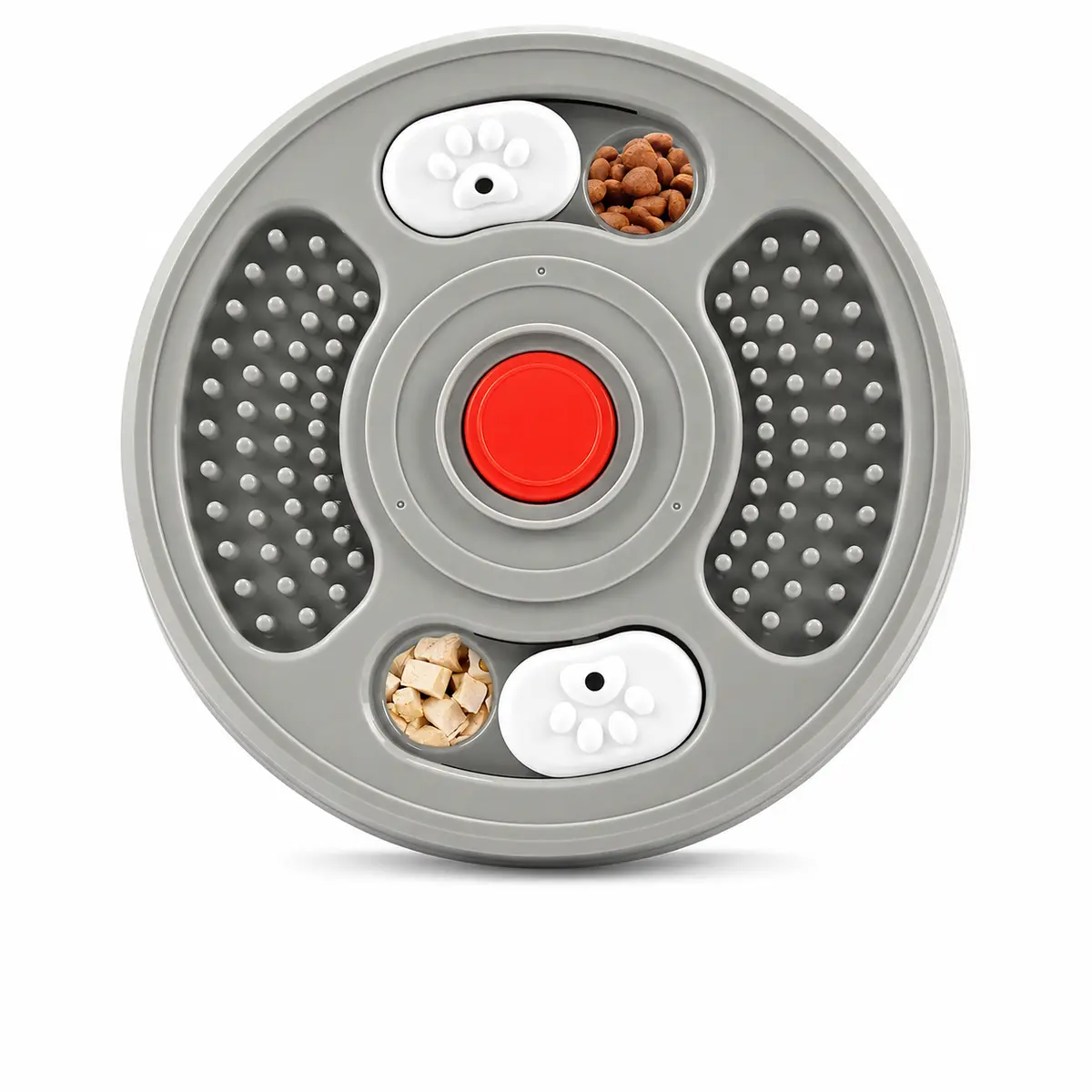
For dogs that gulp anything new, a slow feeder bowl or a lick mat keeps portions small and eating slow.
How much fig by dog weight
Keep figs within the 10 percent of daily calories set aside for treats. As a guide for healthy adult dogs: under 20 lb, one small piece; 20 to 50 lb, a quarter to half of a fig; over 50 lb, up to one fig. Once a week or less is plenty.
Dogs with diabetes or a weight problem should skip figs, which are high in natural sugar. If your dog has a sensitive stomach or a long-term condition, ask your vet before offering new fruit.
Dried figs and Fig Newtons
Drying concentrates the sugar in a fig into a much smaller, chewier piece, and the AKC does not recommend dried figs, especially for overweight or diabetic dogs. A single dried fig has roughly as much sugar as two or three fresh ones.
Fig Newtons and fig bars add flour, oil and more sugar, and the AKC warns those extras can upset a dog's stomach. A dog that steals one cookie is unlikely to come to harm, but watch for loose stool and keep the packet closed.
Figs and puppies
Puppies do not need figs, and their stomachs are more likely to react to the fiber and sugar. A tiny piece of ripe fig is unlikely to cause harm, but there are gentler first fruits, such as a few blueberries.
Puppies are the most likely to chew a fig houseplant or play with fallen fruit and leaves from a backyard tree. Keep them out of reach, and call your vet if a puppy starts drooling, vomiting or pawing at its mouth after chewing the plant.
Signs to watch for, and other fruit
Too much fig usually causes loose stool or diarrhea within a day, sometimes with vomiting. The AKC advises contacting a vet if symptoms continue or vomiting begins. After contact with the plant, watch for drooling, mouth irritation, vomiting and red skin, and call your vet.
If your dog enjoys sweet fruit, blueberries, seedless watermelon and apple slices with the core removed are easier options. Keep grapes and raisins away from your dog entirely, since they can cause kidney damage.
This page is general information, not veterinary advice, and it cannot replace an examination by the vet who knows your pet.
Common questions
Can dogs eat fig leaves?
No. The ASPCA lists the fig plant as toxic to dogs, and its leaves and sap can irritate the mouth, skin and digestive tract. If your dog chewed fig leaves, call your vet for advice.
Can dogs eat dried figs?
The AKC does not recommend dried figs because the drying concentrates the sugar. A single piece is unlikely to harm a healthy dog, but fresh fig is the better choice, and diabetic or overweight dogs should skip both.
Can dogs eat Fig Newtons?
They are not recommended. Fig Newtons add sugar, flour and oil to the fruit and can upset a dog's stomach. A dog that ate one is usually fine; watch for loose stool.
Is a fiddle leaf fig toxic to dogs?
Fiddle leaf fig is a Ficus houseplant with the same irritating sap as other figs, and it can cause drooling, mouth irritation and vomiting if chewed. Keep it out of reach and call your vet if your dog chews it.
Can dogs eat fig skin?
The thin skin of a ripe, washed fig is fine in small amounts. Remove the stem, which carries the plant's irritating sap, and cut the fruit into small pieces before sharing.
Sources we checked
This guide is general information, not veterinary advice. If your pet is unwell or injured, contact your veterinarian.