Food safety
Can Dogs Eat Fennel? Identify the Plant and Form
Yes, identified culinary fennel is listed as non-toxic to dogs by the ASPCA, with advice to keep food quantities small and avoid concentrated oil. That answer concerns Foeniculum vulgare, also called Florence fennel, rather than every plant with “fennel” in its common name. It does not make the herb necessary or establish a medical use. Check the identity and preparation, then ask your veterinarian whether an optional extra fits your dog’s diet.
By Matt GarnettUpdated November 13, 20264 min read3 sources
Use the plant identity rather than a loose common name
The ASPCA identifies culinary fennel as Foeniculum vulgare and records Florence fennel and Finocchio as additional names. This precise identification matters when checking a garden plant or a label. Similar-sounding names should not replace an identification of the actual material a dog may have chewed or swallowed.
Keep the seed packet or purchase label, and photograph the plant if the exposure happened outdoors. Do not try to identify an unknown plant by taste or by encouraging the dog to investigate it again. When you cannot establish what it is, contact the veterinarian with the available details rather than applying culinary-fennel advice.
A concentrated oil is a separate product
The ASPCA’s fennel entry specifically advises avoiding concentrated oil. Do not interpret a non-toxic classification for the food plant as approval for an oil, extract, or supplement. The label and form matter, and an internet discussion of an edible herb cannot establish how a concentrated product should be used.
Do not apply fennel oil to the dog, put it in drinking water, or use it as a home treatment. Keep such products secured separately from food preparation items. After an unexpected exposure, save the container and describe the route of contact, timing, and what may be missing to a veterinary professional.
Keep culinary preparation plain and identifiable
AKC advises offering suitable human foods plainly, without added oils, butter, salt, or seasonings. When sharing an approved extra, set aside the identifiable portion before completing the household recipe. A fennel-containing salad, sausage, or sauce requires its own ingredient check instead of receiving approval from the name of one plant.
Prepare a manageable small portion and supervise the dog while it eats. Ask the veterinarian about texture if the dog has dental or swallowing difficulty. Stop if it struggles or appears uncomfortable. You do not need to persuade a dog to accept an optional ingredient, and refusing fennel is not a nutritional problem to solve.
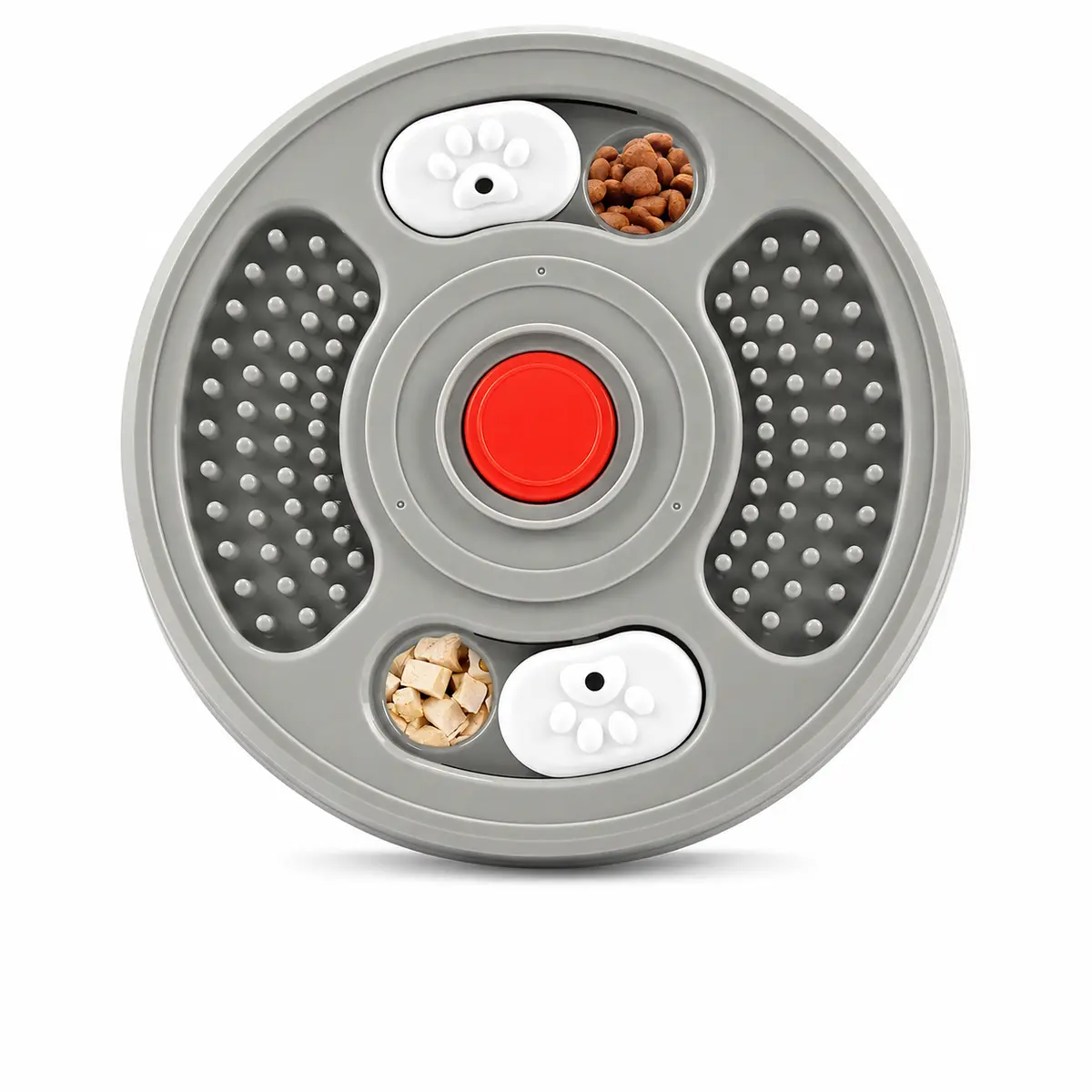
For dogs that gulp anything new, a slow feeder bowl or a lick mat keeps portions small and eating slow.
Keep complete nutrition as the basis of feeding
VCA’s general feeding guidance emphasizes appropriate complete nutrition for the individual dog. Culinary fennel is not a balanced meal, and its presence on a non-toxic list does not provide a recipe for homemade feeding. Do not replace meals or add supplements on the assumption that an edible plant improves a complete diet.
Discuss the usual food and all household extras with your veterinarian when deciding what fits. Puppies need nutrition suitable for growth, and a dog on a prescribed diet or food trial may have restrictions. Provide the actual preparation and reason you want to add it, rather than asking only whether another dog has eaten the herb.
Observe changes without claiming a benefit or a diagnosis
If your veterinarian permits the extra, introduce it modestly without several other unfamiliar foods. Record the preparation and when it was offered. Stop and seek advice about vomiting, diarrhea, appetite loss, or unusual behavior afterward. These observations help the clinic assess the situation but cannot identify the cause at home.
Do not use fennel to manage persistent digestive signs, appetite changes, or another concern instead of arranging an examination. Report the underlying problem directly and explain any foods or products already tried. A plant’s non-toxic status does not establish a treatment, and repeated experimentation may make the exposure history harder to interpret.
Respond to an unknown product or garden incident
Remove access and keep any labels or photographs. Contact your veterinarian about an uncertain exposure, symptoms, or concentrated oil. For suspected poisoning, call ASPCA Animal Poison Control at (888) 426-4435 or Pet Poison Helpline at (855) 764-7661; a fee may apply. Trouble breathing, collapse, seizures, or marked weakness requires emergency veterinary attention; do not use home vomiting remedies.
This page is general information, not veterinary advice, and it cannot replace an examination by the vet who knows your pet.
Common questions
Does the answer cover fennel essential oil?
No. The ASPCA’s entry advises avoiding concentrated fennel oil. Keep the food plant separate from oils, extracts, and supplements, and discuss an accidental product exposure with a veterinary professional.
Can fennel treat my dog’s digestive problem?
Do not use the herb as a substitute for an examination or a veterinary treatment plan. Its non-toxic classification does not establish a therapeutic benefit; report ongoing digestive signs to the clinic directly.
Does my dog need fennel added to complete food?
No. Appropriate complete dog food should remain the main diet. Discuss optional extras around individual restrictions, and do not replace meals or add supplements simply because a plant is listed as non-toxic.
What if I do not know which fennel plant was chewed?
Keep the dog away from it and save photographs, labels, or seed packets. Contact your veterinarian rather than applying culinary-fennel guidance to an unidentified plant with a similar common name.
Sources we checked
This guide is general information, not veterinary advice. If your pet is unwell or injured, contact your veterinarian.