Food safety
Can Dogs Eat Eggs? Yes, Fully Cooked and Plain
Yes, dogs can eat eggs, and a cooked egg is one of the more useful foods in your fridge to share. Eggs are rich in protein and fat and are not toxic to dogs. The key word is cooked: raw eggs can carry Salmonella, and raw whites can interfere with a B vitamin over time. Cook the egg through, skip the butter and salt, and keep the portion in proportion to your dog's size.
By Matt GarnettUpdated November 13, 20264 min read2 sources
Why cooked eggs are good for dogs
An egg packs high-quality protein, fat, and vitamins such as A and several B vitamins into a small, easily digested package. The AKC calls eggs safe and nutritious for dogs when they are fully cooked and fed in moderation.
That does not make eggs a necessary part of the diet. A complete and balanced dog food already supplies everything a healthy dog needs, so an egg is an extra. Think of it as a high-value topper or training reward, not a meal.
Why raw eggs are a risk
Raw eggs can carry Salmonella and E. coli, and the ASPCA lists them among the people foods to avoid. A dog infected with Salmonella may develop vomiting, diarrhea, fever and lethargy, and the people who handle its food and waste can be exposed too.
Raw whites also contain avidin, a protein that binds biotin, a B vitamin that matters for skin and coat. One raw egg will not cause a deficiency, but a habit of feeding raw whites can. Cooking deactivates avidin, which is one more reason to cook every egg you share.
How to cook eggs for your dog
Hard-boiled is the simplest: boil the egg for 10 to 12 minutes, cool it in cold water, peel it and chop it. Plain scrambled eggs made in a nonstick pan with no oil, butter, milk or salt also work. Poached is fine too. In every case, the yolk and white should be fully set.
Leave out seasonings. Onion, garlic and chives are commonly folded into human scrambled eggs and omelets, and those Allium foods can damage a dog's red blood cells. Cheese, bacon and ham add fat and salt that many dogs do not handle well.
How much egg by dog weight
One large egg has around 70 calories, which is a big share of the treat budget for a small dog. Keep treats to about 10 percent of daily calories. As a guide: under 20 lb, a quarter to half of an egg; 20 to 50 lb, half to one egg; over 50 lb, one egg.
A few times a week is plenty. If you add egg to a meal, reduce the kibble a little so the total calories stay the same. Dogs on a weight-loss plan or a prescription diet should only get eggs if the vet managing that diet says so.
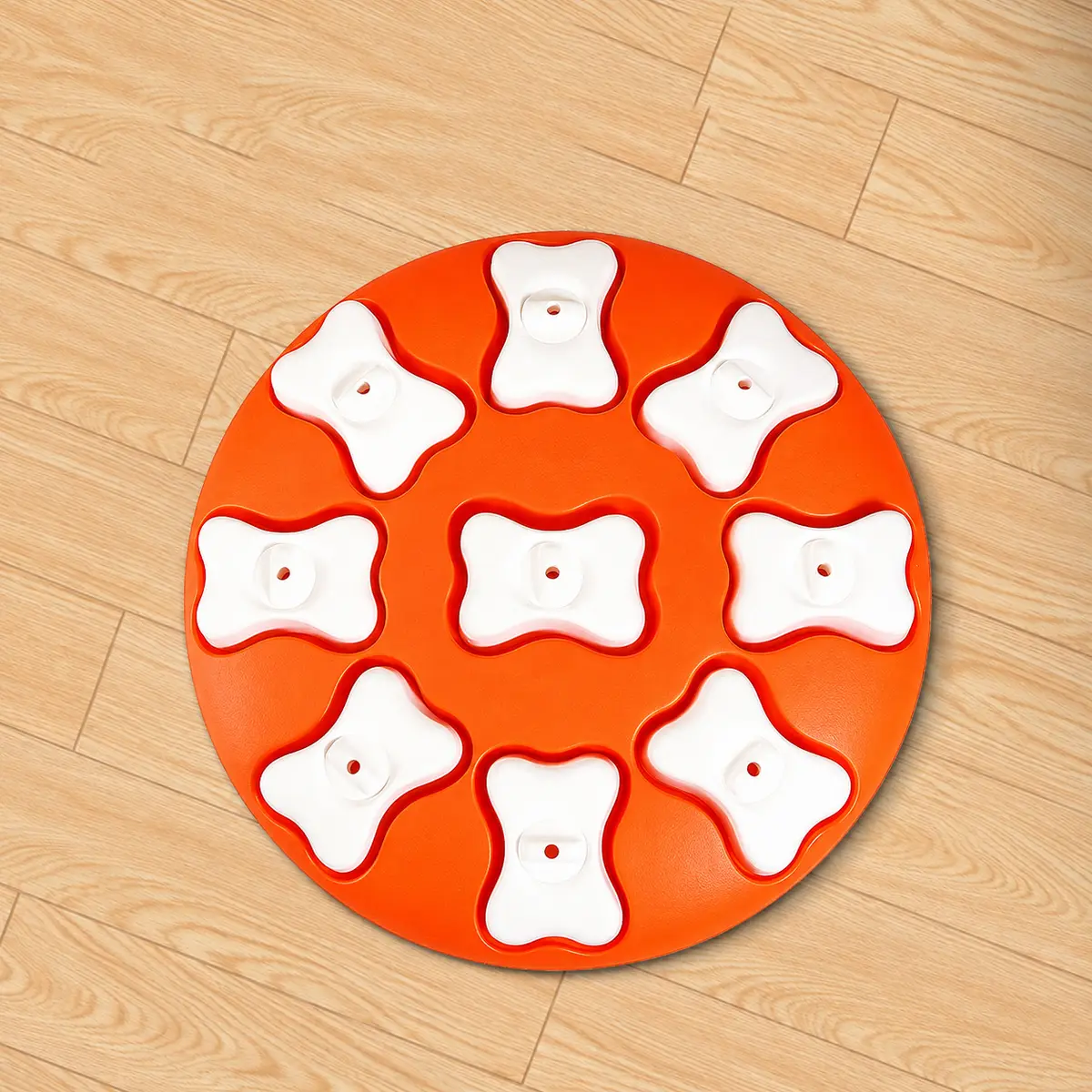
Spreading a few safe pieces across a snuffle mat or packing them into a puzzle toy turns a small treat into a few minutes of sniffing work.
Eggs for puppies
Weaned puppies can have a little plain, fully cooked egg. Start with a teaspoon or two of chopped hard-boiled egg mixed into their usual food, and see how their stomach handles it before offering more.
Puppy food is formulated for growth, and extras can throw off that balance if they become a large part of the bowl. Keep egg to a small, occasional addition, and never feed raw egg to a puppy, whose immune system is still developing.
Eggshells and other questions
Eggshells contain calcium, but the AKC notes that sharp shell edges can scratch the throat and gut, and there are easier ways to add calcium if a dog actually needs it. Do not grind shells into food on your own; that is a decision to make with a vet.
Spoiled eggs are a separate hazard. An egg that smells off or has been left out can grow bacteria that make dogs sick, so share only what you would eat yourself. Duck and quail eggs follow the same rules: cooked, plain and small.
Signs an egg disagreed with your dog
Most dogs handle cooked egg well. Too much at once can cause loose stool, gas or vomiting within a few hours. A dog with an egg allergy may itch, lick its paws or develop ear trouble after repeated servings, which is worth mentioning to your vet.
Call your vet the same day if your dog ate raw eggs and develops vomiting, diarrhea, fever or lethargy, or if it gets into a carton of shells and seems to be in pain. If your dog ate eggs cooked with onion or garlic, call your vet or ASPCA Animal Poison Control at (888) 426-4435; a fee may apply.
This page is general information, not veterinary advice, and it cannot replace an examination by the vet who knows your pet.
Common questions
Can dogs eat raw eggs?
It is safest not to. Raw eggs can carry Salmonella and E. coli, and raw whites can interfere with biotin absorption over time. Cooking the egg fully removes both problems without losing much of the nutrition.
Can dogs eat eggshells?
Not as a habit. Shells have calcium, but sharp pieces can injure the throat and gut. A dog that eats a bit of shell is usually fine; adding ground shell to the diet is something to discuss with your vet first.
Can dogs eat eggs every day?
Most healthy dogs do best with eggs a few times a week rather than daily. Eggs carry fat and calories, and a daily egg can tip a small dog over its calorie needs without you noticing.
Can dogs eat egg yolks?
Yes, cooked yolks are fine in moderation. The yolk carries most of the egg's fat and calories, so it is the part to limit for dogs that gain weight easily or have a sensitive stomach.
Can dogs eat deviled eggs?
No. Deviled eggs are usually made with mayonnaise, mustard, salt and sometimes onion or paprika. The fat and seasoning can upset a dog's stomach, and onion is harmful to dogs.
Sources we checked
This guide is general information, not veterinary advice. If your pet is unwell or injured, contact your veterinarian.