Food safety
Can Dogs Eat Eggplant? Yes, Plain and Cooked, in Moderation
Yes, dogs can eat eggplant in moderation. The American Kennel Club says plain eggplant is safe as an occasional treat, ideally peeled, cut into bite-size pieces and cooked to soften it. Eggplant is a nightshade and contains solanine, but the highest amounts are in the leaves and blossoms rather than the purple fruit. The real risks are how people cook it: fried in oil, layered with cheese in eggplant parmesan, or seasoned with garlic and onion. Here is how to serve it.
By Matt GarnettUpdated November 13, 20264 min read2 sources
Why plain eggplant is safe for dogs
The AKC lists eggplant as safe for dogs when served in moderation. It is low in calories and supplies fiber, a little potassium and some plant antioxidants, mostly in the purple skin. That makes it a light option for a dog that likes vegetables.
It is still an extra, not part of the main diet. The AKC's 10 percent treat rule, that treats should make up no more than 10 percent of a dog's daily calories, applies to eggplant as to any snack. A complete dog food already supplies everything your dog needs.
Solanine and the green parts of the plant
Eggplant belongs to the nightshade family with tomatoes and potatoes. The AKC notes that it contains solanine, a natural plant defense chemical, but that the fruit is not truly toxic in normal amounts. The highest concentrations are in the green leaves and blossoms.
If you grow eggplant, keep your dog from chewing the leaves, stems and flowers in the garden. Cut off the green cap and stem before cooking. A dog that ate a lot of eggplant plant material should be watched for drooling, vomiting and diarrhea.
How to prepare eggplant for a dog
The AKC suggests removing the stem, washing the eggplant thoroughly, peeling it, cutting it into bite-sized pieces and cooking it before serving. Roast, bake, steam or grill it with no oil, salt or seasoning until it is soft, then let it cool.
Eggplant soaks up oil like a sponge, so fried or sautéed eggplant can carry a lot of fat. Skip eggplant parmesan, baba ganoush and ratatouille, which contain cheese, tahini, garlic, onion or salt. The ASPCA lists garlic and onion as harmful to dogs.
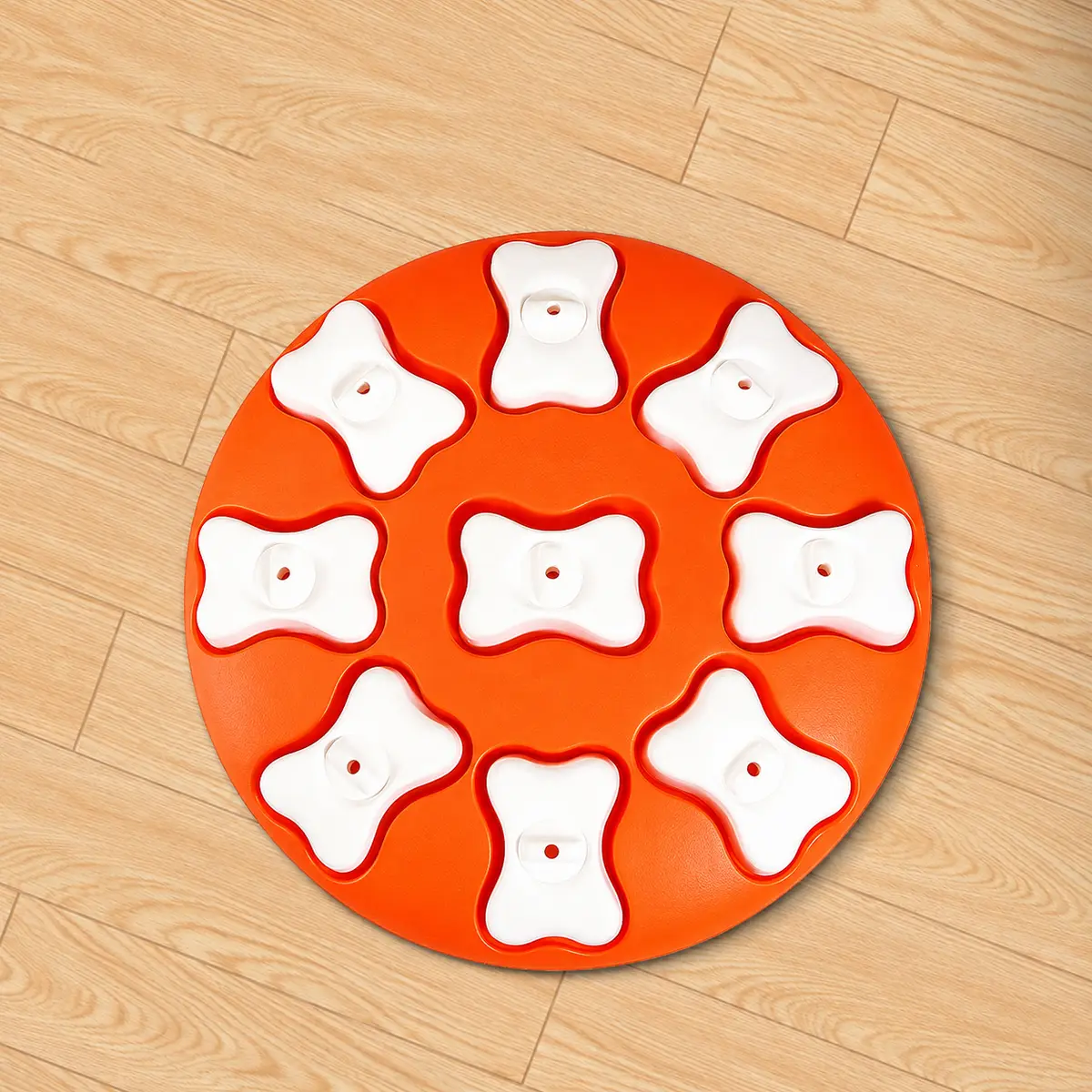
Spreading a few safe pieces across a snuffle mat or packing them into a puzzle toy turns a small treat into a few minutes of sniffing work.
How much eggplant by weight
Start with a small piece and see how your dog reacts. A guide for plain cooked eggplant: one or two pieces about the size of a die for dogs under 20 lb; a tablespoon of chopped eggplant for dogs of 20 to 50 lb; up to two tablespoons for dogs over 50 lb.
The AKC warns never to feed a whole eggplant and notes that the fiber can change your dog's bowel movements if they eat too much. Once or twice a week is a sensible ceiling. Ask your vet first if your dog has kidney disease, arthritis or is on a prescription diet.
Eggplant for puppies
Puppies can try a little plain, peeled, cooked eggplant once they are eating solid puppy food comfortably. Mash a piece about the size of a pea and mix it into their food, then watch their stool over the next day.
A puppy's calories should come from food formulated for growth, so vegetables are best kept as an occasional taste. Keep garden eggplant plants fenced off, as puppies are especially likely to chew leaves and flowers.
Signs eggplant disagreed with your dog
Some dogs get gas, soft stool or a mild upset after a new vegetable, usually within a few hours to a day. A small number of dogs seem sensitive to nightshades; signs of a reaction can include itching, vomiting or repeated loose stool. Stop feeding eggplant if you notice any of these.
Call your vet the same day if vomiting repeats, diarrhea lasts more than a day, your dog has a painful belly or seems lethargic, or if they ate a dish containing garlic or onion. Facial swelling or trouble breathing needs emergency care.
Other vegetables dogs can eat
Zucchini, green beans, carrots, cucumbers and plain cooked sweet potato are other vegetables the AKC regards as safe in moderation for most dogs. Like eggplant, serve them plain and cut to a size your dog cannot swallow whole.
Keep onions, garlic, leeks and chives away from your dog in every form. If your dog eats any of those, call your vet or ASPCA Animal Poison Control at (888) 426-4435; a fee may apply.
This page is general information, not veterinary advice, and it cannot replace an examination by the vet who knows your pet.
Common questions
Can dogs eat raw eggplant?
The AKC says raw eggplant is acceptable, but cooking softens it and makes it easier to digest. Peel it, cut it small and serve it plain. Many dogs find raw eggplant spongy and bitter, so cooked is usually more popular.
Can dogs eat eggplant skin?
The skin is not harmful, but the AKC suggests peeling eggplant before feeding, as the skin is tougher to digest. Peeled, cooked flesh is the gentlest option, especially for small dogs and puppies.
Can dogs eat eggplant parmesan?
No. Eggplant parmesan is breaded and fried and layered with cheese and a tomato sauce that usually contains garlic and onion. A stolen bite may upset the stomach; call your vet if your dog ate a large portion.
Is eggplant toxic to dogs?
No. The purple fruit is safe in moderation. The leaves and blossoms contain more solanine, so keep your dog away from the plants in the garden and remove the green cap before cooking.
Can dogs eat roasted eggplant?
Yes, if it was roasted plain. Most roasted eggplant is cooked with oil, salt and garlic, so set some aside before seasoning, and keep portions small because eggplant absorbs a lot of fat.
Sources we checked
This guide is general information, not veterinary advice. If your pet is unwell or injured, contact your veterinarian.