Food safety
Can Dogs Eat Egg Shells? Not as a Treat — Here's Why
Not as a regular treat. Egg shells are not poisonous to dogs, and a stray piece licked out of the trash is rarely a problem, but the American Kennel Club advises against feeding them casually. Broken shell has sharp edges that can scratch the mouth and throat, raw shell can carry Salmonella, and the calcium in it can unbalance a dog food that is already complete. If your vet suggests shell as a calcium source, it is baked and ground to powder. Here is what to know.
By Matt GarnettUpdated November 13, 20265 min read2 sources
Why egg shells are not a good snack
An egg shell is mostly calcium carbonate wrapped around a thin inner membrane. Nothing in it is toxic, which is why a dog that grabs a shell from the counter is not a poisoning emergency. The concern is physical: the AKC notes that broken shell has sharp edges that can injure the throat or the digestive tract on the way down.
Calcium is the second issue. A complete and balanced commercial dog food already contains the calcium your dog needs, in the right ratio with phosphorus. Adding more on top is not a bonus. In large-breed puppies especially, extra calcium during growth is something vets actively avoid, so shell is never a casual extra for them.
The raw shell and Salmonella risk
Shells straight from the carton can carry Salmonella on the outside, the same bacteria that make raw egg a risk for people. The AKC lists fever, vomiting, diarrhea and lethargy as the signs it can cause in dogs, and the bacteria can also pass to the people who handle the dog's bowl or clean up after it.
That makes the shell from a boiled or baked egg a little safer than a raw one, but cooking does nothing about sharp edges. Keep raw egg waste in a lidded trash can.
If your vet recommends ground egg shell
Some owners who cook homemade diets use egg shell powder as a calcium source, and that is the one setting where shell makes sense. It only works as part of a recipe balanced by a vet or a board-certified veterinary nutritionist, who will tell you how much to add for your dog's specific diet.
Preparation is always the same: rinse the shells, bake them until fully dry, then grind them until they are as fine as flour, with no gritty pieces. Never sprinkle crushed shell into kibble on a hunch.
How much is too much
For a dog on a commercial diet, the honest answer is that no amount of egg shell is needed. A single piece eaten by accident is unlikely to cause trouble in a dog of any size, though a small dog under 20 lb is more likely to feel a sharp fragment than a dog over 50 lb.
Problems tend to come from repeated feeding or from a dog raiding a carton of empties. If your dog has eaten several whole shells, feed their normal meal and watch them closely for the next day. Call your vet if they gag, drool, refuse food or show any signs of discomfort.
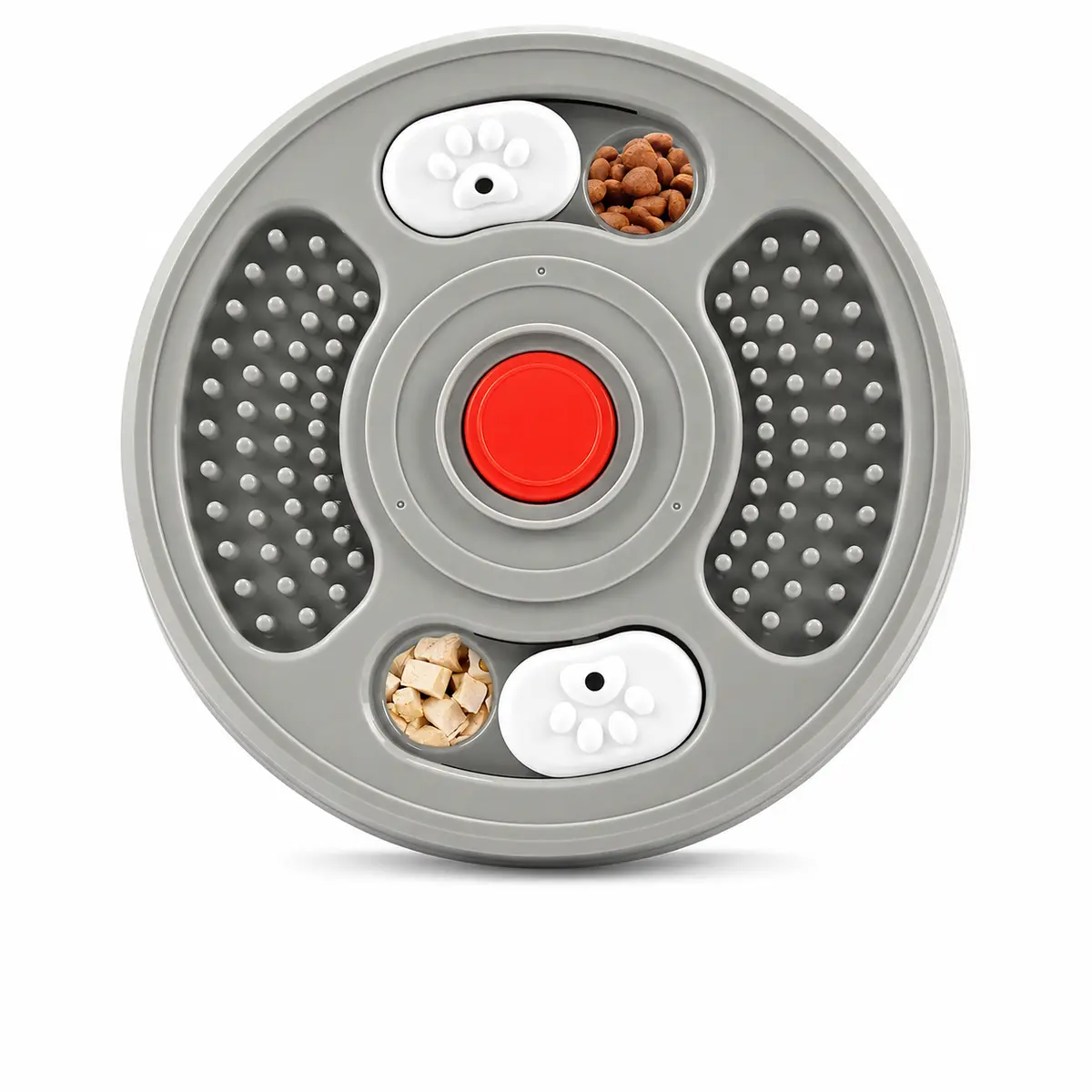
For dogs that gulp anything new, a slow feeder bowl or a lick mat keeps portions small and eating slow.
Egg shells and puppies
Puppies should not be given egg shells at all unless their vet has built them into a diet. Growing bones are sensitive to calcium, and puppy foods are formulated to deliver a precise amount; adding shell can push large-breed puppies in particular past what is healthy for their skeleton.
A puppy's mouth and throat are also smaller and softer, so a sharp edge does more damage. Keep egg cartons and kitchen scraps out of reach, and if your puppy eats shell, watch for coughing, retching or blood-tinged saliva.
Signs of a problem after eating egg shell
Mild signs include licking the lips, gulping, a brief cough or a soft stool. More serious signs are repeated retching, drooling, blood in the saliva, vomiting, a tense or painful belly, or a refusal to eat. If raw shell was involved, Salmonella signs such as fever and diarrhea can appear one to three days later.
Contact your vet the same day for vomiting that repeats, bloody stool or a dog that seems in pain. Go straight to an emergency clinic if your dog cannot swallow, is struggling to breathe or keeps trying to vomit without bringing anything up.
Common questions
Are egg shells good for dogs?
They contain calcium and a membrane that some people supplement for joints, but a dog on complete commercial food does not need them. The sharp edges and bacteria risk outweigh the benefit unless a vet has built ground shell into a homemade diet.
Can dogs eat boiled egg shells?
A boiled shell is less likely to carry Salmonella than a raw one, but it is just as sharp when it breaks. Peel boiled eggs before sharing, and throw the shell away rather than offering it as a crunchy snack.
My dog ate egg shells from the trash, what should I do?
Stay calm, since shell is not toxic. Remove access to the trash, offer water and their usual food, and watch for gagging, vomiting, drooling or a painful belly over the next day. Call your vet if any of those appear.
Can dogs eat egg shell powder?
Finely ground, baked egg shell powder is sometimes used as a calcium source in vet-designed homemade diets. Only add it when your vet or a veterinary nutritionist has told you how much, because too much calcium can cause problems, especially in puppies.
Can dogs eat eggs every day?
Plain cooked egg can be an occasional treat, but daily eggs add calories that can lead to weight gain. A few times a week in small portions suits most healthy dogs; ask your vet if your dog has pancreatitis or is overweight.
Sources we checked
This guide is general information, not veterinary advice. If your pet is unwell or injured, contact your veterinarian.