Food safety
Can Dogs Eat Coconut Oil? Yes, in Small Amounts Only
Yes, dogs can eat a small amount of coconut oil. It is not toxic, and the ASPCA says small amounts of coconut products are unlikely to cause serious harm. Coconut oil is almost pure fat, though, at around 120 calories a tablespoon, so too much brings greasy stool, diarrhea and weight gain, and it is a poor idea for dogs prone to pancreatitis. Treat it as an occasional food topping, not a supplement, and check with your vet first.
By Matt GarnettUpdated November 13, 20264 min read3 sources
Why a little coconut oil is safe
Coconut oil is a plant fat made mostly of saturated fats, including medium-chain fatty acids. The AKC describes it as safe to share with dogs in appropriate amounts, and the ASPCA notes that small amounts of coconut and coconut oil are unlikely to cause serious harm, though they can upset the stomach.
You will see many claims online about coconut oil and skin, coat, brain or immune health in dogs. Good evidence for those claims is thin, and coconut oil should not be used to treat any condition. If your dog has itchy skin, a dull coat or any other health concern, that is a question for your vet.
Dogs that should avoid coconut oil
Because coconut oil is so high in fat, it is not a good choice for dogs that have had pancreatitis. The AKC says those dogs should only have high-fat foods in small amounts and only after talking with a vet, and VCA lists a fatty meal as one trigger for the condition.
Overweight dogs, dogs on a weight-loss plan, and dogs with a sensitive stomach, chronic diarrhea or a liver condition are also better off without it. Dogs on a prescription diet should not have anything added to the bowl unless the vet managing that diet agrees.
How to give coconut oil to your dog
If your vet agrees, choose plain, unrefined virgin coconut oil with nothing added. Soften a small amount and drizzle it over your dog's usual food, or smear a thin layer inside a rubber toy or on a lick mat. Start with a fraction of the full amount and build up slowly over a week or two.
Do not let your dog eat from the jar, and keep coconut oil away from flavored products. Coconut-based desserts, candy and baked goods can contain sugar, chocolate or xylitol, and coconut flakes are often sweetened.
How much coconut oil by dog weight
The AKC quotes up to a teaspoon or so for a large dog, with less for smaller dogs. As a cautious guide for healthy adult dogs: under 20 lb, no more than a quarter teaspoon; 20 to 50 lb, up to half a teaspoon; over 50 lb, up to a teaspoon. The AKC does not recommend giving it every day.
Count it as part of your dog's treat allowance. A teaspoon of coconut oil is around 40 calories, which is a large share of a small dog's daily treat budget. If you add it, reduce other treats that day.
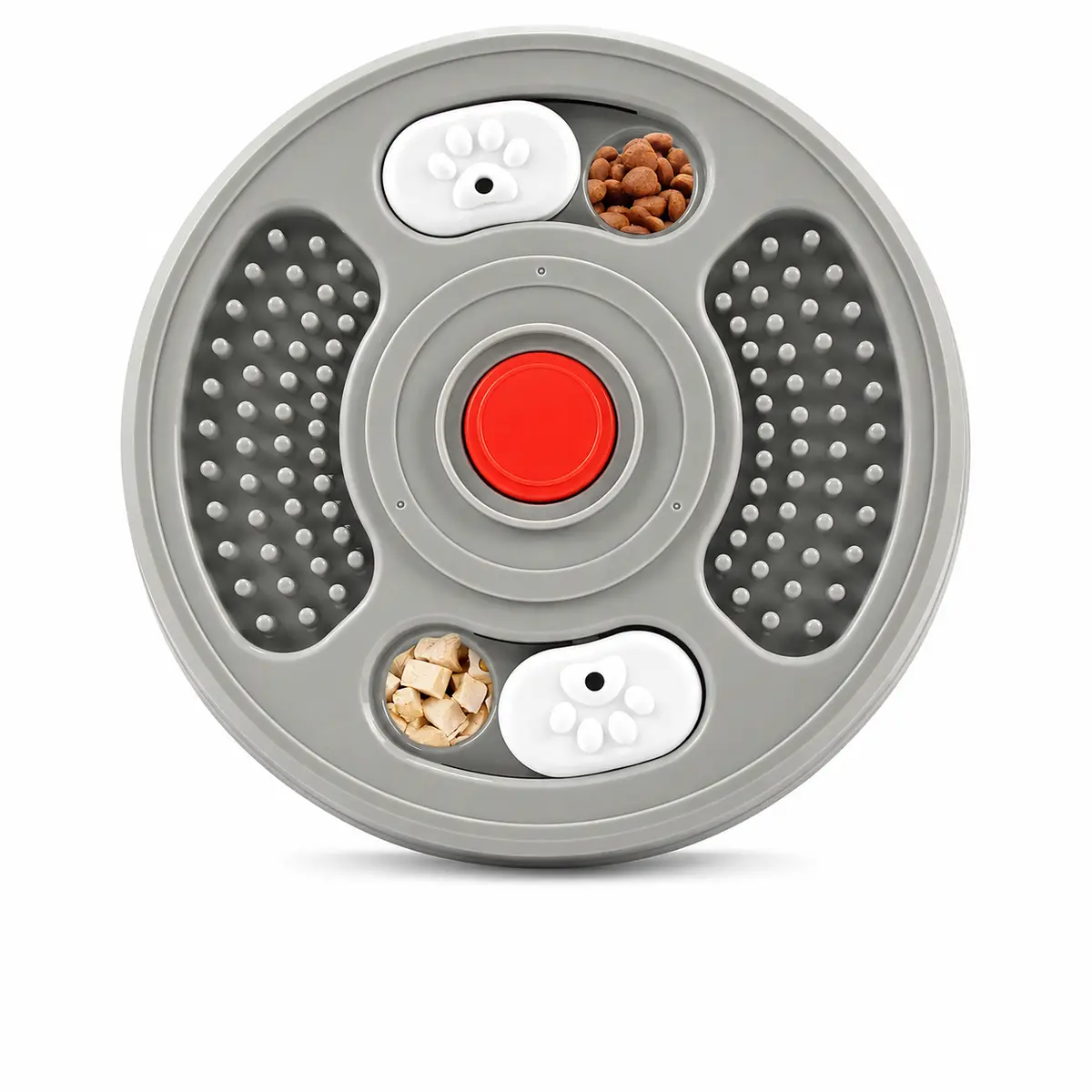
For dogs that gulp anything new, a slow feeder bowl or a lick mat keeps portions small and eating slow.
Coconut oil and puppies
Puppies do not need coconut oil. A complete puppy food is balanced for growth, and adding a pure fat can upset that balance and loosen stool in a puppy's sensitive gut.
If you are asked about coconut oil for a puppy by a breeder or a friend, raise it with your vet at the next puppy visit rather than adding it at home. A puppy that licks some off a spoon is unlikely to come to harm beyond soft stool.
Signs it was too much
Too much coconut oil usually shows up within a day as greasy or loose stool, diarrhea, vomiting or a gurgling stomach. Stop the oil and keep meals normal; most dogs settle within a day or two.
Call your vet the same day if your dog ate a lot of oil, for example licking out a tub, and then vomits repeatedly, seems painful in the belly, stands hunched, becomes lethargic or stops eating. Those signs can point to pancreatitis, which needs prompt treatment.
Other ways to add variety
If you want to make your dog's bowl more interesting, a spoonful of plain pumpkin puree, a few pieces of plain cooked chicken, or some steamed green beans add flavor with less fat than coconut oil.
Fresh coconut flesh and coconut milk can also cause loose stool, according to the ASPCA, so share those only in tiny amounts. Coconut water is high in potassium and is not needed; fresh water is what your dog should drink.
This page is general information, not veterinary advice, and it cannot replace an examination by the vet who knows your pet.
Common questions
Is coconut oil good for dogs' skin?
There is little strong evidence that eating coconut oil improves a dog's skin. Itchy or flaky skin has many causes, including allergies and parasites, so it is worth having your vet look before trying any home remedy.
Can I put coconut oil on my dog's paws?
A thin layer on dry paws is unlikely to cause harm, but most dogs will lick it off and eat it, so it counts toward their fat intake. Cracked, red or sore paws should be checked by your vet.
Can dogs eat coconut oil every day?
The AKC does not recommend daily feeding. Coconut oil is pure fat and adds calories quickly, and regular servings can lead to weight gain and loose stool. Keep it occasional and small.
Can coconut oil cause pancreatitis in dogs?
High-fat foods are one known trigger for pancreatitis, and coconut oil is almost entirely fat. Dogs that have had pancreatitis should not have it unless their vet agrees, and others should only have small amounts.
Can dogs eat coconut?
Small amounts of fresh, unsweetened coconut flesh are not toxic, but the ASPCA notes coconut can cause loose stool. Never give the hard shell or the hairy husk, which can cause a blockage.
Sources we checked
This guide is general information, not veterinary advice. If your pet is unwell or injured, contact your veterinarian.