Food safety
Can Dogs Eat Cinnamon? Not Toxic, But Not a Treat
Cinnamon is not toxic to dogs in the small amounts found in food, but it is not a treat to add on purpose, and large amounts, inhaled powder and cinnamon essential oil can poison a dog. Pet Poison Helpline says problems usually take more than a teaspoon of powder for most pets, and less for small dogs. The bigger risk is usually what the cinnamon comes in: sugary baked goods, xylitol, raisins and nutmeg. If your dog got into a large amount, call for advice.
By Matt GarnettUpdated November 13, 20264 min read3 sources
Why cinnamon is not considered toxic
The AKC describes cinnamon as not toxic to dogs, and Pet Poison Helpline says it is generally well tolerated. The pinch you might find in a cookie or a bowl of oatmeal is very unlikely to cause harm. The most common problem is irritation inside the mouth after a dog chews something heavily spiced.
That does not make it useful. Dogs gain nothing from cinnamon, and the products that contain it are usually sweet, fatty and calorie-dense. There is no reason to sprinkle it on your dog's food, and claims that it treats any condition in dogs should be checked with your vet.
Warning: large amounts, powder and cinnamon oil
Pet Poison Helpline notes that a large overdose of cinnamon powder, or exposure to cinnamon essential oil, can cause vomiting, diarrhea, changes in heart rate, low blood sugar and liver disease. Only a small amount of the essential oil is needed to cause problems, so keep oils, diffuser refills and scented products well out of reach.
Inhaled powder is a separate risk: a dog that knocks over a jar and breathes it in can cough, choke and struggle to breathe. If your dog ate a large amount, inhaled powder, or got into cinnamon oil, call your vet, ASPCA Animal Poison Control at (888) 426-4435 or Pet Poison Helpline at (855) 764-7661; a fee may apply.
The cinnamon foods that are the real problem
Cinnamon rolls, coffee cake, churros, snickerdoodles and pumpkin spice treats are high in sugar and fat, which can upset a dog's stomach. Some baked goods contain xylitol, which can cause a dangerous drop in blood sugar, and cinnamon raisin bread contains raisins, which can cause kidney failure in dogs.
Spice blends often pair cinnamon with nutmeg, which contains myristicin. Pet Poison Helpline says small amounts used in recipes are very unlikely to cause serious toxicity, but a large amount can cause disorientation, a fast heart rate and high blood pressure, lasting up to 48 hours. Raw cinnamon roll dough is also dangerous because the yeast keeps rising in the stomach.
What to do if your dog ate cinnamon
If your dog licked a little cinnamon off a plate or ate one plain cookie, watch them for the rest of the day for drooling, pawing at the mouth, vomiting or diarrhea, and make sure water is available. Most dogs need nothing more.
Call for advice straight away if they ate a spoonful or more of powder, a whole jar, cinnamon sticks, anything with cinnamon oil, or a cinnamon product that also contains xylitol, raisins, chocolate or raw dough. Note the product and the amount, and do not make your dog vomit unless a vet tells you to.
How much cinnamon is too much for dogs of different sizes
Because cinnamon is not a treat, there is no amount to aim for. As a rough picture of risk, a dog under 20 lb is affected by less powder than a dog over 50 lb, and Pet Poison Helpline's guide of more than a teaspoon for most pets is the level at which to call. Small breeds may react to less.
Spiced food is calorie-dense for a small dog too: one cinnamon roll can be a large share of a 10 lb dog's daily calories. Keep human baked goods off the menu, whatever the spice.
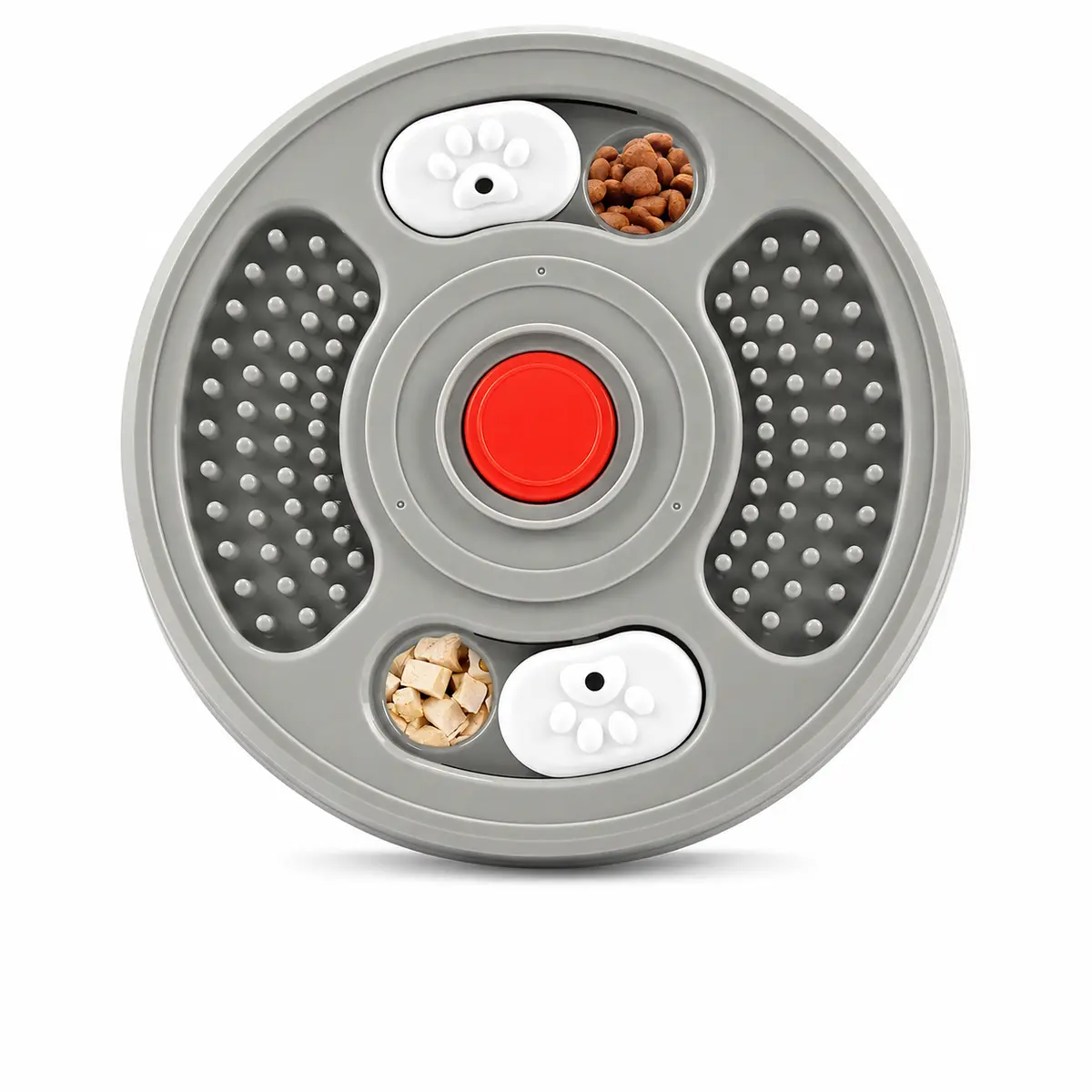
For dogs that gulp anything new, a slow feeder bowl or a lick mat keeps portions small and eating slow.
Can puppies eat cinnamon?
Puppies should not be given cinnamon or cinnamon-spiced foods. They are small, so a modest amount is a larger dose for their size, and their stomachs upset easily. Puppies also chew everything, which makes cinnamon sticks, potpourri and scented ornaments a real hazard.
If a puppy chewed a cinnamon stick or got into spice, check their mouth for redness, offer water, and call your vet if they drool heavily, cough, vomit or seem unwell.
Signs to watch, and safer flavor ideas
After a cinnamon exposure, watch for drooling, pawing at the mouth, coughing or sneezing, vomiting and diarrhea within a few hours. A racing heart, wobbliness, weakness or collapse need to be seen by a vet immediately.
If you want to make homemade dog treats more interesting, plain canned pumpkin, a little mashed banana, or a spoonful of plain unsweetened applesauce add flavor without spice. Ask your vet about any recipe if your dog has health conditions.
This page is general information, not veterinary advice, and it cannot replace an examination by the vet who knows your pet.
Common questions
Can dogs eat cinnamon rolls?
No. Cinnamon rolls are high in sugar and fat, may contain nutmeg, raisins or xylitol, and raw cinnamon roll dough is dangerous because yeast keeps rising in the stomach. Call your vet if your dog ate raw dough.
Can dogs eat cinnamon applesauce?
It is best avoided. Sweetened and spiced applesauce adds sugar your dog does not need, and some versions use xylitol. A spoonful of plain, unsweetened applesauce with no xylitol is the safer choice.
Can dogs eat cinnamon sticks?
No. Chewing a cinnamon stick can irritate the mouth, and swallowed pieces can be a choking risk. Keep sticks, potpourri and cider mulling spices out of reach.
Is cinnamon oil safe for dogs?
No. Cinnamon essential oil is far more concentrated than the spice, and Pet Poison Helpline says only a small amount is needed to cause problems. Call for advice if your dog licked or ate any.
Can dogs eat cinnamon toast crunch or cinnamon cereal?
A few pieces dropped on the floor are unlikely to cause harm, but sugary cereal is not a good treat. Check the label for xylitol and raisins, and keep the box out of reach.
Sources we checked
This guide is general information, not veterinary advice. If your pet is unwell or injured, contact your veterinarian.