Food safety
Can Dogs Eat Chocolate? No — It's Toxic to Dogs
No, dogs should never eat chocolate, because chocolate can poison a dog. It contains theobromine and caffeine, stimulants a dog clears very slowly, and the darker the chocolate, the more dangerous it is. If your dog has eaten chocolate, note the type and amount and call your vet, ASPCA Animal Poison Control at (888) 426-4435 or Pet Poison Helpline at (855) 764-7661 now; a fee may apply.
By Matt GarnettUpdated November 13, 20264 min read3 sources
Why chocolate is toxic to dogs
Chocolate contains two methylxanthines, theobromine and caffeine. The Merck Veterinary Manual explains that they overstimulate the nervous system and the heart, raising heart rate and causing restlessness and, at higher doses, tremors and seizures. Dogs break theobromine down slowly, with a half-life of around 17 hours, so its effects build and linger.
How sick a dog gets depends on three things: the type of chocolate, how much was eaten and the dog's size. Pet Poison Helpline also notes that the dog's health matters. A bite of milk chocolate may cause only stomach upset in a large dog, while the same amount of baking chocolate can be dangerous for a small one.
Which chocolate is most dangerous
From most to least toxic, the Merck Veterinary Manual ranks cocoa powder first, then unsweetened baking chocolate, cocoa bean hulls used as garden mulch, semisweet and dark chocolate, and then milk chocolate. White chocolate contains very little theobromine, but its fat and sugar can still cause vomiting and pancreatitis.
Many chocolate foods carry extra hazards. Pet Poison Helpline warns that candy and baked goods can also contain raisins, macadamia nuts or xylitol, each toxic on its own. Brownies, chocolate chip cookies, hot cocoa mix, chocolate-covered espresso beans and Halloween and Valentine's candy are all common causes of calls.
If your dog ate chocolate: what to do now
Work out what was eaten: the type of chocolate, roughly how much, when, and your dog's weight. Keep the wrapper, which shows the cocoa percentage. Then call your vet, an emergency clinic, ASPCA Animal Poison Control at (888) 426-4435 or Pet Poison Helpline at (855) 764-7661. A fee may apply.
Do not wait for signs and do not induce vomiting at home unless a vet tells you to. The Merck Veterinary Manual notes that vets usually induce vomiting if the chocolate was eaten within about two hours and the dog still seems normal. Pet Poison Helpline also offers a chocolate toxicity calculator as a starting point, not a replacement for a call.
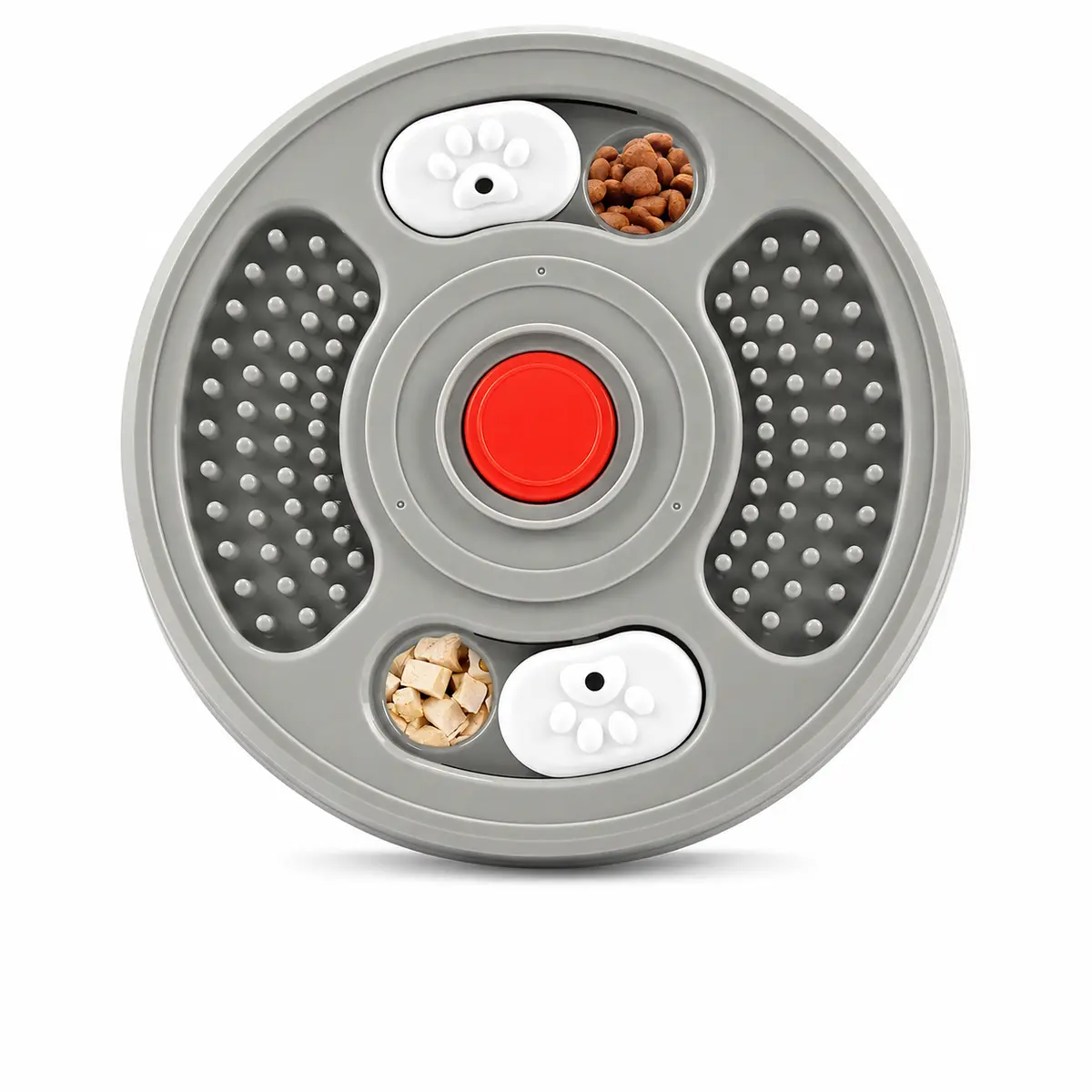
For dogs that gulp anything new, a slow feeder bowl or a lick mat keeps portions small and eating slow.
Signs of chocolate poisoning and their timing
The Merck Veterinary Manual notes signs usually appear 6 to 12 hours after eating. Early signs are vomiting, diarrhea, heavy thirst, a swollen belly and restlessness or pacing. Many dogs also pee more than usual. A dog that ate the chocolate wrapper as well may also have a blockage risk.
More serious signs include hyperactivity, a racing or irregular heartbeat, muscle tremors, wobbliness, high body temperature and seizures. In severe cases signs can last up to 72 hours. Any tremor, collapse or seizure is an emergency: go to the nearest open vet clinic immediately.
Puppies, small dogs and how vets treat it
Small dogs and puppies are at the highest risk because a single candy bar is a large dose for their weight. Older dogs and dogs with heart disease are also more vulnerable to the effect on the heart. There is no safe amount of chocolate to give any dog on purpose.
There is no antidote, but treatment works well when it starts early. Vets may induce vomiting, give activated charcoal, run IV fluids to help clear the toxins, and use medication to control vomiting, a fast heart rate or tremors. Dogs with severe signs may stay in the hospital for a day or more.
Keeping chocolate away, and safer treats
Chocolate poisoning calls spike around Halloween, Valentine's Day, Easter and Christmas. Keep candy bowls, baking supplies, hot cocoa packets and gift boxes up high or in closed cupboards, and check that children's trick-or-treat bags are not left on the floor. Avoid cocoa bean mulch in gardens dogs use.
If you want to share a treat, choose one made for dogs, or a few blueberries or banana slices. Carob dog treats are chocolate-free and safe. Chocolate-flavored dog treats are made without cocoa, but read the label to be sure.
This page is general information, not veterinary advice, and it cannot replace an examination by the vet who knows your pet.
Common questions
How much chocolate is toxic to a dog?
It depends on the type of chocolate, the amount and the dog's weight, so there is no single number. Cocoa powder and baking chocolate are dangerous in small amounts. Call your vet or a poison control line with the details rather than guessing.
My dog ate chocolate but seems fine. What now?
Call your vet or a poison control line anyway. Signs usually take 6 to 12 hours to appear, and treatment works best before then. Your dog looking normal now does not mean the chocolate was harmless.
Can dogs eat white chocolate?
White chocolate contains very little theobromine, so poisoning is unlikely, but it is high in fat and sugar and can cause vomiting, diarrhea or pancreatitis. It should not be given as a treat.
Can a dog die from eating chocolate?
Yes, in severe cases, usually from heart rhythm problems, overheating or seizures after eating a large amount of dark or baking chocolate. Most dogs recover when treated promptly, which is why calling early matters.
Is chocolate toxic to cats?
Yes. Theobromine and caffeine are toxic to cats too, although cats eat chocolate less often because they cannot taste sweetness. If your cat ate chocolate, call your vet or a poison control line.
Sources we checked
This guide is general information, not veterinary advice. If your pet is unwell or injured, contact your veterinarian.