Food safety
Can Dogs Have Chicken Broth? Yes, If It's Onion-Free
Yes, dogs can have chicken broth, but only if it is plain, low in sodium and free of onion and garlic. That rules out most cartons and bouillon cubes made for people, which are salted and seasoned with onion and garlic powder, both of which can damage a dog's red blood cells. A homemade broth of chicken and water, or a broth made for dogs, is the safe choice. A few tablespoons poured over food is plenty to make a meal more appealing.
By Matt GarnettUpdated November 13, 20264 min read3 sources
Why plain chicken broth is safe for dogs
Chicken broth is mostly water flavored with meat, so plain broth adds moisture and smell to a meal with very few calories. That makes it a popular way to tempt a picky eater, soften dry food or encourage a dog to drink more on a hot day.
The AKC describes bone broth, a stock made by simmering bones at low heat for a long time, as a food many dogs enjoy, while warning that some products contain additives such as onions, garlic or salt. The broth itself is not the problem; what goes into it is.
Onion, garlic and salt in store-bought broth
The ASPCA warns that onion, garlic and chives can cause stomach irritation and red blood cell damage leading to anemia. Powdered and concentrated forms are especially potent, and they appear in most supermarket broths, stocks and bouillon cubes, often listed as onion powder, garlic powder or natural flavors.
Salt is the other concern. Regular broth and bouillon can be very high in sodium, and the ASPCA notes that excessive salt causes increased thirst and urination and, in large amounts, salt toxicity. If your dog drank a carton of seasoned broth, call your vet, the ASPCA Animal Poison Control Center at (888) 426-4435 or Pet Poison Helpline at (855) 764-7661; a fee may apply.
How to make a dog-safe chicken broth
Put plain chicken pieces in a pot, cover with water and simmer for an hour or longer. You can add carrots or celery for flavor, but no onion, garlic, leeks, chives, salt or herbs from a seasoning blend. Strain thoroughly and chill the broth, then lift off and discard the layer of fat.
Remove every bone. The AKC warns that cooked bones are dangerous for dogs and can lodge in their throats or splinter. Store the broth in the fridge for a few days, or freeze it in ice cube trays for easy single portions.
How much chicken broth by dog weight
As a topper or occasional treat: under 20 lb, one to two tablespoons; 20 to 50 lb, two to four tablespoons; over 50 lb, up to about half a cup. Pour it over the usual meal rather than replacing any of it.
Broth should never replace fresh water or a complete diet. Dogs with heart or kidney disease, or on a sodium-restricted diet, should only have broth your vet has approved, even low-sodium versions.
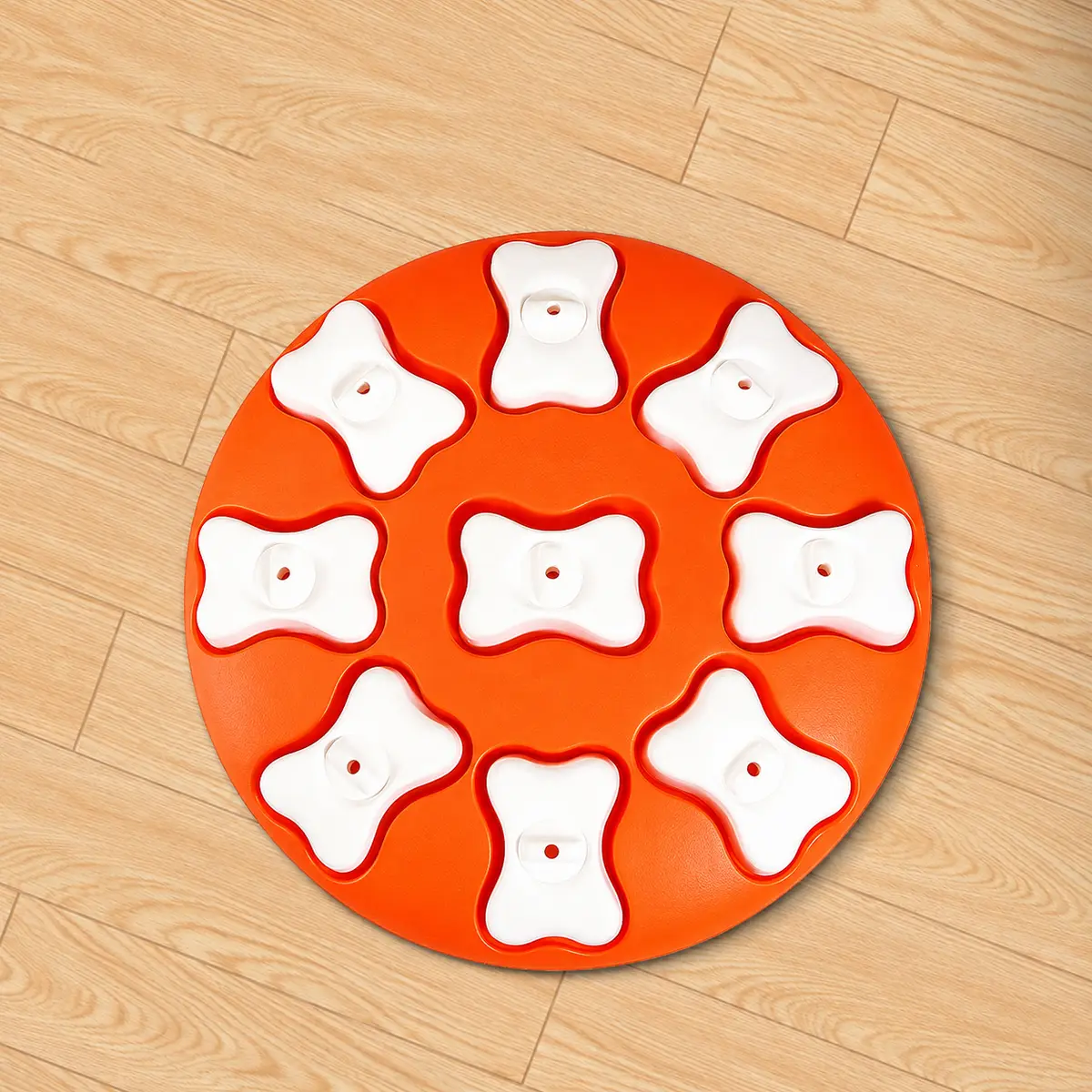
Spreading a few safe pieces across a snuffle mat or packing them into a puzzle toy turns a small treat into a few minutes of sniffing work.
Puppies and chicken broth
A spoonful of plain, homemade, onion-free broth can soften a puppy's kibble or make it more appealing during the switch to a new food. Keep it lukewarm, not hot, and skim off the fat, which can upset a young stomach.
A puppy that refuses food, is vomiting or has diarrhea needs a vet rather than broth. Young dogs dehydrate quickly, and those signs can point to infections that need prompt treatment.
Signs broth disagreed with your dog and when to call a vet
Rich or fatty broth may cause loose stools or vomiting within a few hours. Salty broth can make a dog very thirsty and need to urinate more. These signs usually pass within a day once you stop.
Signs of onion or garlic damage can take a few days to appear: weakness, pale gums, fast breathing, reddish urine or lethargy. Call your vet promptly if you notice any of these, or for repeated vomiting, tremors or wobbliness after a large amount of seasoned broth.
Other ways to make meals more tempting
Warm water poured over dry food releases its smell and works surprisingly well. A spoonful of plain canned pumpkin or a little shredded plain cooked chicken are other simple toppers, and the ASPCA lists lean, cooked, unseasoned meat as acceptable in small amounts.
If your dog has suddenly lost interest in food, rather than being a lifelong picky eater, that change is worth mentioning to your vet before you start adding toppers.
This page is general information, not veterinary advice, and it cannot replace an examination by the vet who knows your pet.
Common questions
Can dogs have store-bought chicken broth?
Most store-bought chicken broths contain onion, garlic and a lot of salt, so they are not a good choice. Look for a broth made for dogs, or check that a low-sodium broth lists no onion, garlic or natural flavors.
Is chicken broth good for dogs with an upset stomach?
Plain broth can encourage a dog to drink, but it does not treat an upset stomach. A dog that is vomiting repeatedly, has diarrhea for more than a day or seems unwell needs your vet.
Can dogs have chicken bone broth?
Yes, if it is homemade or made for dogs and has no onion, garlic or added salt. Strain out every bone, because cooked bones can splinter and lodge in a dog's throat or gut.
Can dogs have chicken bouillon cubes?
No. Bouillon cubes are concentrated salt with onion and garlic flavorings. If your dog ate a cube or a few cubes, call your vet or an animal poison line for advice.
Can I give my dog chicken broth every day?
A small amount of plain, homemade, onion-free broth over food is fine for most healthy dogs. Check with your vet first if your dog has heart or kidney disease or is on a special diet.
Sources we checked
This guide is general information, not veterinary advice. If your pet is unwell or injured, contact your veterinarian.