Food safety
Can Dogs Eat Chicken Bones? No — and What to Do if They Did
No, dogs should not eat chicken bones. Cooked chicken bones are brittle and can splinter into sharp shards that catch in the throat or damage the stomach and intestines, and raw bones carry risks too. If your dog has just eaten one, do not panic and do not make it vomit: many dogs pass a small bone without trouble. Here is what to do, the signs that mean see a vet today, and what to give instead.
By Matt GarnettUpdated November 13, 20264 min read3 sources
Why chicken bones are dangerous
Chicken bones are thin and hollow. Cooking dries them out and makes them brittle, so when a dog crunches one it can break into sharp, angled pieces. The AKC notes that cooked bones splinter more easily than raw ones and that no chicken bone is considered completely safe. Its cookout guide is blunter: never give your dog cooked bones of any kind.
Those shards can lodge between the teeth or across the roof of the mouth, stick in the esophagus, or, more rarely, scrape or puncture the stomach or intestine. Whole wings and drumstick ends can also cause choking or a blockage further down. Raw bones are softer, but they still carry choking and blockage risks along with bacteria such as Salmonella.
What to do if your dog ate a chicken bone
Stay calm and take the rest of the bones away, ideally by trading for a tasty treat rather than chasing your dog, which can make it swallow faster. Check whether your dog is choking. If it is breathing and acting normally, call your vet for advice, with your dog's weight, roughly how much bone was eaten, and whether it was cooked or raw.
Do not make your dog vomit at home. The AKC explains that bringing a bone back up can lodge it in the esophagus and cause aspiration pneumonia. It also advises against giving antacids or immediately feeding bread, because a dog's strongly acidic stomach is what helps break bones down.
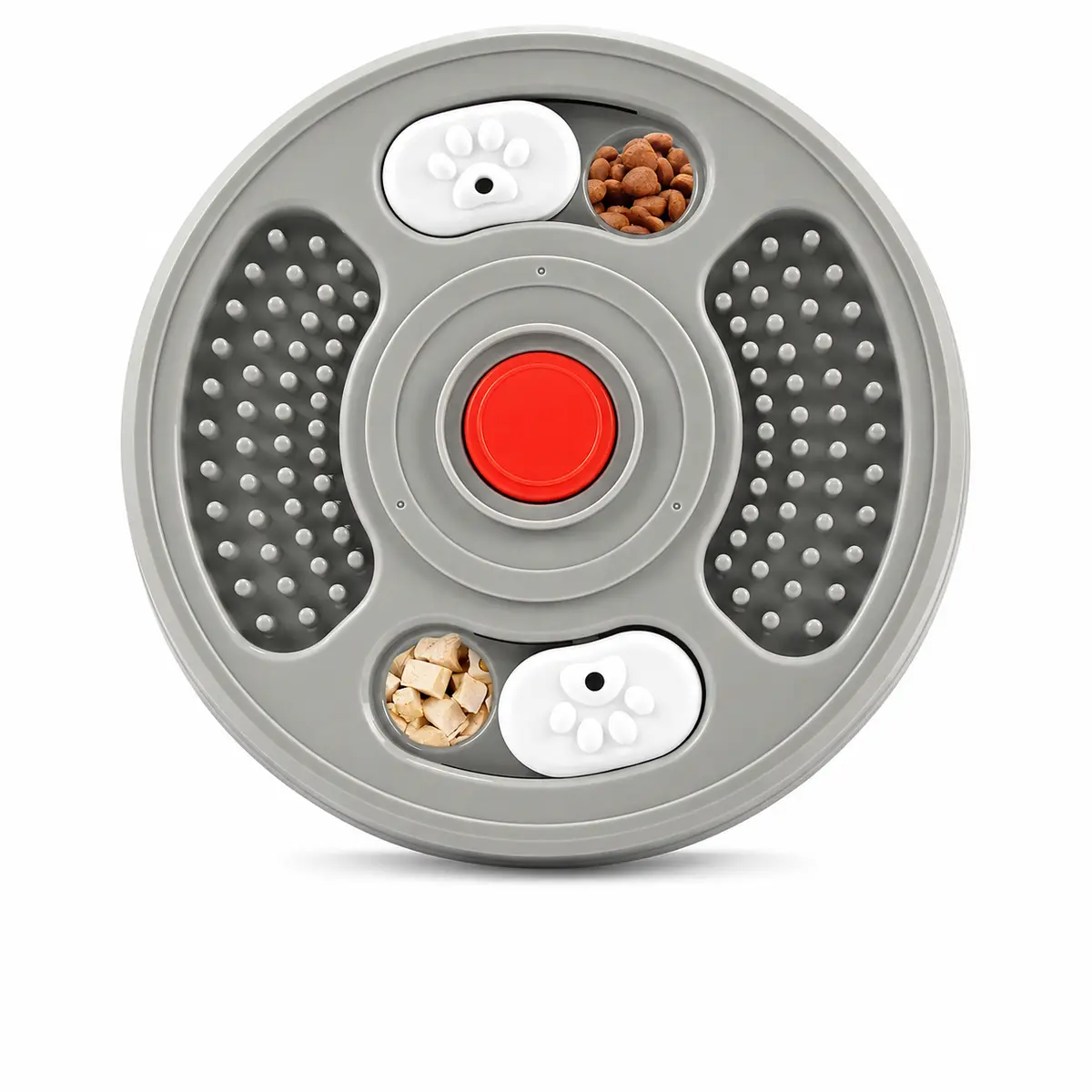
For dogs that gulp anything new, a slow feeder bowl or a lick mat keeps portions small and eating slow.
Warning signs to watch for over the next few days
According to the AKC, if your dog shows no signs and is eating normally within 12 to 24 hours, there is usually little to worry about. Keep watching for two or three days, and check the stool for bone fragments or blood.
Signs that need a vet visit today include choking sounds, gagging, stretching the neck, heavy drooling, regurgitating food, repeated vomiting, trouble swallowing, refusing food, a painful or swollen belly, straining or passing no stool, black or bloody stool, and lethargy. Choking or an outstretched neck can mean a bone stuck in the esophagus and needs an emergency clinic now.
Small dogs and puppies are at higher risk
A dog under 20 lb has a narrow esophagus and intestine, so a bone that a large dog passes easily can cause a blockage in a small one. If a small dog or a puppy has eaten a chicken bone, call your vet straight away rather than waiting to see what happens.
Puppies are also the most likely to raid the trash or snatch a wing from a low plate. Keep bones in a lidded can, take the trash out after a chicken dinner, and never leave plates where a dog can reach them at a picnic, tailgate or holiday meal.
Common ways dogs get chicken bones
Most chicken bone emergencies come from leftovers rather than deliberate feeding: rotisserie chicken carcasses, wing night, fried chicken buckets, a Thanksgiving or game-day spread, or a bone dropped on a sidewalk. Picnic and cookout season brings more cases, and so do holidays when guests slip scraps to the dog.
Ask guests not to feed the dog, and put a lid on the trash can or store it behind a door. On walks, teach a solid leave-it cue, since discarded wings on city sidewalks are a common find for dogs.
Safer alternatives to chicken bones
If you want to share chicken, give plain cooked chicken meat with the skin and every bone removed. The ASPCA and AKC both list lean, cooked, unseasoned chicken among the people foods dogs can eat in small amounts, and it makes an excellent training reward.
For chewing, choose a chew made for dogs and sized for your dog's mouth, and supervise the first few sessions. Ask your vet what chew types suit your dog, especially if it is a heavy chewer or has dental problems.
This page is general information, not veterinary advice, and it cannot replace an examination by the vet who knows your pet.
Common questions
Can dogs eat raw chicken bones?
Raw bones are less brittle than cooked ones, but they are not risk-free. They can still cause choking, blockages and broken teeth, and raw chicken can carry Salmonella. Talk to your vet before offering any bone.
How long does it take a dog to pass a chicken bone?
Many dogs pass a small chicken bone within a day or two, often without any signs. If your dog is eating normally and acting normally within 12 to 24 hours, that is reassuring, but keep watching and call your vet if anything changes.
Should I make my dog throw up after eating a chicken bone?
No. Making a dog vomit a bone can cause it to lodge in the esophagus or be inhaled. Call your vet instead, and only induce vomiting if a vet specifically tells you to.
Should I give my dog bread after eating a chicken bone?
The AKC advises against feeding bread or other food right away, and against antacids, because stomach acid helps break the bone down. Call your vet for advice based on your dog's size and how much was eaten.
Can dogs eat chicken wing bones?
No. Wing bones are small, thin and splinter easily when cooked, and whole wings can be a choking hazard. If your dog ate wings, watch closely for gagging, vomiting or belly pain and call your vet.
Sources we checked
This guide is general information, not veterinary advice. If your pet is unwell or injured, contact your veterinarian.