Food safety
Can Dogs Eat Celery? Yes, Chopped Small and Plain
Yes, dogs can eat celery. It is non-toxic, very low in calories and mostly water, which makes it a reasonable crunchy treat for a dog that needs to watch its weight. The catch is the shape: long, fibrous stalks and tough strings can lodge in a small dog's throat, so celery has to be cut down to size. Served plain and chopped, a few pieces now and then is fine.
By Matt GarnettUpdated November 13, 20264 min read2 sources
Why celery is safe for dogs
Celery has nothing in it that is toxic to dogs. It is roughly 95 percent water, with some fiber, vitamin K, vitamin A, folate and potassium, and very little fat. The AKC describes it as generally safe in moderation, and the ASPCA lists it among the vegetables that make good snacks for pets.
That low calorie count is the main appeal. A handful of celery pieces carries a fraction of the calories of a commercial cookie, so it can stand in for some treats in a dog that is on a weight-loss plan agreed with your vet. It does not replace balanced dog food.
The warning: strings and choking
The risk with celery is mechanical, not chemical. A stalk is long, slippery and stringy, and a dog that gulps can get a chunk or a tangle of fibers stuck in the throat or esophagus. Small breeds, flat-faced breeds and dogs that inhale food without chewing are the most likely to have trouble.
Never hand over a whole stalk as a chew. If your dog coughs, gags, paws at the mouth or retches repeatedly after eating celery, check for anything visible and call your vet straight away. A dog that cannot breathe normally is an emergency and needs to be seen immediately.
How to serve celery
Wash the stalk well, trim the leafy top and the base, and peel off the coarse outer strings with a vegetable peeler if your dog is small. Then cut across the stalk into thin coins about a quarter inch thick, or dice it to pea size for a dog around 10 lb.
Raw is fine and gives the crunch most dogs like. Lightly steamed celery is softer and easier for older dogs with dental problems. Leave out salt, butter, dips, peanut butter with xylitol, and cream cheese, and never share celery from soups or stuffing cooked with onion or garlic.
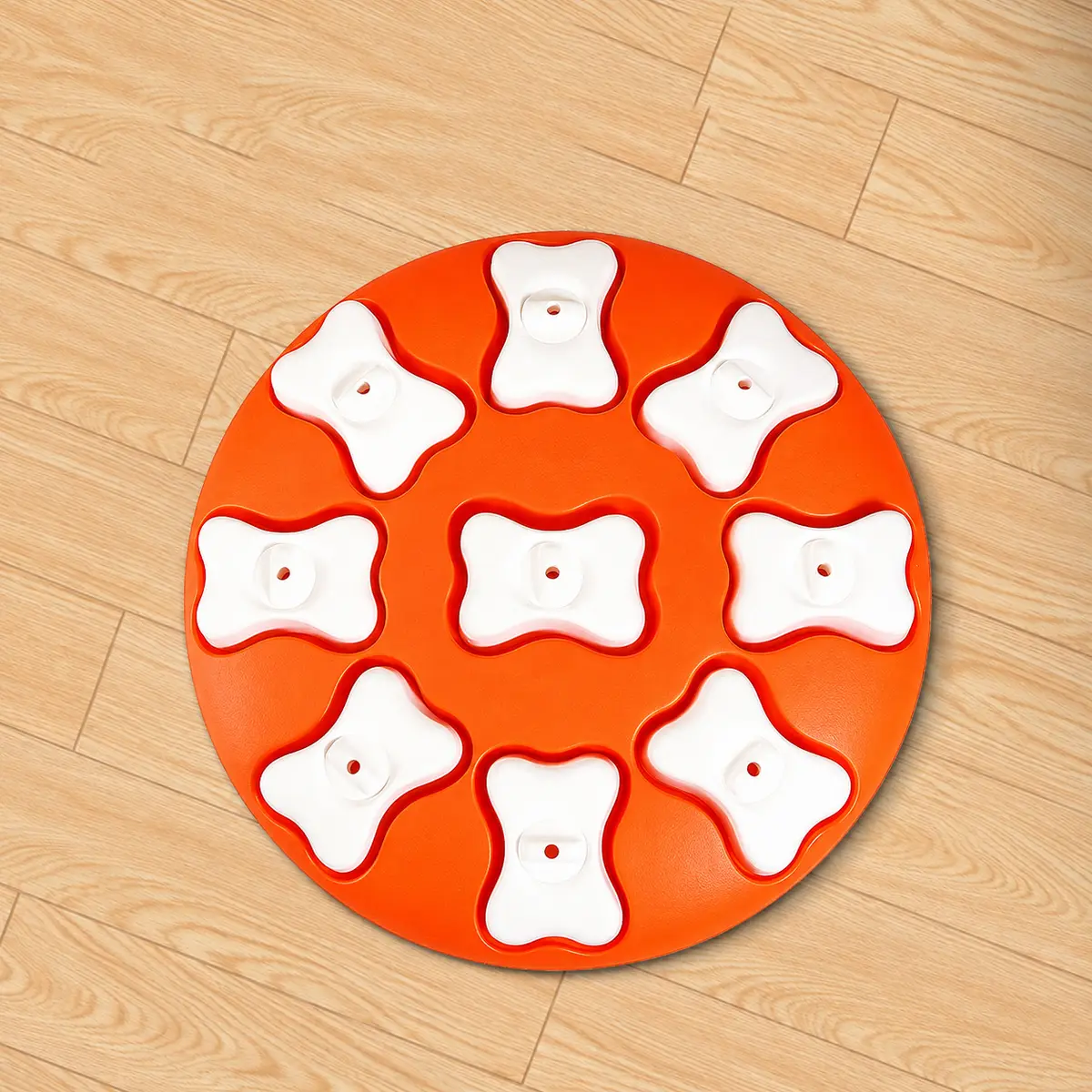
Spreading a few safe pieces across a snuffle mat or packing them into a puzzle toy turns a small treat into a few minutes of sniffing work.
How much celery by dog weight
Keep all treats, celery included, under about 10 percent of daily calories. For a dog under 20 lb, two or three small coins at a time is enough. For a dog of 20 to 50 lb, a small handful of pieces works, and over 50 lb, up to about a quarter cup chopped.
Because celery is so watery and fibrous, the limit is really about the stomach. Too much in one sitting can mean extra gas, loose stools or more trips outside to pee. Spread it across the week rather than giving a big pile in a single day.
Puppies and dogs with health conditions
Puppies can have a few very small pieces once they are settled on solid food. Their airways are narrow and they tend to swallow first and chew later, so dice it finely, sit with them while they eat, and stop if they cough or gag on it.
Check with your vet before adding celery if your dog has a kidney condition, takes medication that changes potassium levels, or is on a prescription diet. Celery is not harmful in itself here, but anything added to a carefully balanced diet should get a quick yes from the vet who manages it.
Signs it disagreed with them, and what to give instead
The usual problems are gas, loose stool or a bit of vomiting within a few hours of a big portion, and they settle on their own within a day. Call your vet the same day for repeated vomiting, a swollen or painful belly, straining, or any coughing and gagging that does not stop.
If your dog does not enjoy celery, cucumber slices, green beans and carrot coins are other low-calorie crunchy options that are easier to chew. Each one still counts toward the daily treat allowance.
This page is general information, not veterinary advice, and it cannot replace an examination by the vet who knows your pet.
Common questions
Can dogs eat celery leaves?
Yes, the leaves are not toxic. They are milder and softer than the stalk, though some dogs find them bitter. Wash them, chop them small and offer a pinch mixed with other food rather than a big bunch.
Can dogs eat celery with peanut butter?
Only if the peanut butter is plain and xylitol-free. Some sugar-free brands use xylitol, which is toxic to dogs. Check the label, use a thin smear and remember that peanut butter adds a lot of calories.
Does celery freshen a dog's breath?
Chewing crunchy vegetables can briefly freshen breath, but celery does not clean teeth or fix the cause of bad breath. Persistent bad breath often comes from dental disease, which your vet should check.
Can dogs eat cooked celery?
Yes, plain steamed or boiled celery is fine and is softer to chew. Avoid celery taken out of soups, stews or stuffing, since those are usually cooked with onion, garlic, salt or butter.
Can dogs eat celery every day?
A few small pieces daily is unlikely to harm a healthy adult dog, as long as it stays inside the 10 percent treat allowance. Larger daily amounts tend to cause gas and loose stool, so moderation still matters.
Sources we checked
This guide is general information, not veterinary advice. If your pet is unwell or injured, contact your veterinarian.