Food safety
Can Dogs Eat Canned Peaches? Skip Syrupy Fruit
No, canned peaches are best avoided as a planned dog treat. The AKC discourages canned peaches because their added sugar and other ingredients can cause problems. A can of fruit is different from a little plain, ripe peach flesh. If your dog already ate some, identify the actual product and ingredients before deciding what help is needed; do not assume every canned preparation has the same risk.
By Matt GarnettUpdated November 13, 20264 min read4 sources
Read the can before drawing a conclusion
Peaches may be packed in syrup, juice, or another preparation. Start with the complete ingredient list rather than the fruit pictured on the front. The AKC specifically advises against canned peaches; a familiar fruit name does not establish that the whole product is an appropriate reward.
If the dog ate from a mixed dessert or fruit cocktail, record all the ingredients you can identify. Keep the can or take a clear photograph. That information is more useful for a veterinarian than describing the snack only as peaches, especially when you do not know how much was eaten.
Why syrup changes the choice
The AKC highlights added sugar as a reason to avoid canned peaches. Choosing an optional snack means considering the preparation as well as the ingredient. Syrup is not needed to make a dog’s complete food nutritionally adequate, and adding fruit does not justify adding a sweet topping with it.
Do not treat draining the can as proof that the remaining fruit has become a suitable daily extra. You still need to account for what the product contains and your dog’s individual needs. When choosing a reward, a known treat that already fits the dog’s diet is an easier decision.
Fresh peach flesh is a separate question
The AKC distinguishes small amounts of fresh, ripe peach flesh from canned fruit. If your veterinarian agrees that peach is suitable, wash the fruit, remove the pit, and offer only a small prepared piece of flesh. Do not offer a whole peach and expect the dog to avoid the center.
This distinction does not mean fruit is necessary. VCA explains that appropriate complete dog foods supply nutrients in the proportions dogs need. A peach snack is an optional extra. It should not displace the regular food or become a reason to change a diet that the veterinarian has prescribed.
Keep pits and packaging out of reach
The AKC warns that peach pits can cause choking or intestinal obstruction and contain a cyanide compound. A pit is not an edible chew. When preparing fresh fruit, put it somewhere the dog cannot retrieve it, and do not leave discarded pits in an accessible kitchen trash can.
Canned fruit may not contain pits, but that does not make the opened can or packaging suitable for a dog to lick or chew. Serve any approved food from a dish yourself. If a pit or part of the packaging was swallowed, call the veterinarian instead of waiting for the dog to appear ill.
For suspected poisoning from a peach pit, call your veterinarian, ASPCA Animal Poison Control at (888) 426-4435, or Pet Poison Helpline at (855) 764-7661; a fee may apply. Do not induce vomiting or give a home remedy unless a veterinary professional directs you.
What to do after an unplanned serving
Remove the remaining food and note when the dog ate it. Check the ingredients, the amount missing, whether another food was mixed in, and whether the dog could have swallowed a foreign object. Share those details and any existing dietary restrictions when you contact the veterinary clinic for advice.
Vomiting, abdominal discomfort, diarrhea, loss of appetite, or unusual tiredness warrant veterinary advice. VCA describes several of these signs in dogs with swallowed foreign bodies, although symptoms alone cannot identify their cause. Breathing difficulty, collapse, or severe distress requires urgent care. Do not attempt to diagnose the problem from the fruit alone.
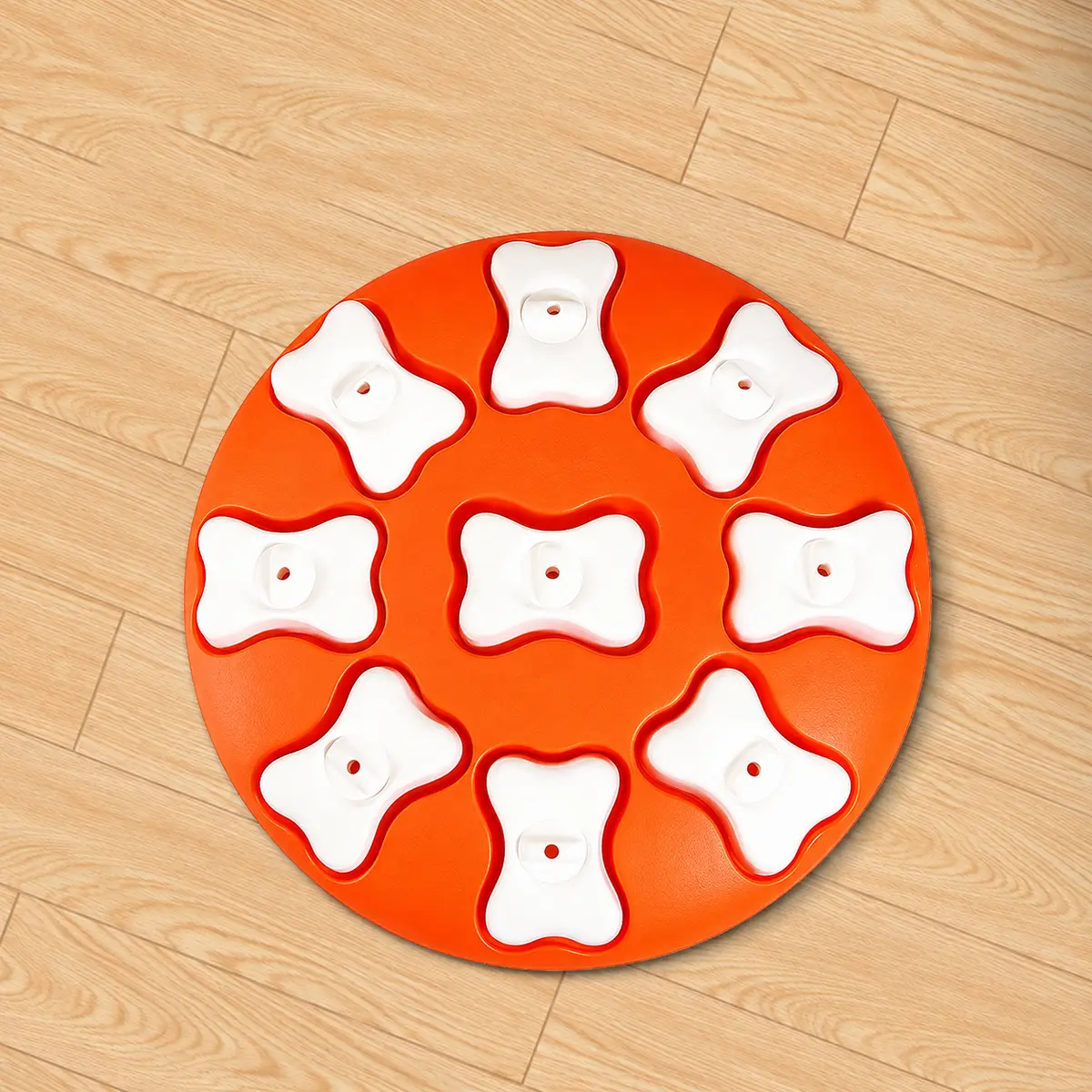
Spreading a few safe pieces across a snuffle mat or packing them into a puzzle toy turns a small treat into a few minutes of sniffing work.
Choose rewards within the existing diet
The AKC’s treat guidance counts all extras together, including human food and training rewards. Ask your veterinarian what suits your dog if weight control, diabetes, digestive disease, or another restriction affects food choices. Let everyone in the household know the agreed approach so a dog does not receive several separate servings.
This page is general information, not veterinary advice, and it cannot replace an examination by the vet who knows your pet.
Common questions
Are canned peaches a good daily dog treat?
No. The AKC advises against canned peaches because of added sugar and other ingredients. Use a reward that fits the dog’s established diet and discuss regular extras with your veterinarian.
Can dogs eat peaches packed in juice instead of syrup?
Do not decide from that front label alone. Read the complete ingredient list and ask your veterinarian about the specific product. The AKC’s peach guidance discourages canned preparations generally.
Can a dog eat a whole fresh peach?
No. Remove the pit before considering a small piece of ripe flesh. The pit poses choking and obstruction risks and contains a cyanide compound; it should never be offered as a chew.
Should I call the vet if my dog ate canned peaches?
Contact the clinic if ingredients are uncertain, a foreign object may have been swallowed, the dog has dietary restrictions, or symptoms appear. Keep the product label and explain the timing and amount.
Sources we checked
This guide is general information, not veterinary advice. If your pet is unwell or injured, contact your veterinarian.